














How Can Businesses Reduce ESG Costs?
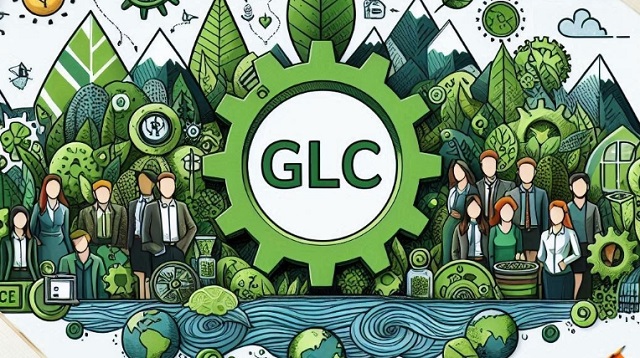
During the Private Social Capability Forum and the Advanced and Pioneering Enterprises for Vietnam (APED) project, I traveled extensively across Vietnam, completing a data survey for the GLC Development Program (a non-profit initiative). The findings were published in the ESG Research Journal at the International Conference in Hanoi in May 2025.
Recently, amidst the heavy rains and storms in Central Vietnam (a critical region prone to natural disasters), I received updates from the Vietnam Studies Forum in Hanoi. This prompted me to reflect: Is the Net Zero debate primarily about costs and fairness? Are we moving too fast?
Is the burden disproportionately falling on ordinary citizens?
My stance is clear: Net Zero is not optional—it’s essential for survival. The ethical question isn’t whether to achieve Net Zero, but how we get there. How fast? How fairly?
In this discourse, two critical factors are often overlooked: education and climate finance. Recent analyses highlight The Green Squeeze as a new form of injustice.
While developed nations implement ambitious environmental regulations (e.g., the Carbon Border Adjustment Mechanism – CBAM, or the EU Deforestation Regulation – EUDR), they inadvertently place immense pressure on producers in developing countries. Compliance costs—from tracing coffee batches to proving deforestation-free production—are shifted onto vulnerable farmers. This isn’t climate justice; it’s burden-shifting.
Finance is the missing link. We cannot demand change from developing nations without providing the tools to achieve it. This reality isn’t unique to Vietnam; I’ve witnessed similar struggles in developed countries, marked by significant strikes.
New regulations require substantial investment in technology, training, and supply chain restructuring. Yet, there’s a massive funding gap for trade-related adjustments. Mandating compliance without financial mechanisms turns green standards into barriers, not bridges to sustainability. The risk of exclusion from value chains is real for weaker, less advanced nations.
Education is the foundation of equitable transformation.
Even with sufficient funding, change won’t happen without knowledge. Large-scale education and capacity-building programs are essential. Key proposals include: Educating Northern policymakers to understand the real-world impact of their regulations on millions of livelihoods in the South; and educating Southern producers to grasp the need for change, adopt sustainable practices, leverage traceability technology, and access green financing.
Don’t be misled by false trade-offs. The battle isn’t between Net Zero and prosperity. Well-designed, adequately funded climate action can drive innovation, create jobs, lower energy costs, and build resilient value chains. Investing in green finance and education isn’t a cost—it’s an investment in global economic and food security.
What’s the moral core of the Net Zero journey?
For me, it’s fairness. Not just rules, but resources. Justice demands we don’t just set the rules but equip everyone to participate. Education and finance are the most powerful tools to empower producers, transforming them from climate change victims into active transition partners. It’s our responsibility to act when we can.
Developed nations and global financial institutions must lead in bridging the gap between climate ambition and financial reality.
What matters most to you?
Nguyễn Phạm Kim Ngân – CEO of Nepa Social Enterprise and “GLC Project”
– 18:00 12/11/2025
Vietjet and Oxford University Unveil Landmark Aviation Initiative, Witnessed by General Secretary Tô Lâm

General Secretary Tô Lâm and Professor Irene Tracey, Vice-Chancellor of the University of Oxford, witnessed the exchange of documents between Vietjet’s Deputy CEO Hồ Ngọc Yến Phương and Professor Myles Allen, Director of the Oxford Net Zero Centre, announcing the results of the Net Zero Carbon research project.
Vietjet and University of Oxford Unveil Groundbreaking Net Zero Solutions for Global Aviation
Unlock the future of aviation with Net Zero Solutions, the transformative pathway to achieving global aviation’s net-zero emissions target by mid-century.
Major Emitters Initiate Greenhouse Gas Inventory Implementation

Mr. Nguyen Tuan Quang, Deputy Director of the Department of Climate Change (Ministry of Agriculture and Environment), announced that programs aimed at green energy transition, reducing carbon and methane emissions are underway. Major emission sources have begun conducting greenhouse gas inventories in compliance with national regulations.
Unlocking Vietnam’s Net Zero Ambition: Innovative Solutions for a Sustainable Future

Dorsati Madani, a senior economist at the World Bank, has stated that without significant technological advancements, current mitigation policies will fall short of achieving Net Zero by 2050. Experts emphasize that the private sector must play a central role in Vietnam’s efforts to reduce emissions.
The Green Business Conundrum: Why Are Firms Struggling to Go Eco-Friendly?
Amidst the looming threat of the EU’s Carbon Border Adjustment Mechanism (CBAM) and the rising ESG demands from international investors, a stark paradox confronts Vietnamese businesses: while “greening” strategies have emerged as a top priority for many, the supply of green industrial real estate remains scarce. This leaves them operating in “grey” factories that fall short of sustainability standards.