


















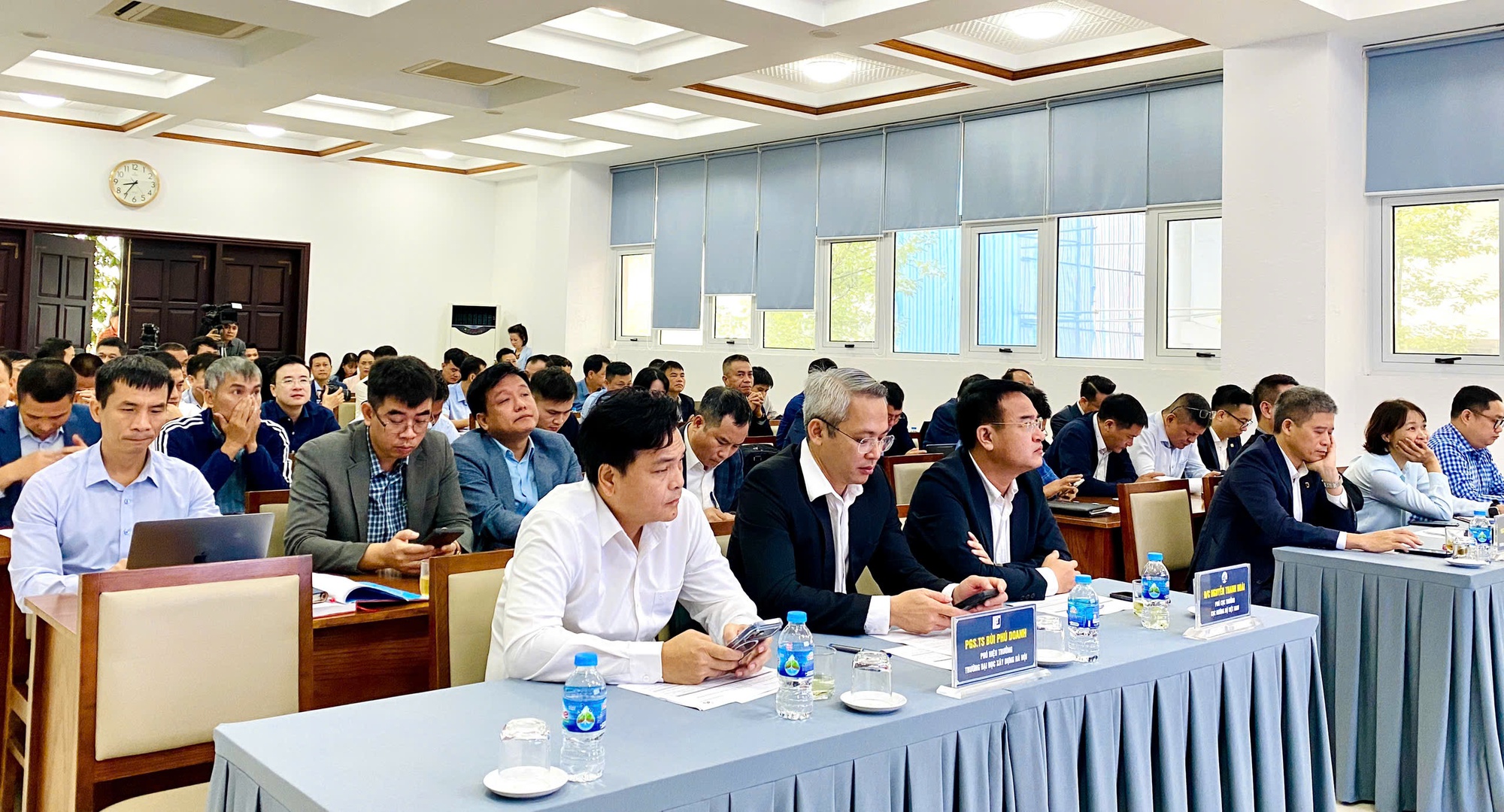
On November 10th, Hanoi University of Civil Engineering, in collaboration with the Vietnam Road Administration, hosted a seminar titled “International Experiences in Expressway Management, Operation, and Exploitation: Proposals for Application in Vietnam.”
In his opening remarks, Prof. Dr. Hoàng Tùng, Rector of Hanoi University of Civil Engineering, emphasized the institution’s commitment to partnering with the Vietnam Road Administration and businesses. The focus is on evaluating practical applications, proposing technology transfer solutions, and contributing to the development of guidelines, foundational standards, and national standards for road infrastructure management and exploitation.
Mr. Nguyễn Thanh Hoài, Deputy Director of the Vietnam Road Administration, highlighted that Vietnam’s expressway network has become a key driver of socio-economic development. However, rapid expansion poses significant challenges in safety, operation, and management, necessitating a shift toward standardized processes and digital data integration.
The Vietnam Road Administration outlined four key strategic directions for the future: standardizing traffic safety management; adopting smart traffic management through shared data and IoT; fostering a culture of safe and humane transportation; and enhancing maintenance management by linking accountability to investment efficiency.
Prof. Dr. Vũ Hoài Nam from the Department of Bridges and Roads at Hanoi University of Civil Engineering analyzed the UK’s Smart Motorway model, which integrates advanced technology to optimize traffic flow. He discussed solutions such as Dynamic Hard Shoulder (converting emergency lanes into active lanes during peak hours) and All Lane Running (eliminating emergency lanes in favor of continuous traffic flow, with refuge areas every 2.5 km). While these measures increase capacity without widening roads, Dr. Nam cautioned that removing emergency lanes could heighten collision risks and recommended selective adaptation of this model in Vietnamese urban areas, particularly given land and financial constraints.
MSc. Nguyễn Tiến Hồng from the Traffic Management and Organization Division at the Vietnam Road Administration proposed standardizing operational procedures, implementing performance-based governance, and accelerating digital transformation with nationwide traffic data integration. He emphasized proactive safety measures, data-driven governance, and outcome-focused efficiency, aiming for “Zero Fatalities” and a modern, humane, and sustainable transportation culture by 2050.
Echoing a human-centric approach, Mr. Trịnh Quang Mộng from the Hanoi-Haiphong Expressway Management Company suggested establishing a National Expressway Operations Center (National TOC). This center would leverage Big Data, AI, early warning systems, and smart monitoring. He also advocated for governance reforms, greater enterprise autonomy, and the implementation of automated fines and driver behavior scoring systems.
Dr. Nguyễn Thị Thu Ngà from the Department of Civil Engineering at the University of Transportation Technology proposed a Key Performance Indicator (KPI) framework comprising four categories: technical infrastructure, operational efficiency, safety and risk, and sustainability and user experience. With Vietnam’s expressway network surpassing 3,000 km and projected to reach 5,000 km by 2030 and over 9,000 km thereafter, she stressed the need to transition from reactive maintenance to performance-based management. This shift aligns with advanced models in South Korea, Japan, the U.S., and Europe.
In the realm of toll collection, Prof. Dr. Đinh Văn Hiệp from the Department of Bridges and Roads at Hanoi University of Civil Engineering praised the electronic toll collection system for reducing transit times and enhancing transparency. However, he noted challenges such as potential congestion during peak traffic. His report recommended system upgrades to ensure seamless integration with urban areas and addressed legal considerations in technology transitions.
Deputy Prime Minister Hồ Đức Phớc Meets with Viettel Group

On the afternoon of November 11th, Deputy Prime Minister Hồ Đức Phớc, Head of the Steering Committee for Enterprise Innovation and Development, held a working session on the implementation of restructuring, innovation, and efficiency enhancement at the Military Industry and Telecoms Group (Viettel).
Government Inspectorate: National Highway 6 Upgrade Project Cost Surges from VND 906 Billion to VND 2,359 Billion, Still Behind Schedule

Government inspectors have uncovered significant issues within the National Highway 6 renovation and upgrade project.
Leveraging AI-Powered UAVs for Advanced Highway Management: Deo Ca Group’s Vision

Dèo Cả Group and China’s Hua Se Group are pioneering a collaborative initiative to integrate UAV technology with artificial intelligence (AI) and digital infrastructure management systems. This partnership aims to revolutionize operational efficiency and innovation across both organizations.
Digital Transformation in Vietnam: A 5-Year Journey Toward a Cashless Future

After five years of implementing the “National Digital Transformation,” Vietnam has made significant strides in building a robust digital economy. Mastercard stands as a pivotal partner, collaborating with the government, financial institutions, and businesses to advance electronic payments, broaden accessibility, and strengthen trust in the digital payment ecosystem.
30-Year-Old Industrial Fair Transforms into International Event at VEC

Building on the resounding success of the 2025 Autumn Fair, all eyes in the industry are now turning to the highly anticipated “Vietnam Industry & Technology Week 2025,” taking place from November 12-15 at the Vietnam Exhibition Center (VEC).