


















Prime Minister Pham Minh Chinh, Head of the Central Steering Committee for Housing Policy and Real Estate Market, chaired the 3rd meeting of the Steering Committee – Photo: VGP/Nhat Bac
|
In the context of Vietnam’s real estate market, the Prime Minister’s directives go beyond technical measures, addressing institutional thinking and the ethos of development.
According to the Prime Minister, housing policy must be viewed as a social commitment—a direct reflection of national governance quality. Housing is meant to serve the majority of the population and must not become a tool for speculation or profiteering. Acts of collusion and misallocation in social housing development must be addressed immediately and severely, as they are not only economic violations but also a betrayal of the policy’s humanitarian spirit.
Simultaneously, he called for the maximum simplification of administrative procedures to ensure citizens no longer face unnecessary delays, time, and costs in exercising their fundamental right to legal residence. Assignments to ministries, sectors, and localities must be clear in terms of personnel, tasks, timelines, responsibilities, authority, and deliverables to ensure policies are implemented substantively rather than remaining mere slogans.
These directives clearly demonstrate the results-oriented governance and sustainable development mindset that the Government is pursuing. Here, the real estate market is not just about profit but a social ecosystem where trust, fairness, and policy discipline must be rebuilt. A healthy market must be founded on societal trust, not asset bubbles.
Lessons from major economies serve as a stark warning, proving that when the housing market diverges from real demand, the consequences are not just economic decline but also a crisis of trust.
Thus, the Prime Minister’s conclusion at this meeting holds particularly profound significance.
This message is not merely an administrative directive but a new institutional vision—aiming for a healthy, humane, and sustainable real estate market.
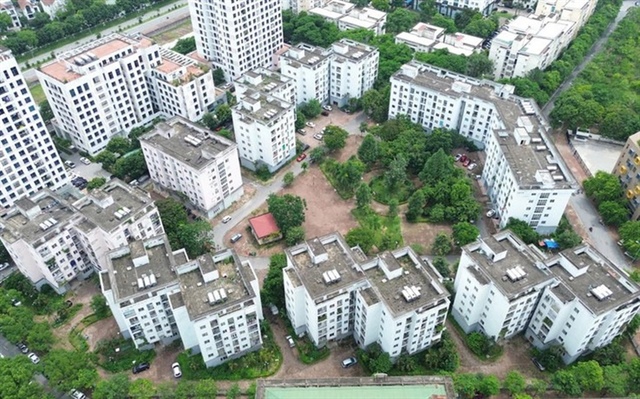 A social housing project in Viet Hung Ward, Hanoi City |
Strategic Directions from the Prime Minister’s Conclusion
The November 11 meeting was not merely a summary of the situation but the introduction of a long-term development framework for Vietnam’s housing policy. Five strategic directions stand out.
First, housing is a pillar of social welfare and stability. In a middle-income country, ensuring every family can own or rent a suitable home is not just an economic goal but a commitment to social equity. When housing becomes unattainable, trust in institutions erodes. Therefore, negativity and profiteering in social housing development must be eradicated to restore the policy’s original humanitarian purpose.
Second, the real estate market reflects institutional quality. The Prime Minister candidly pointed out that the biggest current obstacles are not capital or supply-demand issues but institutional, planning, and administrative procedure problems. A legal project should not take 5–7 years for approval, as this not only increases costs and eliminates business opportunities but is also a serious waste.
Therefore, the Prime Minister called for a unified national investment procedure for housing and real estate development, reducing preparation time to 3–6 months from the current 2 years. He also emphasized the “6 clarities” principle—clear personnel, tasks, responsibilities, authority, timelines, and outcomes—to ensure every step in the process has a specific accountable person.
This move reflects a “servant government” mindset: state agencies must view removing procedural obstacles for citizens and businesses as a duty, not a favor. Only when the administrative apparatus operates transparently, with clear deadlines and personal accountability, can the market function efficiently and fairly.
Third, market development must be disciplined and responsible. The state does not bail out weak enterprises but rescues market trust. A clear distinction must be made between “real investment” and “short-term speculation.” When trust is protected, the market will recover without extreme intervention.
Fourth, institutional reform must be accompanied by data transparency. No healthy market exists without open data. The Prime Minister directed the establishment of a national housing and real estate market data system, regularly updated and publicly disclosed. Transparency is not only a modern governance requirement but also the strongest weapon against speculation and price manipulation.
Finally, trust is the foundation, fairness the direction, and responsibility the measure. When citizens trust the law and believe policies protect their interests, capital and development energy will flow correctly. Conversely, if trust collapses, no credit package can save the market.
Avoiding the “Footsteps” of Other Nations
No country escapes the real estate market’s boom-and-bust cycles, but the mistakes of others are valuable lessons.
Vietnam also faces potential risks as housing prices rise faster than incomes. Without early control, the economy may fall into an “asset trap,” where the easiest profits come from speculation rather than labor.
The fundamental solution is shifting focus from speculation to real investment: taxing flipping and vacant homes while encouraging investment in social housing, rental properties, and green buildings. Land must return to its proper role—a development resource, not a profit mine.
Additionally, instead of “one-time land revenue,” there must be “sustainable revenue from economic value-added.” Localities must grow through infrastructure, services, industry, and tourism development.
Lastly, homebuyers—the most vulnerable but market-sustaining group—must be protected. When citizens lose trust, the entire market paralyzes. A locked account mechanism can be studied: buyers’ payments are held in banks and released to developers only when projects meet progress and technical requirements. Developers must also provide bank guarantees, ensuring buyers receive refunds if projects are delayed or uncompleted.
Simultaneously, the State Bank must assess the credit system’s resilience to real estate risks by simulating scenarios like price drops, liquidity shortages, or borrower defaults. This helps identify risks early, prevent chain reactions, and avoid widespread trust and bad debt crises seen in some economies.
The Vision of an Enabling Government
The real estate market is not just a growth indicator but a measure of social equity. When citizens have access to decent housing, they trust the state and the nation’s future. When that trust is strengthened, the market naturally becomes healthy.
The Prime Minister’s vision today thus goes beyond addressing a challenging sector, laying the foundation for a new development model—where economy and society thrive together, and citizens enjoy both stable housing and peace of mind.
“When every citizen has a stable home, the nation will have a solid foundation for the future.”
This is the spirit of an enabling and integrity-driven government—building trust, governing with integrity, and directing all policies toward the people. If this path is steadfastly followed, Vietnam will not only avoid the world’s pitfalls but also become a 21st-century model of humane, equitable, and sustainable development.
Dr. Nguyen Si Dung
– 16:35 12/11/2025
Caraworld Cam Ranh Sets Second Record in Just 6 Months

On November 6, 2025, at the National Convention Center, CaraWorld—the coastal metropolis developed by KN Cam Ranh—was officially awarded the title of “The First Coastal Metropolis Adjacent to an International Airport and Seaport.”
Crafting Happiness Through Banking: From Trust and Sharing to Sustainable Growth

According to experts, the happiness of Vietnamese people today stems not only from income but also from trust, shared values, and a sense of security—values that businesses can nurture in their growth journey.
Vietnam’s TP Accelerates Plans for a 16,000-Hectare Olympic-Class Mega Project, Stunning the Region

The capital city continues to approve the zoning plans for this development project.
Hanoi: Revitalizing an 11-Year-Abandoned Market into Affordable Housing
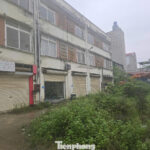
Mai Linh Market, located in Yen Nghia Ward, Hanoi, has stood empty for over a decade despite its completion, with no vendors setting up shop. The developer is now proposing to repurpose the site for the construction of social housing.
Navigating the NOXH Purchase Process: A Month-Long Wait for Income Verification
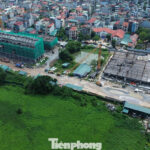
Navigating the complexities of purchasing social housing in Hanoi has become a daunting challenge for many residents, particularly those in the freelance and self-employed sectors. The primary bottleneck lies in securing the necessary documentation to prove housing and income eligibility, a process that often proves cumbersome and time-consuming. Compounding this issue is the limited submission window provided by developers, leaving many applicants at risk of missing out on the opportunity to acquire affordable housing.