Mostly sluggish, delayed progress
Analyzing the reasons behind the slow implementation of social housing projects, which fail to meet demand, Ms. Phạm Thị Miền, Deputy Director of the Vietnam Real Estate Market Research and Evaluation Institute (VARS IRE), highlights several long-standing bottlenecks. Chief among these is the issue of land allocation. Most urban development projects today opt to pay fees rather than allocate 20% of their land for social housing. Many localities have not proactively set aside dedicated land; or if they have, it is often located far from city centers, with poor infrastructure and lacking basic amenities, making it unattractive to residents.
Additionally, the legal procedures related to project investment remain complex and time-consuming, from policy approvals and detailed planning to land clearance and construction permits. These protracted processes increase opportunity costs for businesses, impacting both project timelines and investment efficiency. However, according to Ms. Miền, recent legal reforms have partially alleviated some of these issues, streamlining project implementation.
Funding is another significant hurdle. Despite government-backed preferential credit packages for social housing, accessing these funds remains challenging due to cumbersome procedures. Furthermore, the commitment and execution by local authorities vary widely across regions.
“Under the same policy framework, some localities have met or even exceeded social housing targets, while most others remain sluggish and delayed. This disparity reflects the varying levels of commitment, administrative capacity, and policy implementation effectiveness among local governments,” Ms. Miền noted.
Addressing the rising prices of social housing, which in some areas exceed 25 million VND/m², Ms. Phạm Thị Miền argued that this does not contradict the goal of providing affordable housing for low-income earners. She explained that such high-priced projects are a minority and do not represent the entire segment. Most projects exceeding this threshold are located in prime areas of high-demand localities, where commercial housing prices are three times higher. These projects feature well-developed infrastructure and amenities comparable to commercial developments, justifying their higher prices.
Lack of Fundamental, Coordinated Solutions
Reflecting on the current state of social housing development, Prof. Đặng Hùng Võ, former Deputy Minister of Natural Resources and Environment, noted that despite government efforts to ease challenges in the real estate market, social housing policies remain superficial, lacking fundamental and coordinated solutions. “Since 2023, the government has issued Resolution 33 to address real estate market difficulties, including social housing development. However, most of the resolution’s recommendations have yet to yield results,” Mr. Võ stated.
According to Prof. Võ, the 2013-2016 period saw highly effective social housing market activity, driven by a 30 trillion VND credit package with interest rates of just 4-5%. This package facilitated easy access to capital for both buyers and developers, spurring numerous affordable housing projects. “Since the end of the 30 trillion VND package, subsequent preferential loan programs have been less effective. Citizens report difficulties in accessing loans due to cumbersome procedures,” Mr. Võ added.

Residents prepare documents to register for a social housing project in Uy Nỗ, Đông Anh, Hanoi. Photo: Lưu Trinh
Prof. Võ pointed out that social housing prices have doubled over the past decade, while supply remains critically low. “We are witnessing a paradox: prices rise daily, yet supply is virtually nonexistent. Those genuinely in need of social housing cannot access it, while management infrastructure is weak, lacking clear data on homeownership and income levels,” he analyzed.
Commenting on the scenes of residents staying up all night to submit social housing applications and overwhelmed online registration systems, Prof. Võ attributed these issues to a lack of transparency in management. “The challenge lies not only in supply but also in our approval processes. Authorities rely almost entirely on self-reported declarations from citizens. Many individuals can prove low-income status but face endless delays in approval,” he said.
Prof. Võ suggested that digitizing and integrating land, housing, and personal income data systems would clarify eligibility for social housing. “In reality, only Đồng Nai province and parts of Vĩnh Long have implemented digital land data infrastructure. Elsewhere, the situation is chaotic,” he revealed.
He noted that the plan for 1 million social housing units by 2030 is insufficient to meet actual demand. Without a shift in approach, this goal will not alleviate the exhausting race for homeownership. “The current housing price surge is approaching levels affordable only to the wealthy, and even billionaires, in the coming years,” he warned.
“We are developing social housing with a subsidy mindset, which no longer aligns with market mechanisms. We must transition to a market-oriented approach, with strong private sector involvement.” Prof. Đặng Hùng Võ, former Deputy Minister of Natural Resources and Environment
Based on these observations, Prof. Võ emphasized, “We are developing social housing with a subsidy mindset, which no longer aligns with market mechanisms. We must transition to a market-oriented approach, with strong private sector involvement.”
He proposed that instead of relying solely on state budgets or preferential policies, the government should mandate that commercial developers concurrently build affordable housing projects. Additionally, the government should set price caps for each project type to prevent price gouging amid supply shortages.
Cracking Down on Social Housing Exploitation: What Penalties Are Needed to Deter Abuse?
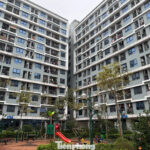
The Ministry of Construction has proposed increasing fines to 80-120 million VND for misusing social housing. Experts argue that while stricter penalties are necessary to deter policy exploitation and ensure these homes reach those in genuine need, the current fines remain insufficiently deterrent. They advocate for additional post-audit measures to strengthen enforcement.
Exciting News: Hundreds of Affordable Homes Set to Hit the Market Amid Housing Shortage
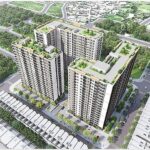
Unveiling a prime commercial opportunity, this project boasts an impressive 4,294 square meters of floor space dedicated to business and retail services.
Sustainability and Trust: The Prime Minister’s Vision for Housing Policy

The Central Steering Committee’s meeting on housing policy and the real estate market, chaired by Prime Minister Pham Minh Chinh on November 11th, delivered a powerful message: housing development is more than just about homes—it’s a cornerstone of social welfare and a critical driver of the real economy.
Hanoi: Revitalizing an 11-Year-Abandoned Market into Affordable Housing
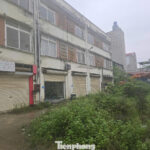
Mai Linh Market, located in Yen Nghia Ward, Hanoi, has stood empty for over a decade despite its completion, with no vendors setting up shop. The developer is now proposing to repurpose the site for the construction of social housing.
Navigating the NOXH Purchase Process: A Month-Long Wait for Income Verification
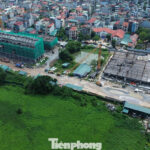
Navigating the complexities of purchasing social housing in Hanoi has become a daunting challenge for many residents, particularly those in the freelance and self-employed sectors. The primary bottleneck lies in securing the necessary documentation to prove housing and income eligibility, a process that often proves cumbersome and time-consuming. Compounding this issue is the limited submission window provided by developers, leaving many applicants at risk of missing out on the opportunity to acquire affordable housing.