“Post-Construction Inspection for Every Project”
Continuing the session’s agenda, on the morning of November 14th, the National Assembly engaged in a plenary discussion on the amended Construction Law.
According to Delegate Pham Van Hoa (Dong Thap), numerous real-life incidents have surfaced regarding the issuance or non-issuance of construction permits, shifting from pre-construction to post-construction inspections. He cited examples such as the case in Hai Phong and a recent incident in Ho Chi Minh City.
“Thus, the responsibility of local authorities in post-construction inspections is crucial. We must ensure that inspections are not conducted only after a project is completed, as disputes may arise, causing financial losses for citizens,” stated Mr. Hoa.
“In the Hai Phong case, where a house was mistakenly built on someone else’s land due to misinformation, such errors could have been prevented with proper pre-construction oversight. If land officers had accurately designated the construction site, this issue would never have occurred,” the delegate explained.
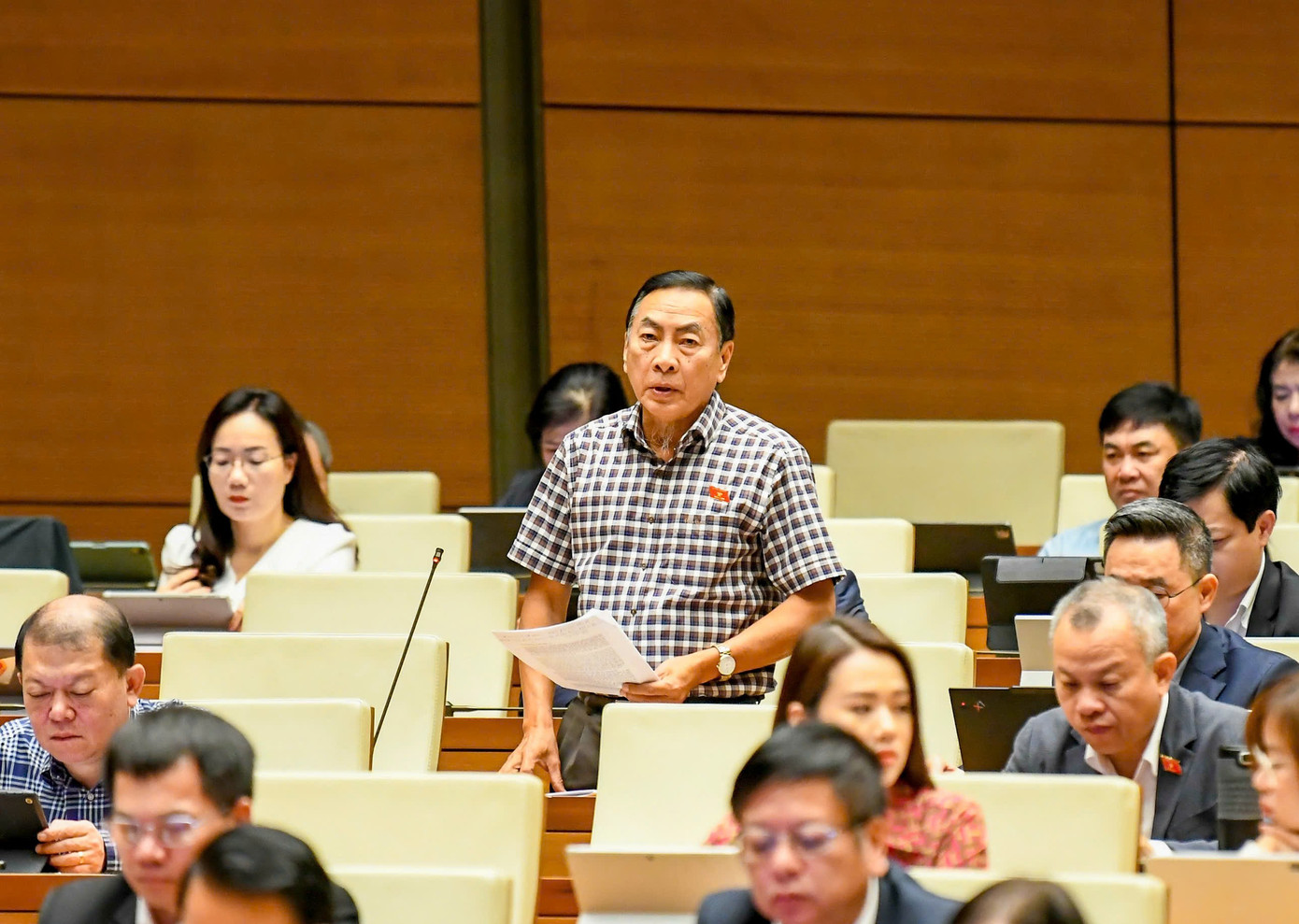
National Assembly Delegate Pham Van Hoa. Photo: Nhu Y
Asserting the necessity of transitioning from pre-construction to post-construction inspections, the Dong Thap delegate emphasized that local authorities must remain accountable during the construction process. “Upon receiving reports, authorities must promptly inspect, document, and issue reminders to ensure compliance,” he noted.
Regarding construction permits, the delegate further illustrated: “Consider a residential building permitted for 10 floors but constructed with 11 or 12 floors. After documenting the violation, should we allow it to remain or not?”
He argued that thorough initial inspections would prevent unauthorized additional floors. “Waiting until 12 or 13 floors are built before intervening not only disrupts residents’ livelihoods but also strains state resources,” Mr. Hoa remarked.
Endorsing post-construction inspections, the delegate stressed the importance of “inspecting each phase and every project” during construction. State construction management agencies must conduct regular inspections to ensure compliance, minimizing potential damages.
“Clarifying Responsibilities of Commune-Level People’s Committees”
Regarding construction permit exemptions, Delegate Nguyen Thi Viet Nga (Hai Phong) noted that the draft law exempts certain projects from construction permits, reducing pre-construction checks and enhancing post-construction inspections. This aligns with administrative reform goals, cutting red tape and reducing costs for citizens and businesses.
However, the Hai Phong delegate highlighted persistent issues such as unauthorized construction, encroachment on sidewalks and public land, exceeding permitted floors, and unauthorized changes in building use. Many violations go undetected until projects are nearly completed or finished.
Given these challenges, and considering the two-tier local government model with limited specialized construction staff at the commune level, Mrs. Nga proposed strengthening post-construction inspection mechanisms for timely violation detection and resolution. She urged clear delineation of responsibilities for commune-level People’s Committees in early-stage inspection and violation handling.
The Hai Phong delegate also recommended penalties for leaders failing to detect or address construction violations promptly and suggested deploying support teams for grassroots construction management to ensure effective post-construction inspections.
“We must avoid implementing post-construction inspection mechanisms without adequate personnel to execute them,” Mrs. Nga cautioned.
Concerns Arise as Homeowners May Still Require Ownership Certificates for Construction Permit Exemptions

Many residents face challenges when applying for property ownership certificates after completing their constructions, as they lack the necessary building permits.
Ho Chi Minh City Transfers Authority to Issue Construction Permits to Commune-Level People’s Committees
The Ho Chi Minh City Department of Construction has been tasked with developing a software application to monitor the issuance of time-bound construction permits and track the validity period of permitted structures. This system will enable commune-level People’s Committees to implement the process seamlessly, ensuring full connectivity and integration with the Department of Construction’s network.
Unauthorized Construction: Who Will Enforce the New Regulations?
The People’s Committee of Ho Chi Minh City has issued a new decree delegating authority for construction order management, effective November 20th.
Streamlining Processes for Construction Permit Exemptions

Numerous National Assembly delegates have expressed consensus on the proposal to exempt construction permits, viewing it as a timely step in administrative procedure reform. However, they emphasize the need for tangible and meaningful implementation to ensure its effectiveness.
Clarifying the Management Responsibilities of Commune Authorities in Cases of Unauthorized Construction

Members of the National Assembly have urged that in cases of construction deviating from approved designs or regulations, the accountability of local commune authorities must be clearly established. Additionally, stringent penalties should be imposed on entities failing to ensure the quality of construction projects.