On November 15th, Mr. Đặng Hoàng Chương, Deputy Director of the Department of Construction in Tay Ninh Province, announced that provincial authorities are actively progressing with preparations for the investment in the Ho Chi Minh City Ring Road 4 project, which passes through Tay Ninh.
Currently, feasibility studies and surveys are underway, with approval expected before December 31st.
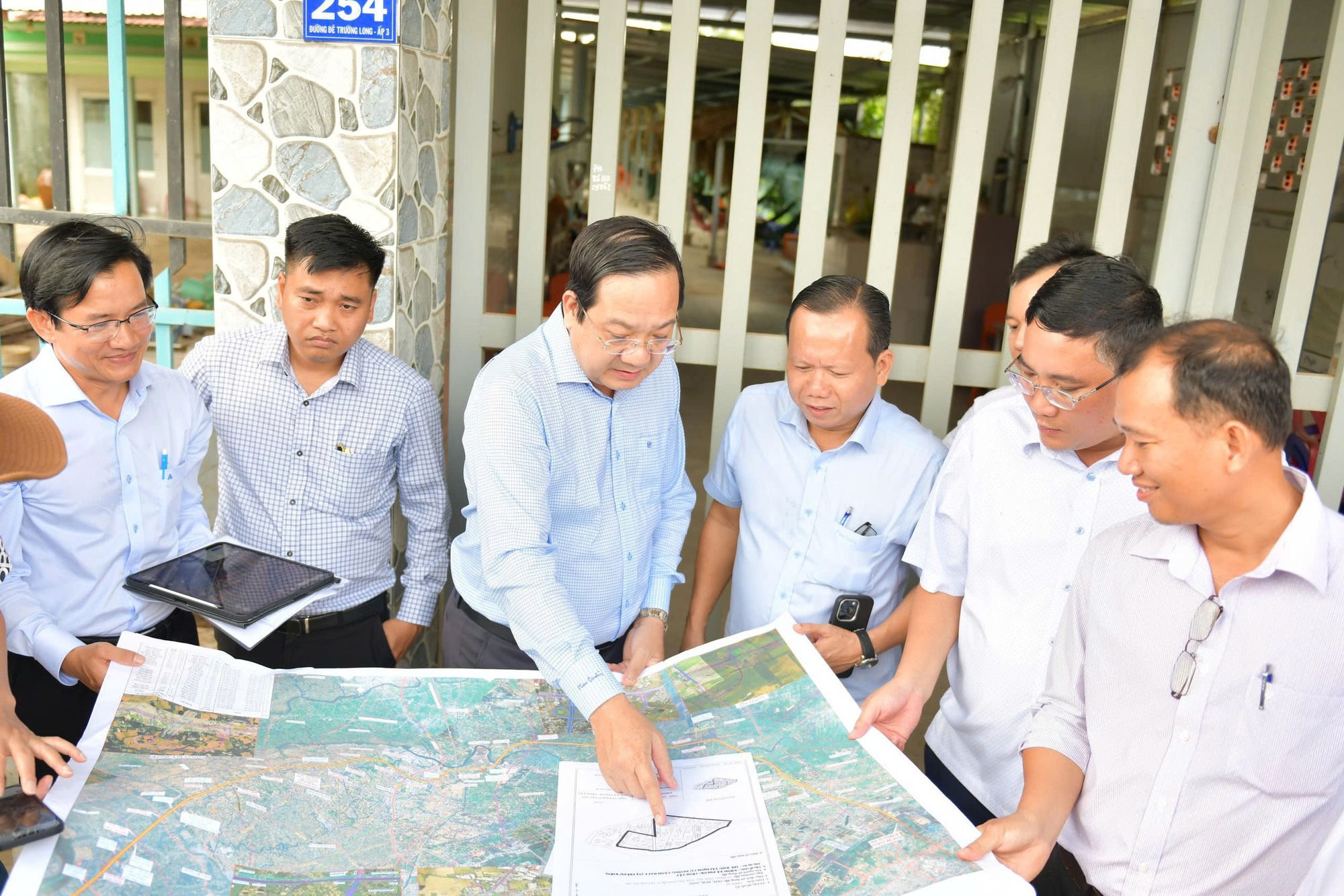
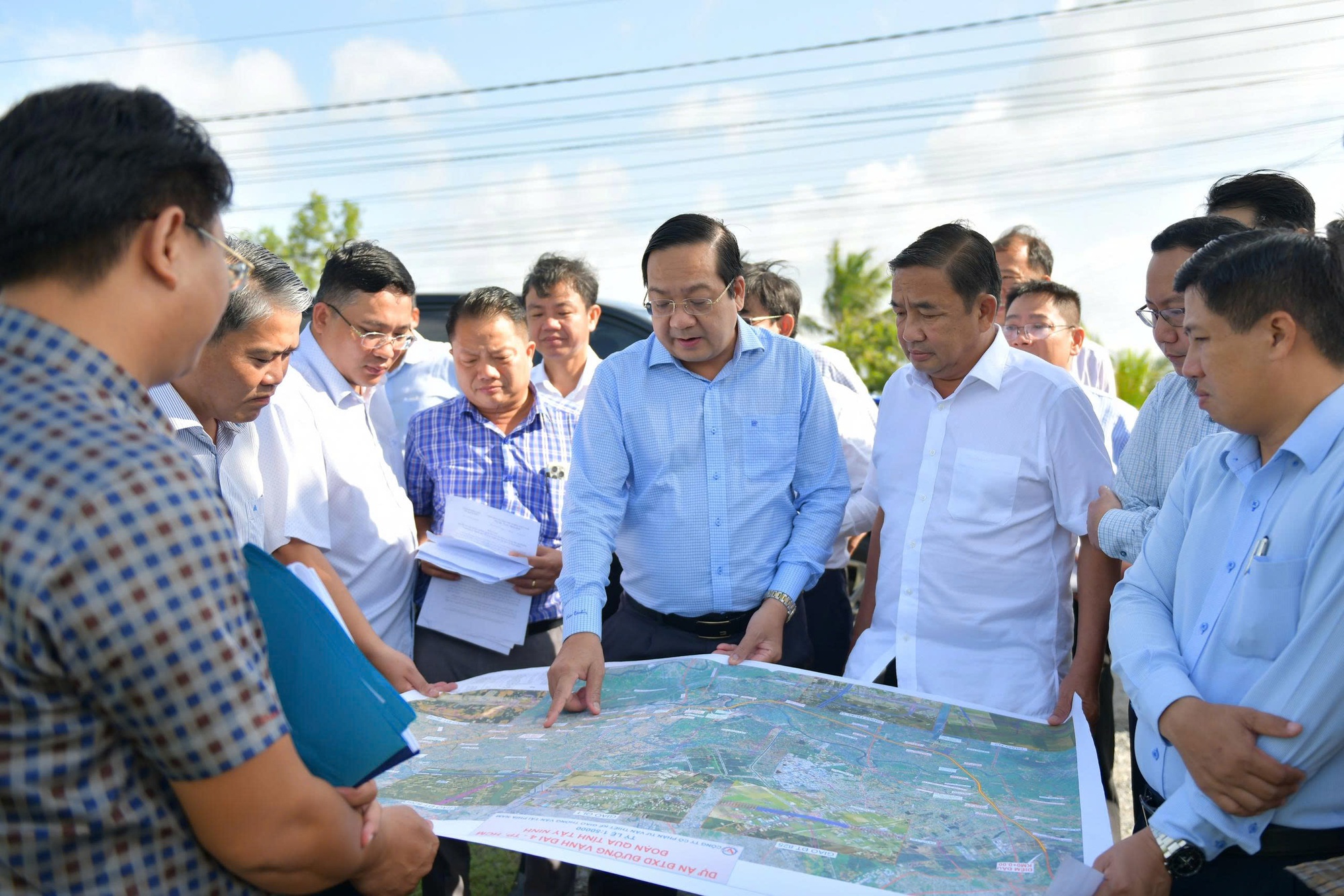
Provincial leaders and relevant departments survey the Ho Chi Minh City Ring Road 4 project in Tay Ninh.
To date, 70% of the route’s length (approximately 55km) has been handed over to local authorities for land clearance. The remaining sections, including intersections, will be handed over in November.
Additionally, planning for resettlement areas and surveys of material sources for the project are nearing completion.
“As of now, project preparation and implementation are on schedule, with no significant challenges encountered. The timely execution and completion of Ring Road 4 will significantly enhance connectivity between the Southeast and Southwest regions, fostering socio-economic development and creating new growth opportunities for Tay Ninh in the coming years,” stated Mr. Chương.
The Ho Chi Minh City Ring Road 4 project was approved by the National Assembly in Resolution No. 220 on June 27, 2025, with a total length of approximately 159.31km, divided into 10 sub-projects. The preliminary total investment is around 120.413 trillion VND. This includes over 29.688 trillion VND from the central budget, more than 40.093 trillion VND from local budgets, and approximately 50.632 trillion VND from investors.
The project commenced in 2025 and is expected to be completed and operational by 2029. The road will feature 8 lanes of expressway with a design speed of 100km/h, along with parallel roads on both sides, each with a minimum of 2 lanes and a design speed of 60km/h. The section passing through Tay Ninh Province spans 74.5km out of the total 78.3km of the Tay Ninh – Ho Chi Minh City segment.
The Tay Ninh Provincial People’s Committee has been designated as the managing authority and the competent body for three sub-projects: Sub-project 1-4: Compensation, support, resettlement, and construction of frontage roads (public investment), with a total investment of 24.972 trillion VND.
Sub-project 2-4: Construction of the expressway section from Thầy Cai Canal to the Ho Chi Minh City – Trung Luong Expressway (PPP, BOT contract), with a total investment of 20.485 trillion VND.
Sub-project 2-5: Construction of the expressway section from the Ho Chi Minh City – Trung Luong Expressway to Hiệp Phước Port (PPP, BOT contract), with a total investment of 22.813 trillion VND.
The total state budget allocated for Tay Ninh’s portion is 39.556 trillion VND. Of this, the central government contributes 29.668 trillion VND (75%), Tay Ninh Province provides 9.888 trillion VND (25%), and investors mobilize 28.714 trillion VND.
According to the Department of Construction of Tay Ninh Province, the Provincial People’s Committee has assigned tasks and directed relevant departments to expedite investment preparations. They have also approved the route alignment, policy, and land clearance scope for Sub-project 1-4. The province has agreed on the location and scale of six resettlement areas in Hòa Khánh, Đức Huệ, Bến Lức, Rạch Kiến, Mỹ Lộc, and Tân Tập.
Deputy Prime Minister Hồ Đức Phớc Meets with Chairman of China’s Hua Tie Group

On the afternoon of November 15th, Deputy Prime Minister Hồ Đức Phớc received Mr. Dương Vệ Đông, Chairman of the Board of Directors of Hua Tieh Group (China), along with leaders from the Jiangsu Enterprise Association in Beijing and representatives from several enterprises and investment funds affiliated with the Association.
Benhill Investors Reap Cash Flow Benefits as Project Surpasses Milestones, Nearing Handover

Exciting news for Benhill investors and residents as the project enters its final stretch, with the first apartments set to be handed over by December 2025, ahead of schedule.
Ho Chi Minh City Supports Tay Ninh with VND 1.806 Trillion for Expressway Development

Land clearance and investor selection are underway, targeting a March 2026 groundbreaking for the HCMC – Moc Bai Expressway.
Ho Chi Minh City Increases Total Investment for Ton That Thuyet Road Expansion to VND 5,554 Billion

The Ho Chi Minh City People’s Council has approved adjustments to the investment policy, expanding the scope and extending the timeline of the Ton That Thuyet – Kenh Te road project until 2029. This decision aims to alleviate traffic congestion and enhance urban beautification along the canal area.
Unveiling Vietnam’s $16 Billion Mega Airport: General Secretary Urges “No Delays, Every Day Lost Costs the Nation”

The General Secretary received progress updates, encouraged the construction workforce, and presented gifts to the officials and workers on-site.