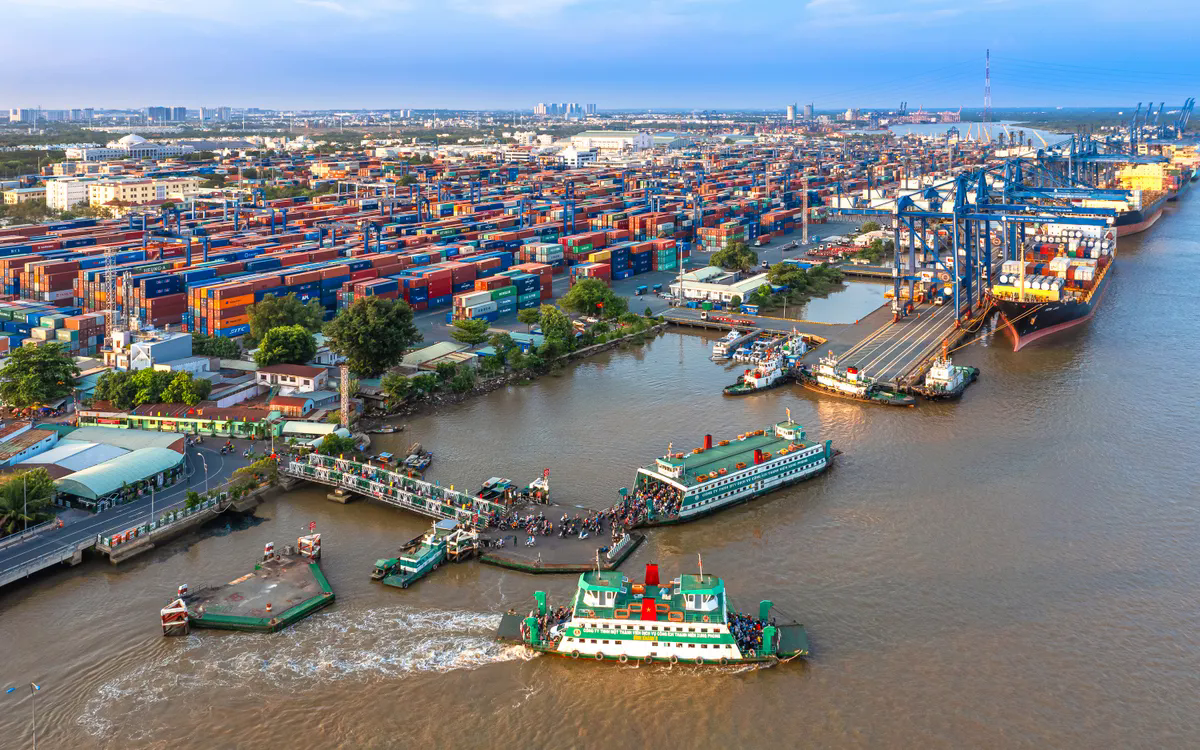
Ho Chi Minh City faces a significant challenge in balancing its budget as the demand for public investment capital from 2026 to 2030 far exceeds its revenue capacity. At a conference on budget resource mobilization solutions, city leaders and experts identified several bottlenecks and proposed innovative measures to create sustainable revenue streams, aiming for modern infrastructure development and enhanced economic competitiveness.
The conference report revealed that the city’s total public investment capital demand over the next five years exceeds VND 3.16 quadrillion. Of this, the local budget must self-balance approximately VND 2.83 quadrillion, a figure beyond its current capacity. The projected total budget revenue for 2026-2030 is around VND 4.7 quadrillion, with an average annual growth of 6.53%. However, this revenue covers only about 34% of the public investment capital needs, leaving a financial gap of VND 1.85 quadrillion.
Domestic revenue from the economic sector, particularly non-state enterprises and FDI, is expected to be the primary driver, accounting for 88.5% and growing at about 10% annually. This positive trend reflects a shift toward a private and high-quality foreign investment-driven economy. Nonetheless, land revenue, projected to increase nearly fourfold compared to the previous period, remains a high-risk area, heavily dependent on legal progress and market conditions.
Based on these analyses, the City Development Research Institute recommended prioritizing the removal of business obstacles, maintaining regular dialogue, and fostering a transparent business environment to encourage private sector and FDI expansion. Additionally, the city should continue to enhance industrial infrastructure to attract new capital and increase long-term budget contributions.
For state-owned enterprises, divestment and equitization were highlighted as significant revenue sources, facilitating asset transfers to the more efficient private sector. The institute suggested leveraging surplus land and production facilities from state-owned enterprises to promote public-private partnership projects, aligning with Resolution 68 on private economic development.
To address the budget shortfall, the city was advised to maximize special mechanisms under Resolution 98, including increasing borrowing capacity, piloting new fees and charges, broadening revenue sources, and diversifying mobilization methods.
The city’s tax authority aims to fully exploit tax revenues from the economic sector, tighten transfer pricing and related-party transaction management, and control e-commerce activities, a rapidly growing but leak-prone sector. Customs Region II pledged to streamline procedures, reducing processing time by 30% to enhance import-export efficiency.
Increasing land revenue is a key city expectation. The City Development Research Institute emphasized improving public land auction processes and accelerating investor selection bidding under Resolution 98 to expedite procedures and recover capital faster. Prioritizing the 2026-2030 City Planning Adjustment is crucial, as it forms the legal basis for land allocation, bidding, and auctions.
World Bank advisor Macr Robinson noted Ho Chi Minh City’s potential in capturing land value increments from infrastructure. He suggested adopting more modern revenue tools, enhancing staff capacity, and implementing comprehensive reforms to minimize resource wastage.
The Department of Agriculture and Environment acknowledged past land auction inefficiencies, which even caused market fluctuations. From 2026, the city will introduce annual land price tables under the 2024 Land Law, ensuring state prices align with market rates. This will naturally increase land revenue, making it more transparent and sustainable.
The department will also fully apply land valuation methods, particularly the surplus method, to accurately reflect post-infrastructure investment land values. The city will further leverage the Transit-Oriented Development (TOD) model and strengthen the Land Development Organization’s capacity to proactively create clean land funds for auctions.
Alongside revenue enhancement, resolving compensation, support, and resettlement issues is critical for public investment progress. The city aims to relocate 50% of canal-side houses by 2030, equivalent to 20,000 units. The resettlement policy is designed to be humane, ensuring residents receive equal or better housing. With resident cooperation in land handover, infrastructure project timelines accelerate, generating stable land revenue for the budget.
According to the City Land Development Center, 85 land plots totaling 435 hectares are expected to be auctioned between 2026 and 2030, yielding over VND 100 trillion. To achieve this, the center proposed special mechanisms for public land auctions and increased revenue allocation for peripheral infrastructure and new satellite cities.
The Department of Construction noted the city’s ownership of over 4,900 resettlement apartments and land plots, a significant asset if effectively utilized. Revenue from selling resettlement apartments has grown strongly, demonstrating its untapped potential. For 2026-2030, the department suggested accelerating legal resolutions, streamlining procedures, optimizing public asset management, and upgrading housing funds to enhance value.
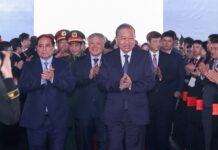
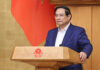
Concluding the conference, Vice Chairman of the City People’s Committee Nguyen Van Dung emphasized the city’s focus on investment attraction, business support, and expedited public investment disbursement. He announced that as of mid-November, the city had met its assigned budget revenue target but needed to strive harder to achieve the new goal: VND 800 trillion in 2025, a 25% increase from the initial target.
This is a formidable challenge requiring close coordination among departments. The Tax Authority must ensure accurate and complete revenue collection; the Department of Agriculture and Environment must fulfill land revenue plans; and the entire political system must drive public investment disbursement to stimulate economic growth.
Ho Chi Minh City Sets Groundbreaking Date for Ben Thanh – Can Gio Metro Line
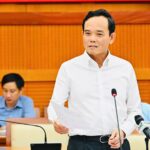
At the Steering Committee meeting on November 14th, Party Secretary Tran Luu Quang announced that Ho Chi Minh City will commence construction on the Ben Thanh – Can Gio metro line on December 19th. He urged relevant departments to concurrently address tasks, preventing delays and bottlenecks in coordination, to ensure the timely completion of key metro projects before 2030.
Revived Real Estate Market in Ho Chi Minh City: A Legal Minefield for the Uninformed
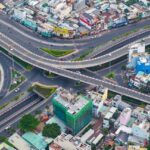
Northern investors are increasingly eyeing the Ho Chi Minh City real estate market. However, disparities in legal frameworks, urban planning, and market dynamics can lead to unmet expectations for those unfamiliar with the Southern landscape. Understanding the local “rules of the game” is crucial for success in this vibrant market.
AIC’s Dominance: Securing 230 Contracts in Ho Chi Minh City

The AIC case in Ho Chi Minh City has exposed how a company can manipulate public procurement processes with insider complicity.
Ho Chi Minh City Chairman Addresses $430 Million Flood Control Project and Rail Link to Long Thanh Airport
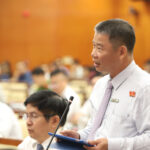
The Chairman of the Ho Chi Minh City People’s Committee announced that the Standing Committees of the Ho Chi Minh City Party Committee and the Dong Nai Provincial Party Committee recently convened and reached agreements on numerous inter-regional transportation connectivity projects. These initiatives encompass both rail and road infrastructure, as well as bridge connections between the two localities.
Top Experts and Scientists in Ho Chi Minh City Earn Up to $4,300 Monthly Salaries

Elevate Your Career in Ho Chi Minh City: Unmatched Opportunities Await
Discover unparalleled opportunities in Ho Chi Minh City, where experts, scientists, and uniquely talented individuals thrive. Enjoy monthly incomes ranging from 30 to 100 million VND, coupled with an initial allowance of up to 100 million VND. Your exceptional skills deserve exceptional rewards—join us and redefine success.