















Mr. Phan Trung Tuấn strongly refutes the misinformation circulating about the reduction of administrative units from 34 provinces and cities to 16 in the near future, labeling it as entirely false.
The previous decision to reorganize and merge administrative units marked a historic and strategic step, signaling a new phase in the development of a streamlined, efficient, and citizen-centric state administrative apparatus. This move aims to perfect the political system’s institutions and organizations, ensuring they are synchronized, lean, effective, and geared toward a modern administrative governance model that serves the people’s best interests.
Beyond streamlining organizational structures, reducing staff, and cutting administrative costs, the reorganization of administrative units at all levels, implemented in early 2025, seeks to create new development opportunities for localities and ensure long-term stability of the administrative system. This significant policy has been meticulously researched and considered by the Party, National Assembly, and Government before its implementation.
With the entire political system’s decisive engagement, the two-tier local government model (provincial and commune/ward levels) officially commenced operations across all provinces and cities on July 1, 2025. The nation now comprises 34 provinces/cities and 3,321 communes, wards, and special zones.
On June 12, 2025, the National Assembly adopted a Resolution on the reorganization of provincial-level administrative units for 2025. Consequently, the country now has 34 provincial-level administrative units, including 28 provinces and 6 cities.
Among these, 19 provinces and 4 cities were formed following the reorganization outlined in the resolution: Tuyên Quang, Lào Cai, Thái Nguyên, Phú Thọ, Bắc Ninh, Hưng Yên, Hải Phòng, Ninh Bình, Quảng Trị, Đà Nẵng, Quảng Ngãi, Gia Lai, Khánh Hòa, Lâm Đồng, Đắk Lắk, Ho Chi Minh City, Đồng Nai, Tây Ninh, Cần Thơ, Vĩnh Long, Đồng Tháp, Cà Mau, and An Giang. The 11 provinces and cities not undergoing reorganization are: Cao Bằng, Điện Biên, Hà Tĩnh, Lai Châu, Lạng Sơn, Nghệ An, Quảng Ninh, Thanh Hóa, Sơn La, Hanoi, and Huế.
Alongside administrative reorganization, the two-tier local government model (provincial and commune/ward levels) began operations on July 1 across all provinces and cities. This shift also involves robust decentralization and devolution between central and local authorities, as well as between provincial and commune-level governments, guided by the principle: “Localities decide, localities act, localities take responsibility.”
Mr. Phan Trung Tuấn further revealed that the Ministry of Home Affairs is drafting a Decree to guide public consultation on the establishment, dissolution, merger, division, boundary adjustment, and renaming of administrative units. This draft will replace Decree No. 54/2018/NĐ-CP and Decree No. 66/2023/NĐ-CP.
The draft decree does not include an appendix listing a reduction from 34 to 16 provinces and cities, contrary to rumors spreading on social media.
“The drafting of this decree aligns with the provisions of the Law on Local Government Organization No. 72/2025/QH15 and Decision No. 1589/QĐ-TTg by the Prime Minister, which outlines the implementation plan for the Law on Local Government Organization No. 72/2025/QH15,” Mr. Tuấn emphasized.
Mr. Phan Trung Tuấn noted that this law introduces fundamental changes, stipulating that Vietnam’s administrative units are organized into two levels: provinces and centrally-affiliated cities (provincial level); and communes, wards, and special zones under provincial authority (commune level).
Under this new structure, the district-level administrative unit is eliminated, and a new administrative type, the “special zone” (commune level), is introduced.
However, Decree No. 54/2018/NĐ-CP and Decree No. 66/2023/NĐ-CP are designed to guide public consultation on the establishment, dissolution, merger, division, and boundary adjustment of administrative units under the three-tier model (provincial, district, and commune levels).
The drafting and submission of this decree to the Government aim to provide guidance for public consultation in standard cases involving the establishment, dissolution, merger, division, and boundary adjustment of administrative units.
Two Individuals Fined VND 3 Billion for Stock Manipulation Using 19 Accounts

The State Securities Commission (SSC) has recently issued penalties against multiple individuals involved in the manipulation of Petro Times Corporation’s (PPT) stock. Two individuals were fined a total of 3 billion VND for using 19 accounts to repeatedly buy and sell shares, artificially creating supply and demand to manipulate the stock price.
Thai Tycoon Reaps Windfall Dividends from Vietnamese Enterprises

After 13 years, Nawaplastic Industries Co., Ltd. has reaped over VND 2.824 trillion in dividends from Binh Minh Plastics, equivalent to their initial investment in shares. Meanwhile, Vietnam Beverage has garnered approximately VND 15.4 trillion in dividends from Sabeco, and F&N Dairy Investments has collected more than VND 15 trillion in dividends from Vinamilk.
Infrastructure Bond Funds: Essential Yet Requiring Oversight to Safeguard Investors

Vietnam’s infrastructure investment demand is projected to reach $245 billion by 2030, yet the forecasted budget is expected to cover only 70% of this requirement.
The Red River Mega Avenue: A $13 Billion Project Set to Break Ground in December 2025

Prime Minister Pham Minh Chinh has urged Hanoi to accelerate efforts to commence the Hong River Scenic Boulevard Axis and the Olympic Sports City Urban Area projects by December 19, 2025. This initiative aims to generate momentum, drive, and enthusiasm as the nation steps into a new era.
Q3 Profits Surge for Shipping Operators Amid Vessel Disposal Boom
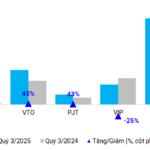
The Q3/2025 profit performance reveals a stark divergence among transportation sectors. While the container segment maintained its robust momentum and oil transportation showed signs of improvement, the offshore and bulk shipping sectors continued to face significant challenges, relying heavily on sporadic non-core income to stay afloat.