Recent reports suggest VinFast is developing hybrid vehicles, a move that has captured market attention despite the lack of official confirmation. After three years of focusing on pure electric vehicles, this strategic shift aims to address charging station concerns and expand the customer base.
Reaching a Broader Customer Segment
Multiple sources, including VinFast partners and media outlets, indicate the company may launch its first hybrid model in 2026. The VF 8 and VF 9 are rumored to be the first candidates for this transition.
VinFast is expected to adopt the EREV (Extended-Range Electric Vehicle) technology, where the electric motor remains primary, and the gasoline engine acts as a generator for the battery. This approach is gaining traction in major markets like China, addressing range anxiety and charging infrastructure limitations.

The VinFast VF 8 is rumored to be the first model to transition to hybrid. Photo: NGUYỄN HẢI
If VinFast launches hybrid vehicles, its in-house LFP battery technology could be a game-changer. LFP batteries are known for their safety, durability, and cost-effectiveness, enabling VinFast to offer competitively priced vehicles with impressive electric range.
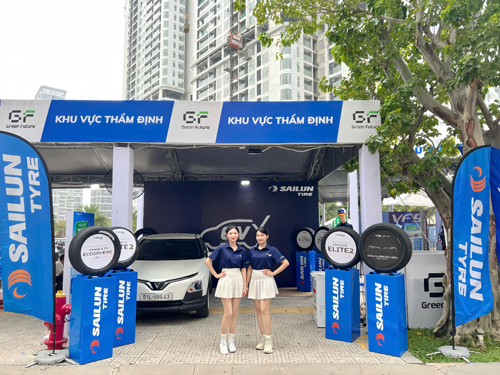
Sailun recently unveiled hybrid tires, alongside an image of a vehicle resembling a VinFast model. Photo: FANPAGE SAILUN VIỆT NAM
The strongest indication of VinFast’s hybrid plans comes from its tire supplier, Sailun, which released images of hybrid tires alongside a vehicle resembling the VF 8. Sailun also mentioned that new VinFast models like the VF 6, VF 7, and VF 9 will feature a “distinct platform,” further fueling speculation.
If these rumors prove true, it would mark a significant strategic shift. In 2022, VinFast announced it would cease gasoline vehicle production to focus solely on electric vehicles. Experts suggest this pivot to hybrids may stem from market demand, as consumers remain concerned about charging infrastructure. Hybrids offer greater flexibility, making them suitable for Vietnam’s current conditions.
Additionally, changes in tax incentives may influence VinFast’s strategy. Starting in 2026, hybrids in Vietnam will be taxed at 70% of the rate applied to internal combustion engine vehicles, making this segment more attractive to manufacturers.
However, hybrid technology, especially EREV, requires complex energy management systems, high development costs, and robust durability. Despite these challenges, in a competitive market with rapidly evolving consumer needs, the industry eagerly awaits VinFast’s next move. If the rumors are accurate, this could be a key strategy to reach a wider audience and boost its global expansion.
Enhancing Competitiveness
According to the Vietnam Automobile Manufacturers’ Association (VAMA), electric vehicles are a global trend but heavily depend on energy infrastructure. Moreover, electric vehicles are 10%-40%, or even 100%, more expensive than conventional vehicles.
As a result, many countries are shifting incentives from electric vehicles to broader new energy vehicle categories. For instance, China has removed electric vehicles from its development support list, the U.S. has cut subsidies, and Europe has significantly reduced its support.
An automotive expert notes that plug-in hybrids are popular in the U.S. and Europe for their convenience and independence from charging stations. These vehicles operate purely on electricity at low speeds in urban areas and switch to internal combustion engines for high-speed highway driving. “If VinFast introduces hybrids, they will undoubtedly gain market acceptance and compete effectively,” the expert predicts.
Assoc. Prof. Dr. Đỗ Văn Dũng, Vice Chairman of the Ho Chi Minh City Automobile and Engine Association, believes hybrids serve as a bridge during the energy transition, reducing fuel consumption and emissions without relying entirely on charging infrastructure. This is particularly important in markets with limited charging infrastructure, such as Southeast Asia, South America, and India.
Major manufacturers like Toyota, Ford, Mercedes, and BMW recognize the risks of focusing solely on electric vehicles due to high battery costs, unstable material supplies (lithium, nickel), and fluctuating policies. Therefore, they are developing diverse product lines to address these challenges.
“If VinFast plans to develop hybrids, it’s understandable, as global electric vehicle growth has slowed since 2023-2024. Meanwhile, gasoline and hybrid vehicles offer more competitive pricing, appealing to Southeast Asia, where consumers still prefer fuel efficiency,” Mr. Dũng analyzes.
MSc. Trần Anh Tùng, Head of Business Administration at the University of Economics and Finance in Ho Chi Minh City, views VinFast’s rumored hybrid production as a logical strategy, providing a crucial transitional solution suited to current infrastructure.
Infrastructure challenges are common in emerging markets, including those VinFast targets, such as Southeast Asia, India, the Middle East, and Africa. “At a national level, a Vietnamese automaker entering both pure electric and hybrid segments will enhance competitiveness, aligning with global technological diversity,” Mr. Tùng concludes.
“Swapping Two VinFast VF 8s in Two Consecutive Years, Owner Shares: ‘Having Driven All Kinds of Gas Cars, I Doubt I’d Go Back Now’”

After nearly 30 years of driving various gasoline-powered vehicles, Nguyen Anh Tuan decided to switch to the VinFast VF 8. He discovered that electric cars are not only smooth and cost-effective but also far easier to use than he had ever imagined.
Asia’s Billion-Strong Nation Welcomes VinFast and Tesla Simultaneously, but Is the American Giant Falling Behind?
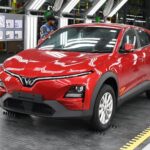
Why is VinFast outpacing Tesla in sales despite both brands emerging on the scene?
VinFast’s Brand-New Electric Vehicles Spotted at European Race Track: Launch Imminent in Ukraine’s Neighboring Country

Unveiled on a racetrack, these two VinFast electric vehicles are poised to make their debut in this market.
October 2025 Best-Selling Cars: VinFast Dominates Half the List, Only One Gasoline Model Makes Top 5
VinFast dominates the automotive market, claiming 5 out of the top 10 best-selling car models in October 2025.
What’s Captivating at VinFast’s Booth During Vietnam Industry and Technology Week 2025?

At the grand opening of Vietnam Industry and Technology Week 2025, held at the Vietnam Exhibition Center (VEC), the VinFast booth emerged as a standout attraction. Visitors flocked to experience and test-drive the latest “Made in Vietnam” electric vehicle lineup, showcasing the nation’s innovation and automotive prowess.