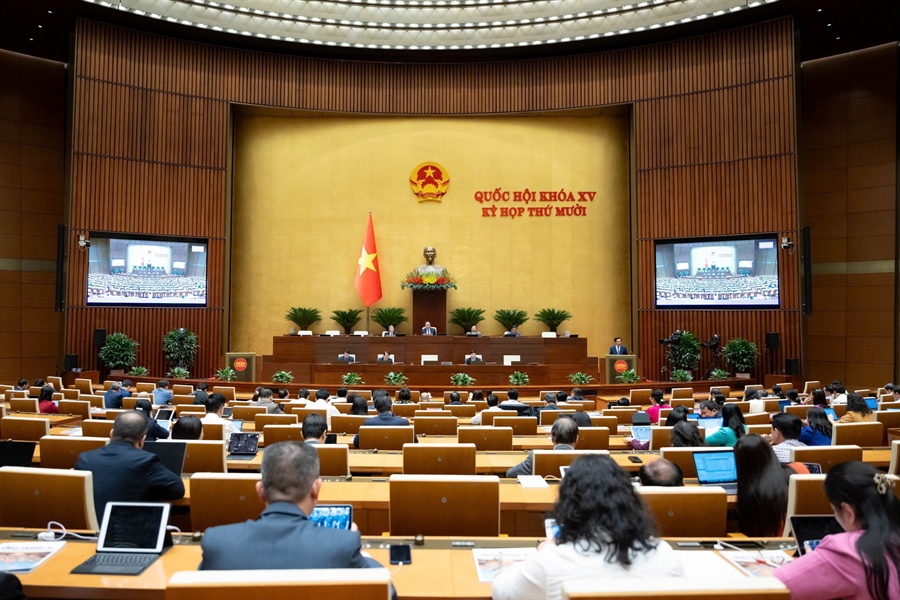
Session on November 13th. (Photo: Vũ Hiếu – Cao Hoàng)
|
This week, the National Assembly is dedicating time to discuss several key legislative projects, including the amended National Reserve Law, amendments to ten laws related to security and order, and laws in areas such as defense industry, judicial records, public debt management, insurance business, anti-corruption, tax administration, and personal income tax. Additionally, the Assembly will provide feedback on specialized laws concerning technology transfer, high technology, statistics, bankruptcy, and artificial intelligence.
A significant highlight of the fifth working week is the full-day discussion on November 20th focusing on education laws, including the amended Education Law, Higher Education Law, and Vocational Education Law, along with a draft resolution on special mechanisms and policies to implement Resolution 71-NQ/TW on breakthroughs in education and training development. The session will be broadcast live on television and radio, allowing voters and the public to fully follow the discussions.
Alongside education, the National Assembly will discuss several draft resolutions of great importance to healthcare and land management—two sectors in need of institutional unblocking. These include mechanisms for implementing Resolution 72-NQ/TW on enhancing health protection and improvement, a resolution addressing challenges in the implementation of the Land Law, and a resolution on special mechanisms and policies to enhance international integration effectiveness.
Previously, during the fourth working week (November 10-14), the National Assembly spent most of its time in the plenary session deciding on critical matters, notably personnel appointments and the adoption of the Resolution on the 2026 Socio-Economic Development Plan and the Resolution on the 2026 State Budget Estimate.
– 04:58 17/11/2025
Boosting Local Budgets: Additional $2.34 Billion Allocated for Base Salary Implementation Across Regions
In the 2026 central budget allocation, a supplementary fund of 53,554 billion VND has been earmarked to support localities in implementing the base salary of 2.34 million VND per month.
Vietnam’s National Assembly Targets Over 10% GDP Growth in 2026, Aims for Per Capita GDP of $5,400–$5,500
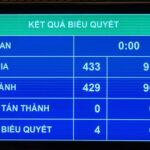
This morning, during the 10th Session of the 15th National Assembly, the National Assembly voted to adopt the Resolution on the Socio-Economic Development Plan for 2026. With 429 out of 433 participating delegates (90.51%) voting in favor, the National Assembly officially approved the Resolution on the Socio-Economic Development Plan for 2026.
Vietnam’s National Assembly Sets Ambitious 10%+ Economic Growth Target for 2026
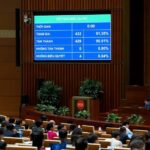
On November 13th, with an overwhelming majority of 429 out of 433 votes in favor, the National Assembly adopted a resolution outlining the socio-economic development plan for 2026. This ambitious plan sets a target growth rate of 10% or higher, marking a significant stride towards economic advancement.
Exciting News: Rice Exports, Accounting Services, and 23 Other Industries Proposed by the Government to Operate Without Business Licenses
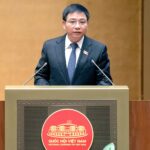
The government has submitted a draft amendment to the Investment Law to the National Assembly, proposing the elimination of conditional business requirements for 25 sectors, including accounting services and rice exports. This move aims to significantly shift from ex-ante to ex-post inspection, fostering greater business freedom and streamlining regulatory processes.
Revamped Investment Law: Streamlining Business Procedures with Proposed Cuts and Simplifications
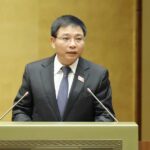
The revised Investment Law has been meticulously crafted to institutionalize the resolutions of the Party, effectively addressing institutional and legal bottlenecks. By streamlining and simplifying investment and business procedures, it empowers both citizens and enterprises, fostering a more conducive environment for growth and development.