On the morning of November 17th, continuing the agenda of the 10th Session, Minister of Health Dao Hong Lan presented the Draft Resolution of the National Assembly on breakthrough mechanisms and policies for public health protection, care, and enhancement.
The Draft Resolution comprises 7 articles, focusing on addressing strategic and breakthrough issues to promptly institutionalize Resolution 72-NQ/TW of the Politburo and to advance the healthcare sector.
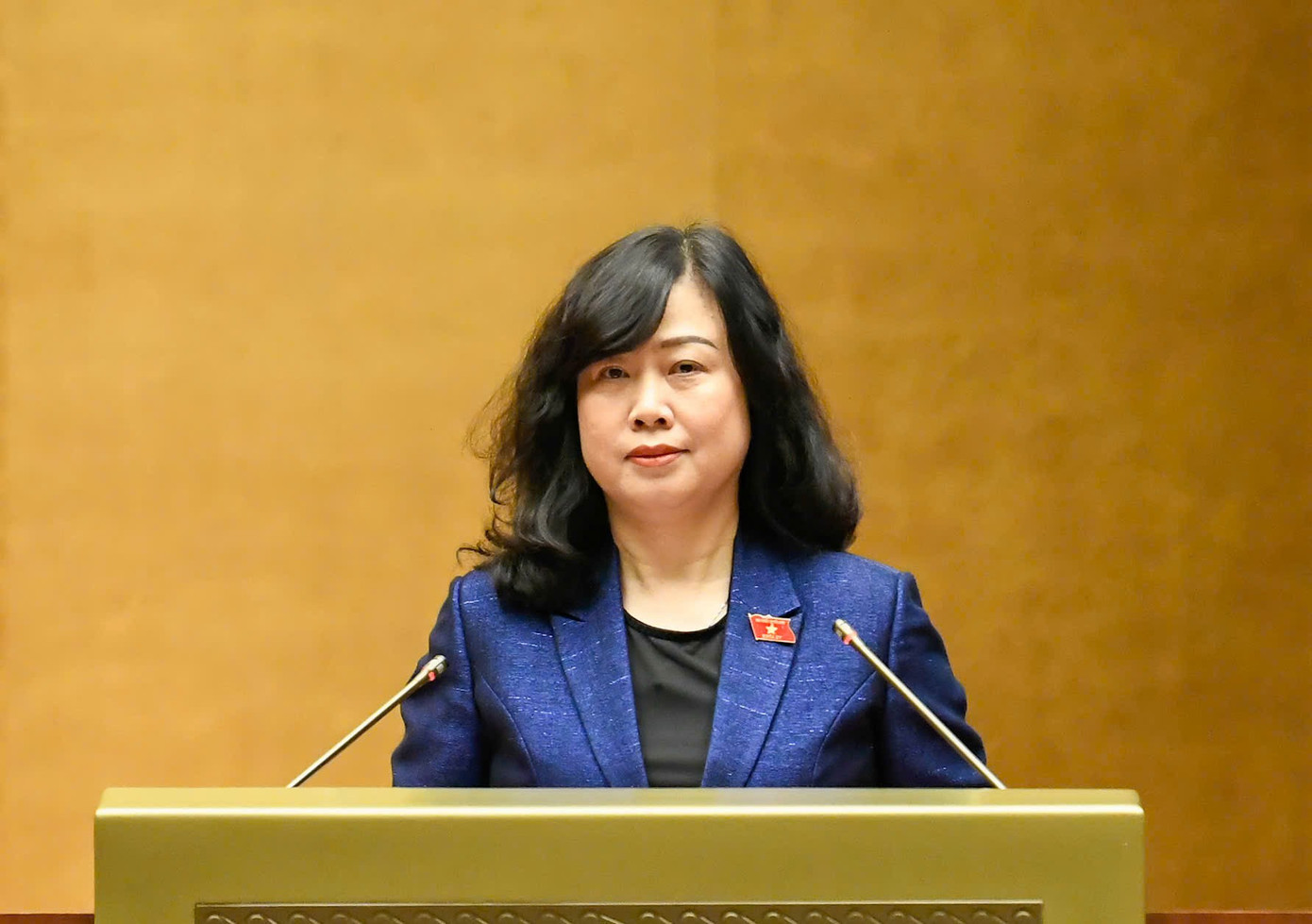
Minister of Health Dao Hong Lan. Photo: Nhu Y.
Regarding policies to reduce healthcare costs for citizens, the Draft Resolution proposes that from 2026, citizens will receive free periodic health check-ups or screenings at least once a year, based on priority groups and timelines.
Coordination will be organized between periodic health check-ups, free screenings, student health checks, occupational health examinations, employee health checks, and health insurance-covered medical services to provide free healthcare and complete the establishment of digital health records for all citizens. The government will determine appropriate funding sources for implementation.
Funding for periodic health check-ups will come from employer contributions, health insurance funds, and the state budget. The state budget will prioritize specific groups, with an estimated annual cost of 6,000 billion VND, potentially increasing gradually.
Free screening programs will be funded by the National Target Program on Healthcare, Population, and Development for 2026-2035.
The Draft Resolution also proposes waiving basic healthcare fees within health insurance benefits, following a timeline aligned with the country’s socioeconomic development.
Specifically, from 2027, 100% coverage within health insurance benefits will be implemented for near-poor households and seniors aged 75 and above receiving social pensions. This is expected to increase the Health Insurance Fund from 455 billion VND to over 2,738 billion VND.
Another proposal allows for pilot programs to diversify health insurance and supplementary health insurance packages based on citizen needs. The government recommends the National Assembly approve the pilot and delegate implementation details once conditions are met.
In his review report, Chairman of the Culture and Society Committee Nguyen Dac Vinh noted that the provision for annual free periodic health check-ups or screenings from 2026 relates to disease prevention. Most opinions suggest moving this content to the Preventive Medicine Law (under consideration at the 10th Session), clarifying financial mechanisms, target groups, priority timelines, and implementation dates, with the government providing detailed regulations. Some suggest retaining this content in the Draft Resolution, while others recommend revising “priority timeline” to “according to timelines and priority groups” for clarity.
Regarding the policy to waive healthcare fees, the Culture and Society Committee noted that paragraph 2 only addresses policy changes for health insurance participants, to be implemented from 2027 to 2030 (100% coverage for medical services within health insurance benefits). Most opinions suggest paragraph 2 should outline principles and task the government with submitting amendments to the Health Insurance Law for National Assembly approval in 2026 (adding this task to Article 6 of the Draft Resolution).
Additionally, the Committee requests the government clarify the term “waiving basic healthcare fees” within health insurance benefits and specify whether increased coverage refers to basic levels or other benchmarks.
According to Nguyen Dac Vinh, the Committee noted that some tasks and solutions outlined in Resolution 72 have not been fully researched or institutionalized in the Draft Resolution. Therefore, the drafting agency should thoroughly review and explain each provision, including those already institutionalized in related laws and programs. For tasks and solutions not yet specified in the Draft Resolution, detailed explanations and justifications should be provided to ensure alignment.