









Resolving Ho Chi Minh City’s Flood Control Project and Rach Chiec Sports Complex
During the 5th session of the Ho Chi Minh City People’s Council on November 14, delegates raised numerous questions regarding investments in transportation infrastructure connecting Ho Chi Minh City to Long Thanh Airport, ensuring timely completion before the airport’s operation. The VND 10 trillion flood control project and the Rach Chiec Sports Complex were also key topics of discussion among city leaders and departments.
In response, Chairman of the Ho Chi Minh City People’s Committee, Nguyen Van Duoc, emphasized that these are critical projects receiving special attention from the city. They will be decisively implemented to complete a synchronized, modern infrastructure system, supporting the city’s socio-economic development in the coming years.
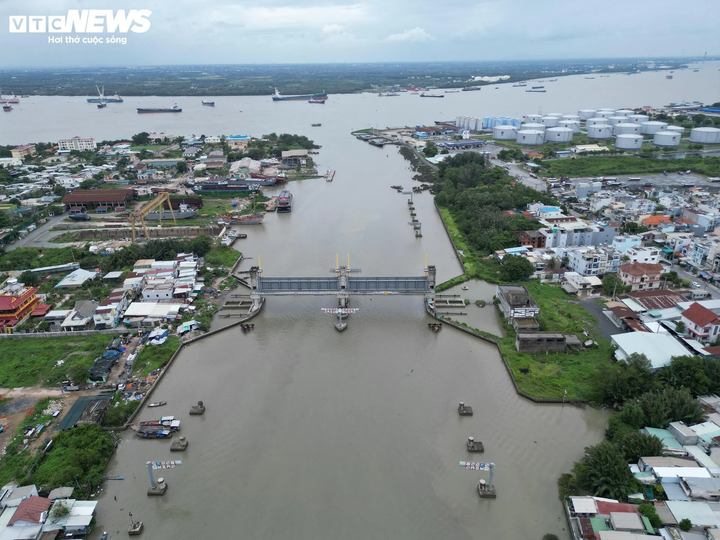
The VND 10 trillion flood control project remains incomplete after years of construction. (Photo: Luong Y)
Despite years of implementation, the VND 10 trillion flood control project is still unfinished. Both the central government and Ho Chi Minh City have shown strong commitment, issuing directives to expedite its completion.
The Ho Chi Minh City People’s Committee has held multiple meetings to review progress and propose solutions. The city is adhering to legal regulations and will honor the previously signed BT contract for payments. Additionally, an audit of the project is underway.
“Following the audit, the city will proceed with BT contract payments. The project’s effectiveness will be assessed and announced upon completion of the audit and evaluation process,” stated Mr. Duoc.
Regarding the Rach Chiec Sports Complex, Mr. Duoc confirmed that the area is included in the city’s master plan. Detailed zoning plans are complete, and the city is now seeking investors for the BT project.
“Barring any changes, the project will break ground on December 19. Approximately 5 hectares will be reclaimed for the initial phase,” added Mr. Duoc.
To facilitate new investments, the city will suspend the previously approved VND 8 trillion compensation and site clearance plan for the Rach Chiec National Sports Complex.
“The city pledges to develop the Rach Chiec Sports Complex into a modern, internationally recognized facility. Within five years of investment, Ho Chi Minh City will host a sports complex capable of accommodating international tournaments,” Mr. Duoc emphasized.
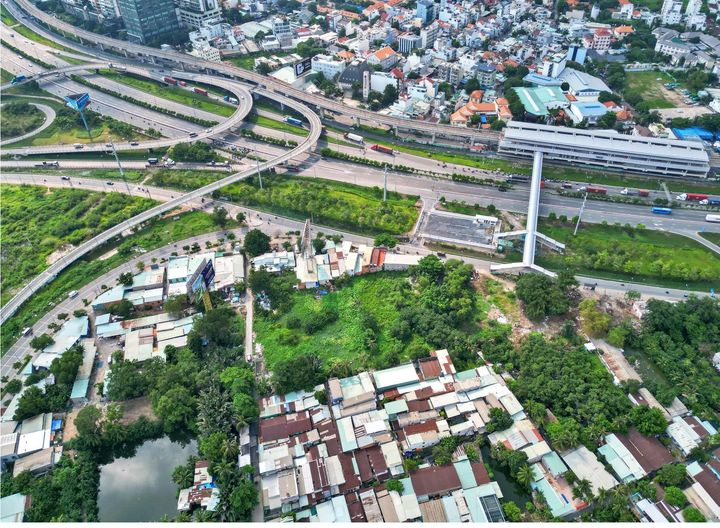
The Rach Chiec Sports Complex is scheduled to break ground on December 19. (Photo: Luong Y)
Delegate Tran Thanh Trong highlighted the necessity of investing in the Rach Chiec Sports Complex, noting Ho Chi Minh City’s lack of a large stadium suitable for hosting major sporting events.
Mr. Trong advised the city to attract reputable investors with sufficient capabilities for this large-scale project. Located between rapidly developing urban areas, the complex will enhance connectivity with Long Thanh Airport. The goal is to create a world-class sports facility that balances investor and city interests.
“Successfully developing this project will significantly boost the city’s growth. It is essential to include an international-standard stadium capable of hosting global sports events.
Currently, Ho Chi Minh City lacks a stadium suitable for major football matches or sports tournaments, which is a source of disappointment for residents,” Mr. Trong remarked.
Furthermore, Mr. Trong suggested reevaluating sports complex plans in three neighboring provinces. Previously, Binh Duong and Ba Ria – Vung Tau also proposed large sports complexes.
For instance, Binh Duong planned a 200-hectare sports complex with a 40,000-60,000 seat stadium. With the Rach Chiec project moving forward, the feasibility of these other complexes should be reassessed. Given limited resources, priority should be given to Rach Chiec, with other projects temporarily paused.
Investing in Bridges and Roads Connecting Ho Chi Minh City and Dong Nai
Regarding metro and railway connections between Ho Chi Minh City and Long Thanh Airport, as well as between Tan Son Nhat and Long Thanh Airports, Mr. Duoc announced that Ho Chi Minh City and Dong Nai Province have agreed on multiple inter-regional transportation projects. These include railways, roads, and bridges linking the two localities.

Ho Chi Minh City and Dong Nai are implementing modern transportation projects to enhance connectivity. (Photo: Luong Y)
Two priority railway projects will directly connect the airports. Dong Nai Province will lead the Long Thanh – Suoi Tien railway, while Ho Chi Minh City will manage the Thu Thiem – Long Thanh railway. Both cities have engaged investors to initiate preparatory work.
Mr. Duoc added that these railway projects are pending government approval. Once completed, a modern metro system will connect the two international airports, meeting inter-regional transportation demands.
In addition to urban railways, road and bridge projects across the Saigon and Dong Nai Rivers will enhance connectivity. The two localities plan to construct three bridges—Cat Lai, Long Hung, and Phu My 2—with construction expected to begin in early 2026.
Other road and bridge projects will further strengthen regional connectivity, in line with commitments made by both cities.
During the 6th session on November 10, the Dong Nai People’s Council approved the provincial People’s Committee’s proposal to invest in the Cat Lai, Long Hung, and Phu My 2 bridges spanning Dong Nai and Ho Chi Minh City, under a public-private partnership (PPP) model.
Dong Nai also agreed to designate managing agencies for three connection projects: Thanh Hoi 2 Bridge, Tan An Bridge, and Tan Hien Bridge.
The Ho Chi Minh City People’s Committee will manage Thanh Hoi 2 and Tan An Bridges, funded by the city’s budget.
Dong Nai Province will oversee Tan Hien Bridge, financed by the provincial budget.
$4.5 Billion Metro Lines Set to Transform Ho Chi Minh City’s Gateway, Boosting Local Real Estate Market

The Metro Line No. 1 (Binh Duong New City – Suoi Tien) and Metro Line No. 2 (Thu Dau Mot – Ho Chi Minh City) are prioritized for early investment, with a combined total investment of over $4.5 billion.
Airports, Seaports Boom Propel Top 4 GRDP Province into “Golden” Cycle, Unveiling 2 Most Investable Hotspots

Nestled within the economic powerhouse of Southeast Vietnam’s “Golden Triangle,” this province boasts an impressive GRDP of 609 trillion VND.
Proposed Capital Increase for Bến Thành – Tham Lương Metro Line to VND 52 Trillion

The proposed investment for the 11-kilometer railway line has been revised upward from 47.890 trillion VND to 52.047 trillion VND. This adjustment accounts for expanded construction scope, technology upgrades, and inflationary impacts.
Free Health Insurance for Students and Seniors Over 65 in Ho Chi Minh City

At its 5th session on November 14th, the Ho Chi Minh City People’s Council passed a resolution outlining financial support for health insurance premiums for both seniors and students residing in the city. This initiative allocates nearly 2 trillion VND to provide free health insurance coverage for over 2 million students and more than 530,000 individuals aged 65 and above.
Ho Chi Minh City Aims to Complete 232 km Metro Network by 2030
Ho Chi Minh City aims to complete 232 kilometers of Metro by 2030. The entire political system is focused on accelerating progress, mobilizing additional resources, and expanding land funds through the Transit-Oriented Development (TOD) model.