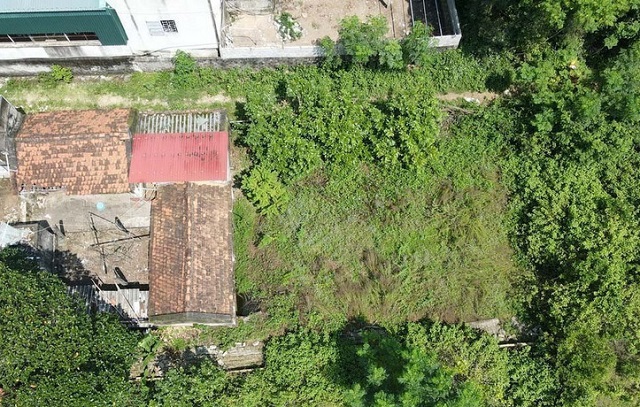
Illustrative image. (Source: TTXVN)
|
The new land price list, expected to be implemented from January 1, 2026, under the 2024 Land Law, is being finalized by local authorities, with significant increases in many urban and suburban areas.
While it is hoped that this policy will closely reflect market prices, experts are concerned that it will put considerable pressure on investment costs, selling prices, and people’s access to housing.
Dong Nai Province is developing a unified land price list to be applied across the province from January 1, 2026, replacing the two separate price lists of former Binh Phuoc and Dong Nai before their merger.
According to the draft (expected to be submitted for approval before December 31), land prices in many urban areas of the province have increased significantly, particularly for agricultural land and residential land.
For instance, in the former Binh Phuoc area, agricultural land prices have risen by 1 to 1.2 times compared to current rates, mainly along provincial roads, densely populated areas, and major traffic hubs. Residential land prices in this area have also increased by 1.1 to 1.4 times, depending on the location, with the highest increases in newly opened roads or areas undergoing urban redevelopment.
In the former Dong Nai area, agricultural land prices have increased by an average of 1.1 to 2.2 times, urban residential land by 1.6 to 9 times, and rural residential land by 2.3 to 6.8 times compared to the current price list.
Similarly, Hanoi’s Department of Agriculture and Environment recently submitted a draft for the first Land Price List, to be announced and applied from January 1, 2026. According to the draft, residential land prices in Hanoi are expected to increase by 2-26% compared to the current price list.
Central areas within Ring Roads 1, 2, and 3 will see a slight increase of about 2%, with the highest price reaching over 702 million VND/m², applicable to prime locations on streets like Ba Trieu, Dinh Tien Hoang, Hai Ba Trung, Hang Dao, Ly Thuong Kiet, and Tran Hung Dao.
In contrast, outlying districts such as Me Linh, Dong Anh, Hoai Duc, An Khanh, Thanh Tri, Thuong Tin, and Thanh Oai have recorded higher increases, ranging from 16% to 26%.
A representative from Ho Chi Minh City’s Department of Agriculture and Environment stated that the department is urging wards, communes, special zones, the Ho Chi Minh City Tax Department, local tax offices, and the Land Registration Office, along with relevant agencies, to promptly provide land price data for roads, planned routes, and resettlement projects for compilation, calculation, and adjustment.
Once the price data is available, the Department will submit the draft land price list to the Vietnam Fatherland Front Committee of Ho Chi Minh City and publish it on the city’s information portal for public consultation from agencies, organizations, and citizens.
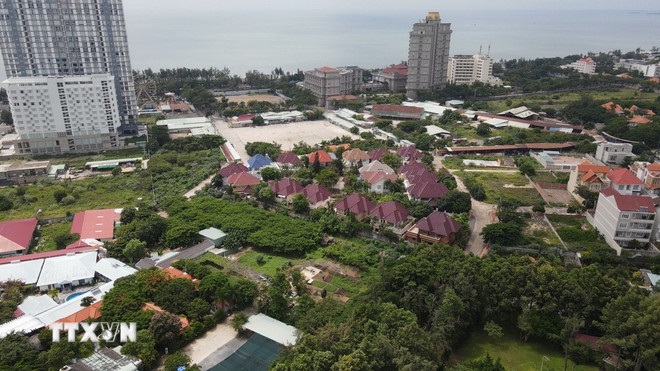
Photo: Hoang Nhi/TTXVN)
|
Subsequently, the Department will consolidate and submit the draft to the Land Price Appraisal Council for feedback, send it to the Department of Justice for legal review, and compile a report for the People’s Committee of Ho Chi Minh City, along with the draft land price list, for submission to the People’s Council for approval.
Experts argue that adjusting the land price list is necessary to reflect market values accurately and increase budget revenue. However, if not properly controlled, the policy could inadvertently lead to adverse effects.
The new land price adjustments in localities will have far-reaching impacts on various groups. For real estate businesses, compensation costs, land use fees, and site clearance expenses will rise, driving up overall project investment.
For residents, increased land use costs may lead to higher housing prices, affecting affordability. From a macroeconomic perspective, there is a risk of increased credit risk and impacts on investment.
Therefore, experts and related professional associations recommend that the policy be adjusted flexibly, tailored to each area and development goal. The land price list should primarily serve compensation and site clearance purposes, rather than being used solely to regulate market supply and demand.
Mr. Nguyen Van Dinh, Chairman of the Vietnam Real Estate Brokers Association, analyzed: “If the land price list is developed to closely follow market prices, while market prices are being unreasonably inflated, the state will inadvertently validate an unrealistic price level. In this case, the price list will become a price anchor, making it difficult for the market to adjust to a reasonable level.”
“Moreover, increasing the land price list will raise input costs for project developers, thereby increasing product costs and selling prices, and reducing residents’ access to housing,” Mr. Dinh advised.
From an expert’s perspective, Dr. Tran Xuan Luong, Deputy Director of the Vietnam Real Estate Market Research and Evaluation Institute, believes that a land price list with significant increases at this time is not aligned with the government’s directive to control housing prices.
In reality, land-related costs typically account for 30-50% of real estate prices. When the price list increases, all stages from compensation and site clearance to financial obligations will rise accordingly.
“This is like ‘adding fuel to the fire’ when management agencies are trying to stabilize the market and housing prices. It is crucial to synchronize policies when adjusting the land price list, especially regarding taxes, land data, and pricing procedures. If land prices are increased in isolation without improving tax systems and transparent information mechanisms, it will backfire and destabilize the market,” the expert noted.
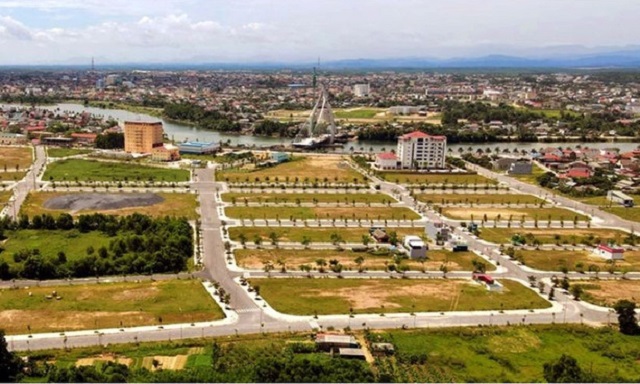 Illustrative image. (Source: Nguyen Linh/TTXVN)
|
According to Mr. Luong, the government should temporarily delay approving new land price lists until a comprehensive database, pricing mechanisms, and land taxes are in place. At that point, adjustments will both align with market conditions and avoid market disruptions, contributing to the government’s goal of stabilizing housing prices.
Resolution No. 339/NQ-CP by the Government on the draft National Assembly Resolution outlining mechanisms and policies to address difficulties in implementing the Land Law has proposed applying land price lists for each land type, area, and location to calculate land use fees, land rent, and compensation when the state recovers land.
Among these, the Government has clearly outlined the direction: Eliminate “specific land prices” and transition to a mechanism using land price lists as the basis for calculating land use fees, land rent, and compensation when the state recovers land. Additionally, develop adjustment coefficients and land use fee rates for each land type, area, and usage form./.
Thu Hang
– 09:04 18/11/2025
Essential Insights on Land Reclamation and Compulsory Land Acquisition

Land reclamation through compulsory acquisition has been and is currently taking place in several localities. Our legal experts are here to address any questions or concerns you may have regarding this complex issue.
₫6 Billion Still Falls Short for Buying an Apartment in Hanoi
Owning a 2-bedroom apartment in the city center for just 6 billion VND seems like a dream come true, but the reality is far more challenging than it appears.
Reining in the Surging House Prices: Urgent Solutions for a Cooling Market
The Vietnam Association of Realtors (VARS) emphasizes that to ensure sustainable growth in the real estate market without excessive risk, it is crucial to implement measures that curb the rapid rise in housing prices. The most critical solution lies in unlocking a sufficient supply of affordably priced housing. When the supply is ample, market prices will naturally stabilize, aligning with the true balance of supply and demand.
Hanoi, Ho Chi Minh City Apartment Prices Surge, Outpacing Real Income Growth: VARS Warns of Potential Housing Bubble Risk
VARS expresses concern that the sharp rise in housing prices not only limits access to affordable homes for the majority of the population but also heightens the risk of a price bubble forming.
Taxing Frequent Real Estate Traders: A Path to Fairness?

When property taxes are strategically implemented, they can serve as a powerful economic lever, effectively deterring speculative investors from artificially inflating the market.