In recent years, as the Long Thanh International Airport gradually takes shape on a vast 5,000-hectare site, not only Dong Nai and Ho Chi Minh City but the entire Southeast region of Vietnam stands on the brink of an unprecedented transformation.
A “super airport,” poised to become the nation’s largest aviation gateway, is set to commence operations, signaling a complete overhaul of the economic, urban, and logistics landscape of Southern Vietnam.
Amid this shift, Vung Tau emerges as the prime beneficiary. Its proximity to the airport is undeniable, but it’s the city’s unique ecosystem—comprising an international deep-water port, supporting industries, energy resources, maritime logistics, and a well-established tourism hub—that sets it apart from other locales.
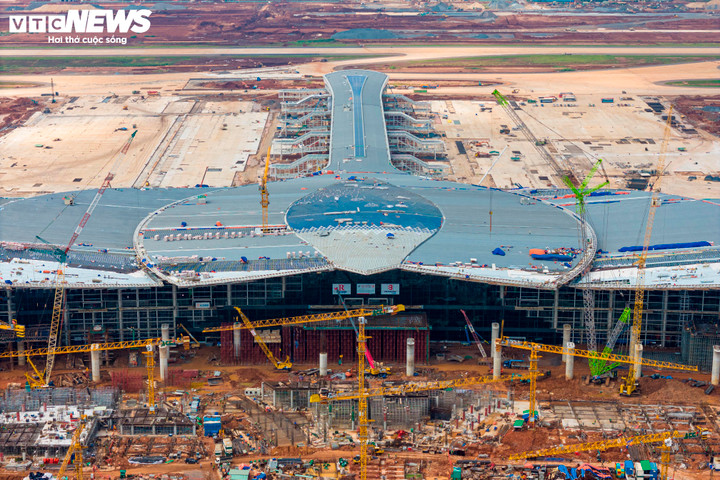
A panoramic view of Long Thanh Airport ahead of its inaugural flight. (Photo: Luong Y)
With Long Thanh’s operationalization, these elements are poised for activation, propelling Vung Tau into a new era of growth. This is no longer a matter of potential but a tangible, unfolding reality.
The Bien Hoa – Vung Tau expressway reduces travel time to just 40-50 minutes, a privilege unmatched by any other coastal city in Central or Northern Vietnam. In an era where tourism competitiveness hinges on accessibility and service quality, this sub-hour beach access is a golden advantage.
Previously, international visitors to Vung Tau endured a 100+ km journey from Tan Son Nhat Airport, often plagued by traffic congestion, taking 2-3 hours. Now, this duration is halved, a critical factor for high-end tourists, MICE groups, foreign experts, and FDI investors who prioritize travel efficiency.
As Long Thanh Airport progresses from Phase 1’s 25 million annual passengers to its full capacity of 100 million, Vung Tau’s near-instant connectivity positions it as the top destination for this influx.
Beyond tourism, Vung Tau stands to expand its luxury real estate, international conference centers, beachfront entertainment complexes, and high-end wellness tourism, catering to affluent travelers.
Designed as a regional aviation hub, Long Thanh Airport will converge international cargo, logistics, rapid transit, cross-border e-commerce, and aviation-industrial-urban services. Such hubs invariably catalyze economic, industrial, and urban migration to neighboring areas.
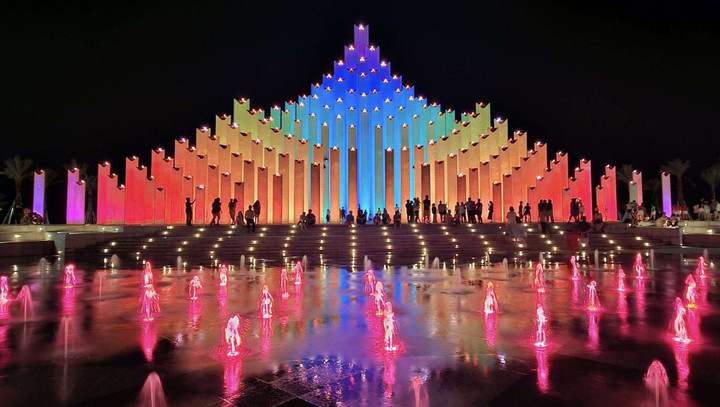
The vibrant Tam Thang Tower and Square illuminated at night. (Photo: Hai Trieu)
Long Thanh expedites not only passenger flow to Vung Tau but also: Shortens cargo transit from airport to seaport; Enables seamless air-sea logistics integration; Enhances appeal for foreign investors seeking port and airport proximity; Fosters a new economic corridor from Long Thanh to Phu My and Vung Tau.
The synergy of air, sea, road, and rail infrastructure propels Vung Tau toward its goal of becoming a regional logistics hub and Vietnam’s primary export-import gateway.
To fully capitalize on the “Long Thanh momentum,” Vung Tau is undergoing its most intensive infrastructure development phase in years.
Road: The Bien Hoa – Vung Tau expressway, coastal routes, and Phu My – Long Hai connectors are unlocking new urban and industrial spaces.
Sea: The Cai Mep – Thi Vai port complex continues to expand, maintaining its status as a direct Europe-America container hub.
Air: Long Thanh serves as a launchpad for tourism, trade, and investment.
Rail: The Bien Hoa – Vung Tau line is accelerating, promising to alleviate road congestion and enhance cargo sharing with ports.
This comprehensive transport ecosystem not only accelerates Vung Tau’s growth but also ensures sustainability, reduces transport costs, and boosts business competitiveness.
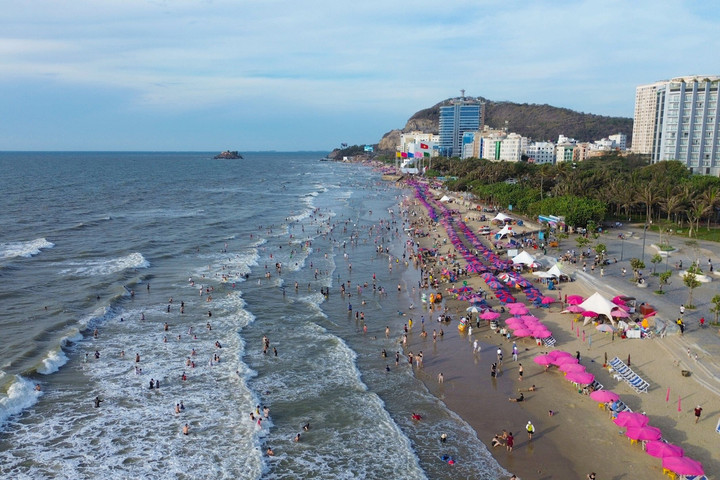
A serene beachfront in Vung Tau. (Photo: Thac Hieu)
Long Thanh Airport presents both opportunity and imperative: Vung Tau must surge ahead to avoid lagging as the Southeast region enters a new developmental phase.
This critical juncture demands Vung Tau’s tourism evolution toward luxury, experiential, and 4-5 star offerings, leveraging ultra-short airport transfers; Urban and industrial expansion into Phu My, Chau Duc, and Long Son; Vigorous FDI attraction, particularly in energy, petrochemicals, and maritime support services.
With its unique port ecosystem, maturing infrastructure, and the “aerial catalyst” of Long Thanh, Vung Tau faces a once-in-decades opportunity.
Never has Vung Tau been better positioned. Long Thanh Airport not only opens pathways but also exerts positive pressure for Vung Tau to rethink planning, pivoting decisively toward a high-quality maritime, industrial, and service-oriented urban model.
Transitioning from a traditional tourism stronghold, Vung Tau is poised for metamorphosis into a new growth pole. With Long Thanh’s inauguration, Vung Tau’s developmental horizons will expand farther than ever before.
Unveiling the First Social Housing Project Adjacent to the $16 Billion Mega Development: Pre-Launch Sale Announced with a Shockingly Affordable Price
The meticulously planned residential project in Long Thanh Commune has set its starting price at just 20.9 million VND per square meter (inclusive of VAT, excluding maintenance and management fees).
Long Thanh Airport & Upcoming Infrastructure Projects: A Golden Opportunity for Vung Tau’s Transformation
As the Long Thanh Airport nears completion, the infrastructure landscape of Southern Vietnam is taking shape, revealing a “golden development axis” connecting Ho Chi-Minh City, Long Thanh, and Vung Tau. This emerging corridor promises to unlock unprecedented growth for one of the nation’s most dynamic economic regions.
The $1.4 Billion Coastal Urban Development Project in Ho Chi Minh City: A Comprehensive Overview

After six months of construction, the internal roads of Blanca City have been paved with asphalt, numerous villas are nearing completion, and the largest water park in the South is taking shape.
Ho Chi Minh City Chairman Nguyen Van Duoc: Upcoming Bridges and Roads to Connect HCMC and Dong Nai

Chairman Nguyễn Văn Được announced a series of bridge and road projects connecting Ho Chi Minh City and Dong Nai are underway or planned, with immediate priority given to Metro lines linking Long Thanh Airport.
Vietnam Set to Launch $14.1 Billion Mega Coastal Project Spanning 4,300 Hectares, Proposed by Vingroup

This is a cutting-edge port complex and logistics hub, seamlessly integrating state-of-the-art infrastructure with unparalleled efficiency to redefine global supply chain operations.