











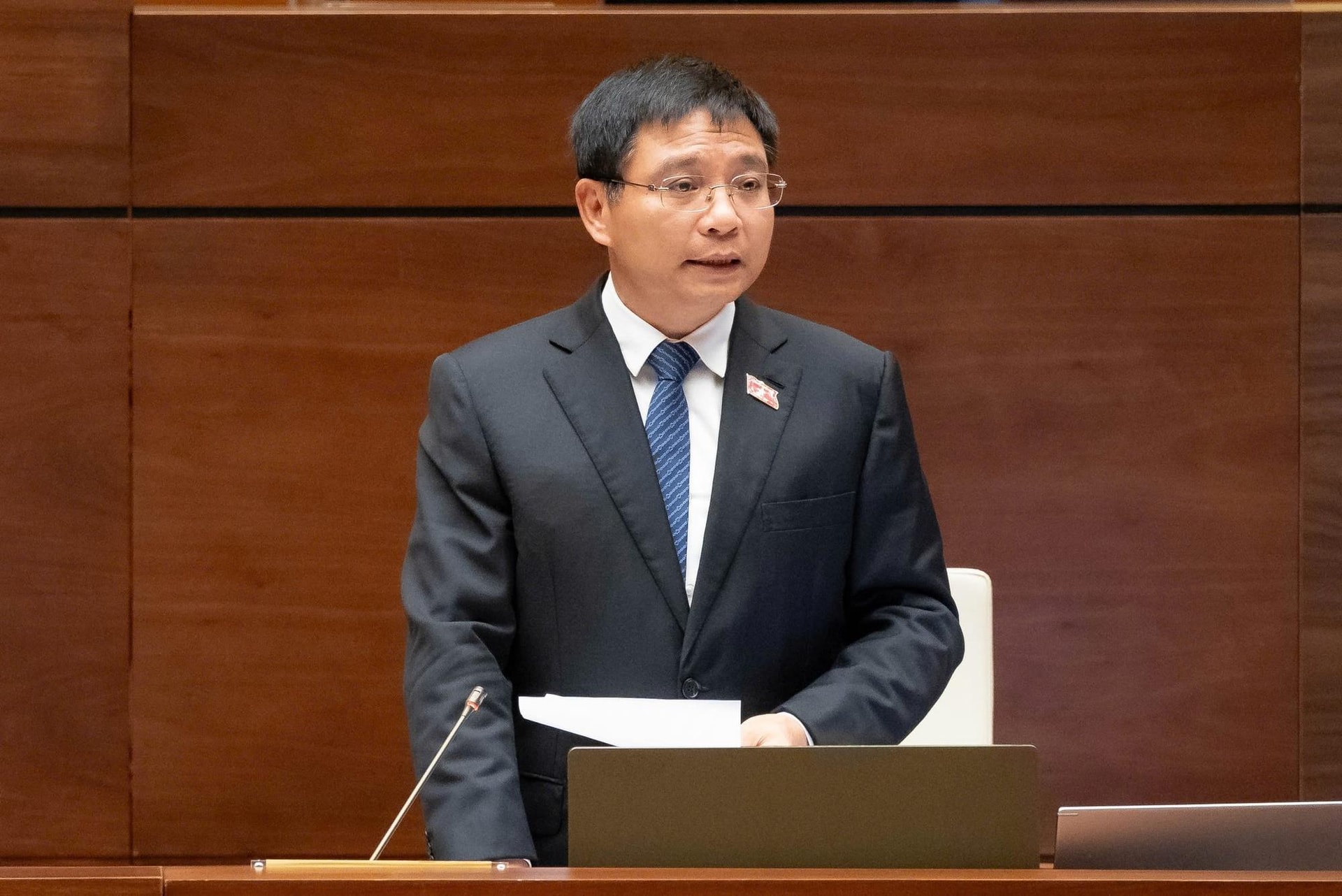
Image: Minister Nguyen Van Thang (Quochoi.vn)
During the discussion session, Delegate Tran Van Lam (Bac Ninh delegation) expressed concerns that the new tax calculation method requires households and individual businesses to pay taxes on every dong of revenue above 200 million VND per year, regardless of whether the business is profitable or not. Additionally, these households and individuals are not entitled to personal or family deductions, unlike salaried employees.
Addressing this issue, Minister Nguyen Van Thang acknowledged that this is indeed a challenging and complex matter. Tax collection from business households has been consistently implemented for many years, and the current method remains largely unchanged.
Previously, a lump-sum tax was applied, where businesses self-declared a fixed amount for payment. Now, the system has shifted to a declaration-based method.
The Minister highlighted that since the transition to the declaration-based method, coupled with the adoption of information technology, tax revenue has increased by 64%. This underscores the necessity of this change.
The new method mandates that business households declare their actual revenue rather than relying on lump-sum taxes.
“Previously, taxes were levied on incomes above 100 million VND per year, and now the threshold has been raised to 200 million VND per year. Therefore, it cannot be said that we are creating difficulties for business households,” the Minister explained.
However, the Minister agreed with the delegates’ viewpoint that fairness is paramount. The Ministry of Finance will consider their feedback to ensure equitable taxation between business households and salaried employees. According to the Minister, the Ministry will explore an appropriate tax threshold for business households.
Must-Know Benefits and Considerations for Household Businesses Earning Over 200 Million VND/Year When Switching from Lump-Sum Tax to Declaration Model

As of January 1, 2026, new tax regulations for businesses will be implemented in accordance with Resolution 198/2025/QH15 and Decision 3389/QD-BTC. Business owners with annual revenues ranging from 200 million to 3 billion VND should take note of the following key points.
Finance Minister Confirms More Favorable Tax Policy for Household Businesses: Threshold Increased from 100 Million VND to 200 Million VND Annual Revenue

Minister of Finance Nguyen Van Thang stated that the fundamental tax calculation method remains unchanged. Previously, it was based on a fixed tax system (where business owners self-declared revenue), whereas now it relies on revenue declaration. Transitioning to this declaration system significantly reduces losses, particularly in economically developed areas.
Eliminating Lump-Sum Tax: Business Households Grapple with Input Invoice Declaration

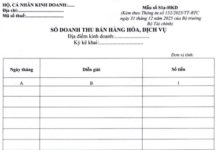
As of January 1, 2026, the lump-sum tax will be officially abolished, requiring business households to declare taxes or transition to a corporate model. The Hanoi Tax Department has provided detailed guidance addressing key concerns, including input invoice declarations and inventory management, even for goods purchased from individuals.
Deputy Tax Director: Setting a Tax Exemption Threshold at VND 200 Million or Below Would Exempt 44% of Businesses

Tax authorities have pledged to streamline administrative procedures and reduce compliance costs by approximately 45%, emphasizing their commitment to easing the burden on taxpayers.
“Deputy Director of the Tax Department: The More Transparent and Open Businesses Are, the Less Likely They Are to Face Administrative Violations”
Mr. Mai Sơn, Deputy Director of the Tax Department, emphasizes: “The more transparent and compliant business households are, the less likely they are to face administrative violations. With proper collaboration with tax authorities, those who adhere to regulations will not be subject to inspections. In practice, audits are only conducted when there is a perceived risk.”