












Our data reveals that in the first nine months of the year, apartment prices in Ho Chi Minh City surged significantly in both the primary and secondary markets, averaging a 25-30% increase compared to the same period last year. This rapid price growth has led to numerous resale transactions yielding profits ranging from hundreds of millions to billions of Vietnamese dong.
However, according to investors, these gains are often just enough to “break even,” especially for those leveraging financial instruments or purchasing at peak prices.
Mr. Tran Minh, an investor from An Binh Ward, recently sold a two-bedroom apartment in District 9 for 6 billion VND. Compared to his purchase price of 4.9 billion VND in 2021, he profited 1.1 billion VND. Yet, having borrowed 2.4 billion VND from a bank for the investment and paid interest over several years, his net profit after expenses was negligible.
Similarly, Ms. Thao Nguyen from Minh Phung Ward bought an apartment in Di An in 2020 for 1.6 billion VND and sold it in October for 2.1 billion VND. After deducting loan interest of nearly 350 million VND, her actual profit was only about 150 million VND, equivalent to a 2% annual return.
Mr. Pham Trung Hieu, an investor in Di An, shared that the recent price surge merely helped him avoid a loss. In 2020, he purchased an apartment in Thuan An (formerly Binh Duong) for 3.2 billion VND. After a prolonged market stagnation, he held the property for over five years before selling it recently for 3.7 billion VND, just enough to cover his loan interest.
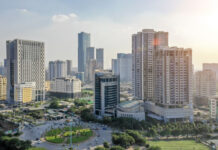
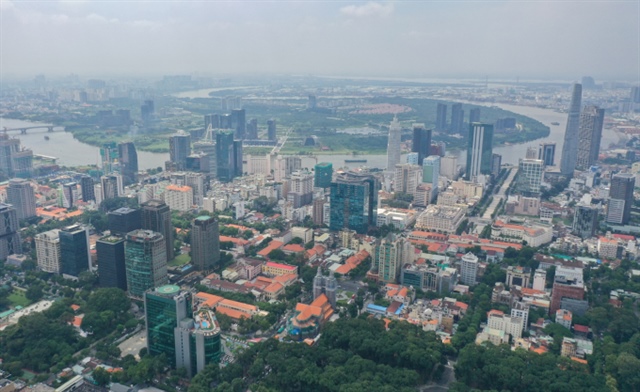 Ho Chi Minh City’s real estate market in the city center. Photo: Quynh Tran |
In reality, price increases of hundreds of millions to billions of dong are only the “tip of the iceberg,” as they depend on purchase timing, available capital, borrowing costs, and holding periods. Expenses such as loan interest, management fees, and opportunity costs can significantly erode profits—factors often overlooked by new investors focusing solely on nominal price gains.
Real estate expert Le Quoc Kien analyzed that investors who bought in early 2024, when prices were stable and the market had not yet entered a clear uptrend, are benefiting the most. They purchased at the beginning of the wave and cashed in during the second half of 2024. In contrast, those who bought between 2020 and 2021 are merely breaking even or earning minimal profits, as their current gains are spread across multiple years of holding.
Mr. Kien cited an example of a project launched over a year ago, where prices rose from 7-8 billion VND to around 1 billion VND, a 20% increase. Annually, this equates to a 12-13% return. However, for investors who bought in 2020-2021, after deducting expenses and loan interest, the profit drops to 6-7%.
According to Dinh Minh Tuan, Director of Batdongsan in the Southern region, after the 2019-2021 boom, apartment prices and liquidity in the South plateaued from mid-2021 to 2023, even declining in some projects. By mid-2024, capital inflows from the North, coupled with limited supply and product diversity, made apartments a standout choice, driving prices up significantly.
Mr. Tuan noted that the current uptrend is the result of years of accumulation. Investors who bought from late 2023 to early 2024 are reaping the most benefits, while earlier buyers, especially those using leverage, are seeing lower-than-expected profits.
Amid rising development costs and land prices, experts predict apartment prices will remain stable but are unlikely to see sharp increases. Additionally, mortgage interest rates rising from 1.5% to 2% are increasing borrowing costs, reducing actual investor profits and slowing apartment liquidity. In fact, liquidity in many apartment projects has stalled following the interest rate hike, a significant warning sign.
Experts advise investors to carefully calculate total costs, financial capacity, and holding periods before entering the market, rather than focusing solely on price gains. Many newcomers are drawn to resale profits of billions of dong without considering borrowing costs, opportunity costs, and time, leading to overestimated profits. Choosing the right purchase timing, projects with potential, and preparing contingency plans are crucial for success in apartment investing, especially when using financial leverage.
Furthermore, experts recommend prioritizing projects with high liquidity, prime locations, transparent legal status, and diverse product offerings, avoiding “artificial frenzies.” “Thorough market assessment and clear goal-setting will help investors manage risks and optimize long-term profits.”
Phuong Uyen
– 02:16 22/11/2025
Cooling Down Skyrocketing Scallion Prices: $5/kg and Rising – What’s the Solution?

Soaring vegetable prices have left both homemakers and food business owners reeling in shock.
Residents Demolish Homes, Clearing Land for Nguyen Khoai Bridge Construction
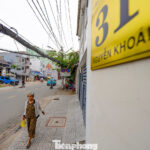
In Vĩnh Hội Ward, Ho Chi Minh City, numerous residents have proactively demolished their homes and handed over land for the Nguyễn Khoái Bridge project, spanning the Tẻ Canal and Bến Nghé Creek. This strategic infrastructure will connect District 7 and District 4 to the historic core of District 1, aiming to alleviate congestion along the city’s southern axis.
Dong Nai to Implement Lane Separation on National Highway 51 in Sync with Ho Chi Minh City

To ensure smooth, safe, and synchronized traffic flow, Dong Nai will implement dedicated lanes for cars and motorbikes on National Highway 51, mirroring the successful model adopted in Ho Chi Minh City.
How Will Ho Chi Minh City Manage Thousands of Public Properties Post-Merger?
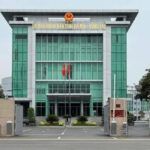
Following the merger, Ho Chi Minh City now possesses thousands of state-managed properties, land plots, buildings, and headquarters that remain unused. As a result, the Department of Finance has been urgently tasked with advising and proposing solutions to the HCMC People’s Committee for the efficient handling and allocation of these public assets, ensuring optimal use and preventing wastage.
Ho Chi Minh City Pilots Pork Trading Platform in December
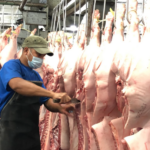
The Director of the Department of Industry and Trade in Ho Chi Minh City has announced that the city will pilot a pork trading platform in December, with plans for official operations by the end of Q1 2026.