

















Midnight Construction on the Hau River
As riverside communities along the Hau River drift into deep sleep, the Dai Ngai 1 Bridge construction site, a key component of the Dai Ngai Bridge Project on National Highway 60, remains bustling with activity throughout the night. From the river’s surface, the floodlights from scaffolding, barges, and work zones cast a vast glow across the water, illuminating the tireless efforts of workers in every corner.
After over a year of construction, the Dai Ngai 1 Bridge is beginning to take shape. This critical infrastructure project connects Vinh Long and Can Tho, replacing the overburdened Dai Ngai ferry and establishing a new transportation axis for the Mekong Delta region.
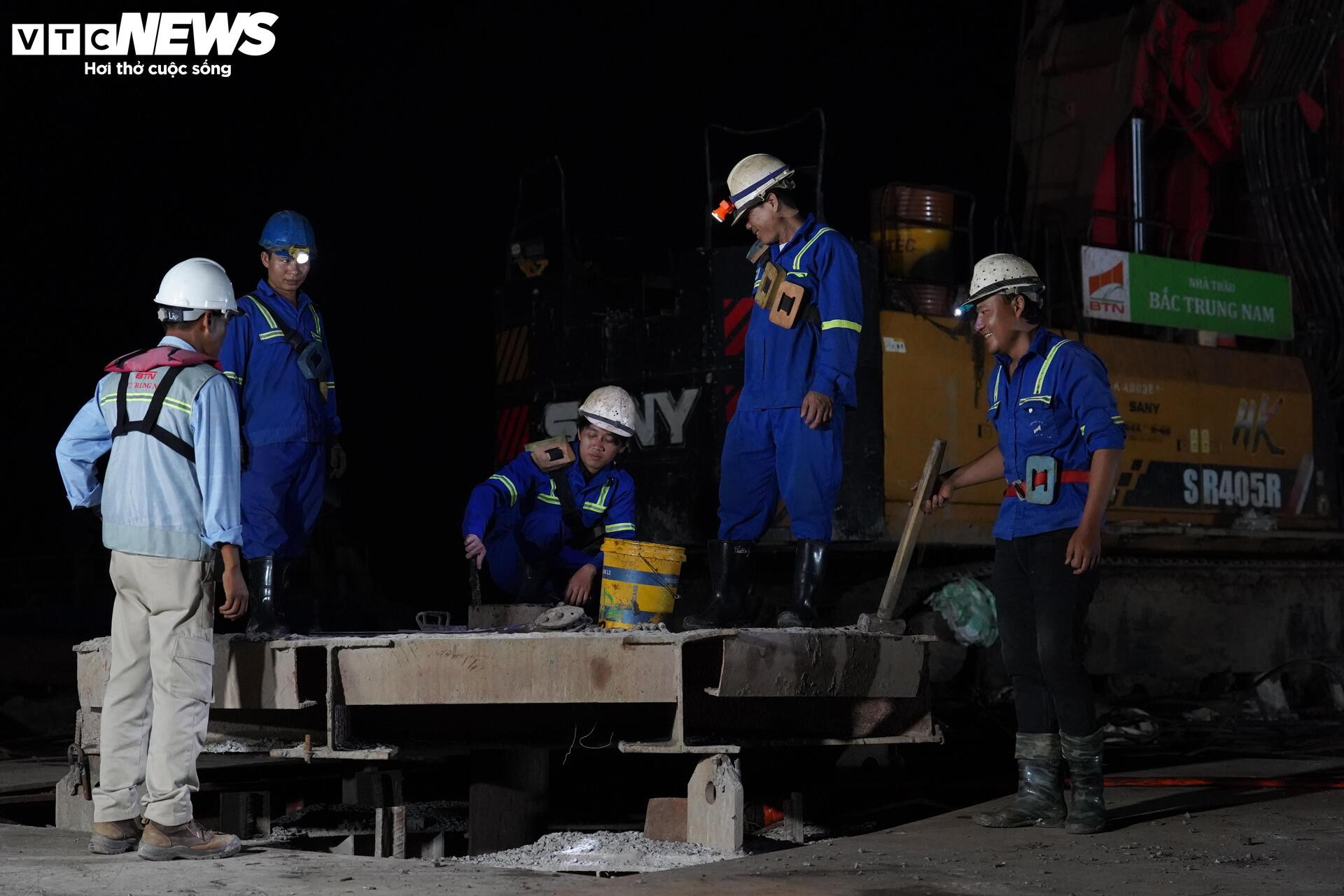
VTC News reports capture the bustling activity at the construction site, even in the dead of night.
Managed by Project Management Unit 85 (Ministry of Construction), the project adheres to the highest standards for cable-stayed bridges, spanning over 3 km in length. The main bridge stretches 2.59 km with a 21.5-meter-wide deck, crossing the Dinh An waterway—a vital maritime route connecting the Mekong Delta to the sea.
The two main towers stand at 110 meters tall, featuring an A-shaped structure with a 450-meter main span, second only to the Can Tho Bridge in scale within the region. Notably, this is the first large-scale cable-stayed bridge in Vietnam designed and constructed entirely by domestic consultants, marking a significant leap in the country’s bridge-building capabilities.
The entire project includes two main bridges (Dai Ngai 1 and Dai Ngai 2), five interchanges, seven bridges, and an extensive road network. Package 15XL, responsible for constructing Dai Ngai 1 and its approach roads, is valued at over 3.907 trillion VND. Work began in December 2024, with completion expected by June 2028.
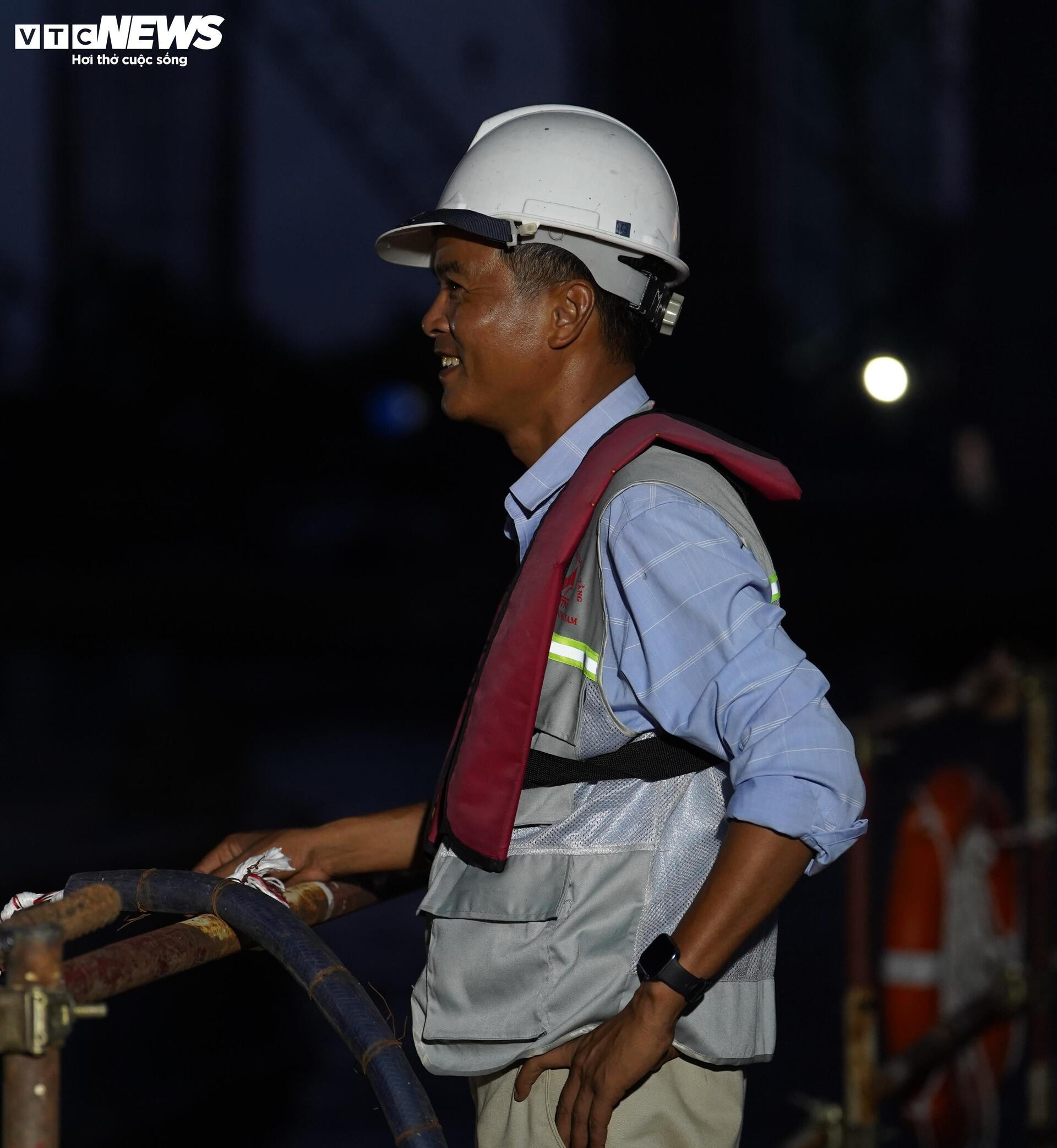
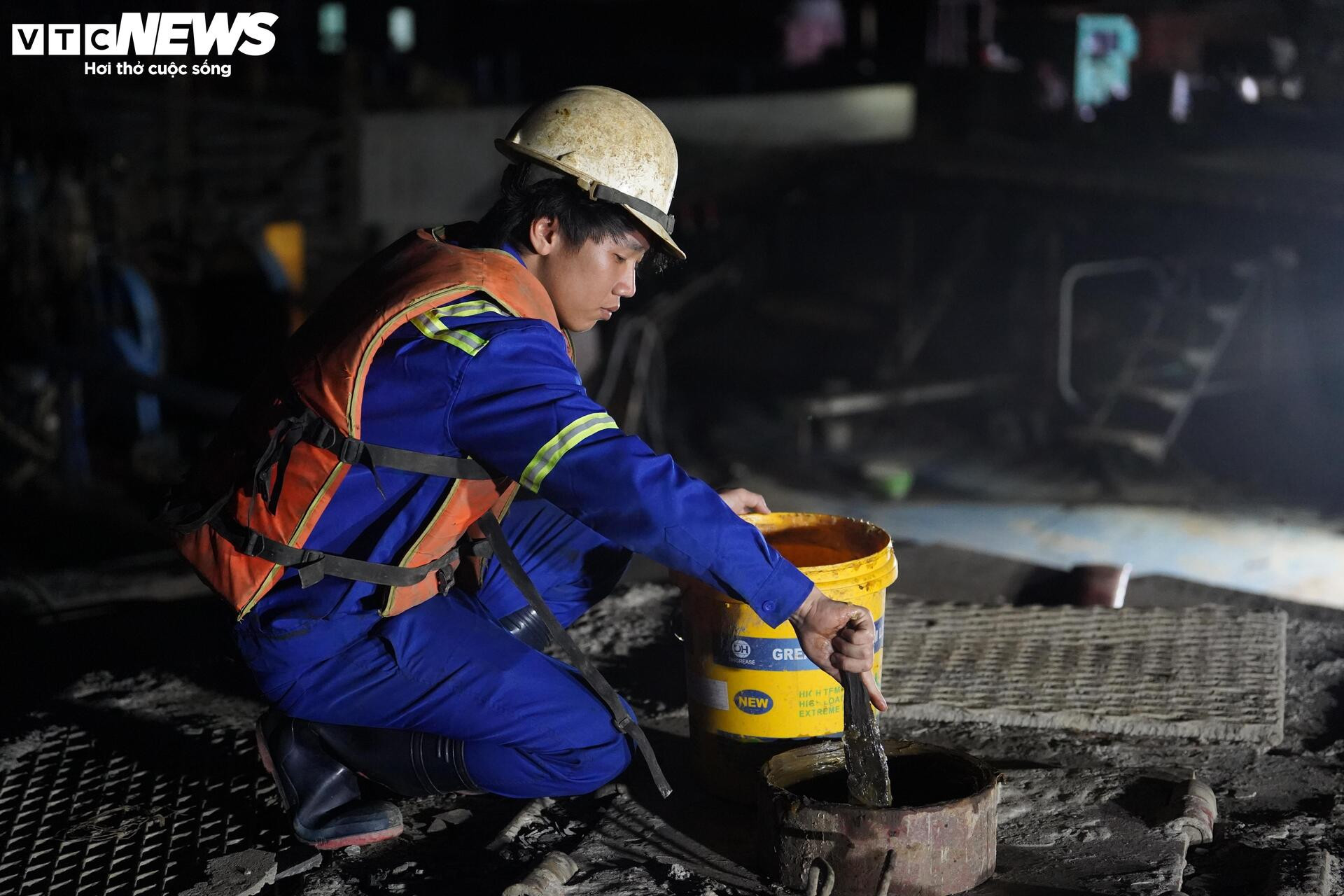
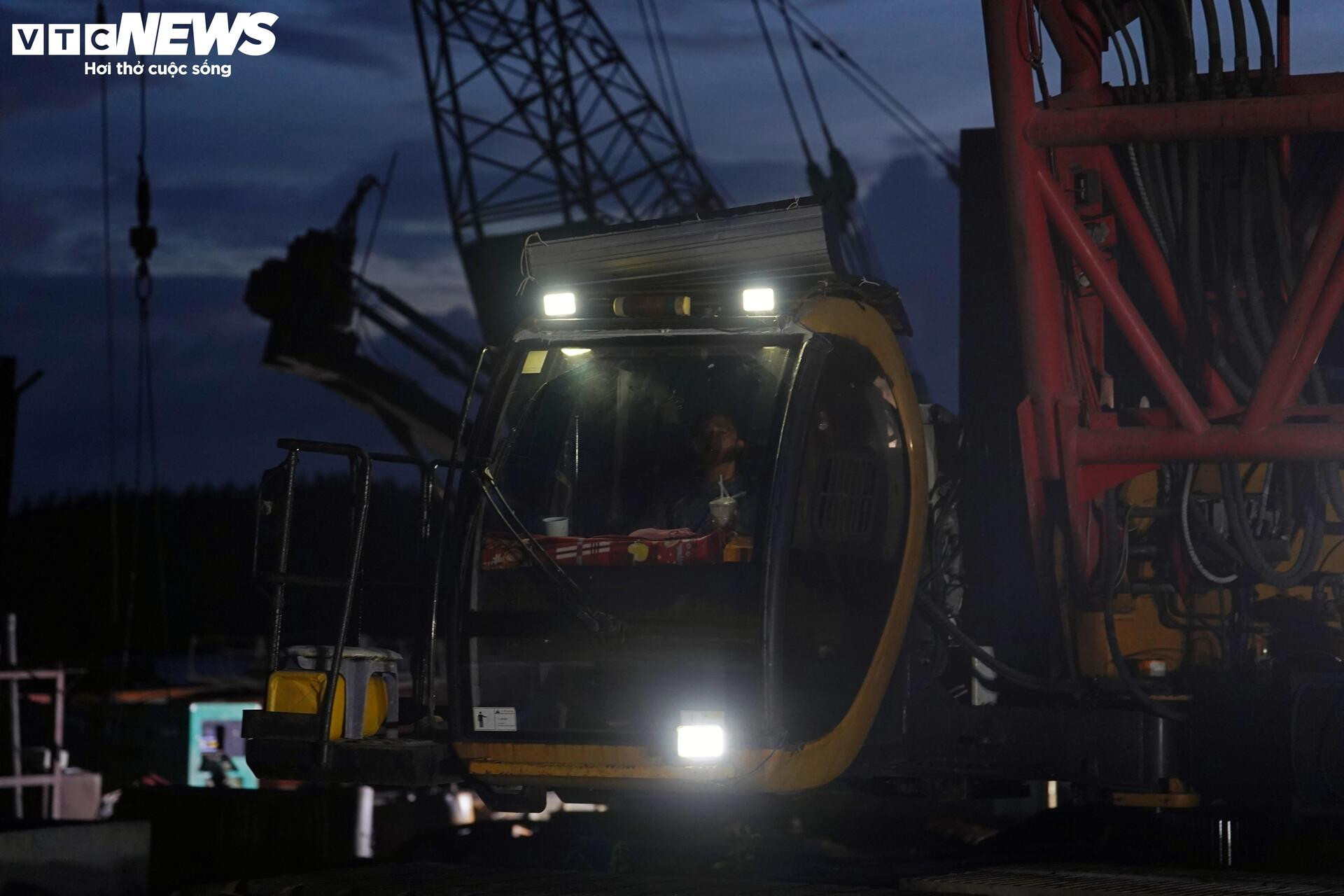
Construction proceeds at a rapid pace to ensure project timelines are met.
VTC News reports reveal that the site operates as efficiently at night as during the day. The rhythmic sounds of pile driving, barge engines, steel clanging, and workers’ communication blend into the symphony of a major construction site.
Over 300 engineers and workers are deployed in three continuous shifts to maintain progress. Each team closely monitors tidal patterns, ensuring materials and equipment are ready to maximize every favorable construction window.
On the river, pile drivers continuously plunge into the riverbed. As each pile penetrates the clay layer, the water churns, creating swirling white eddies. Amid the machinery’s roar, engineers’ radio commands and workers’ synchronized calls echo as they assemble formwork and position steel cages.
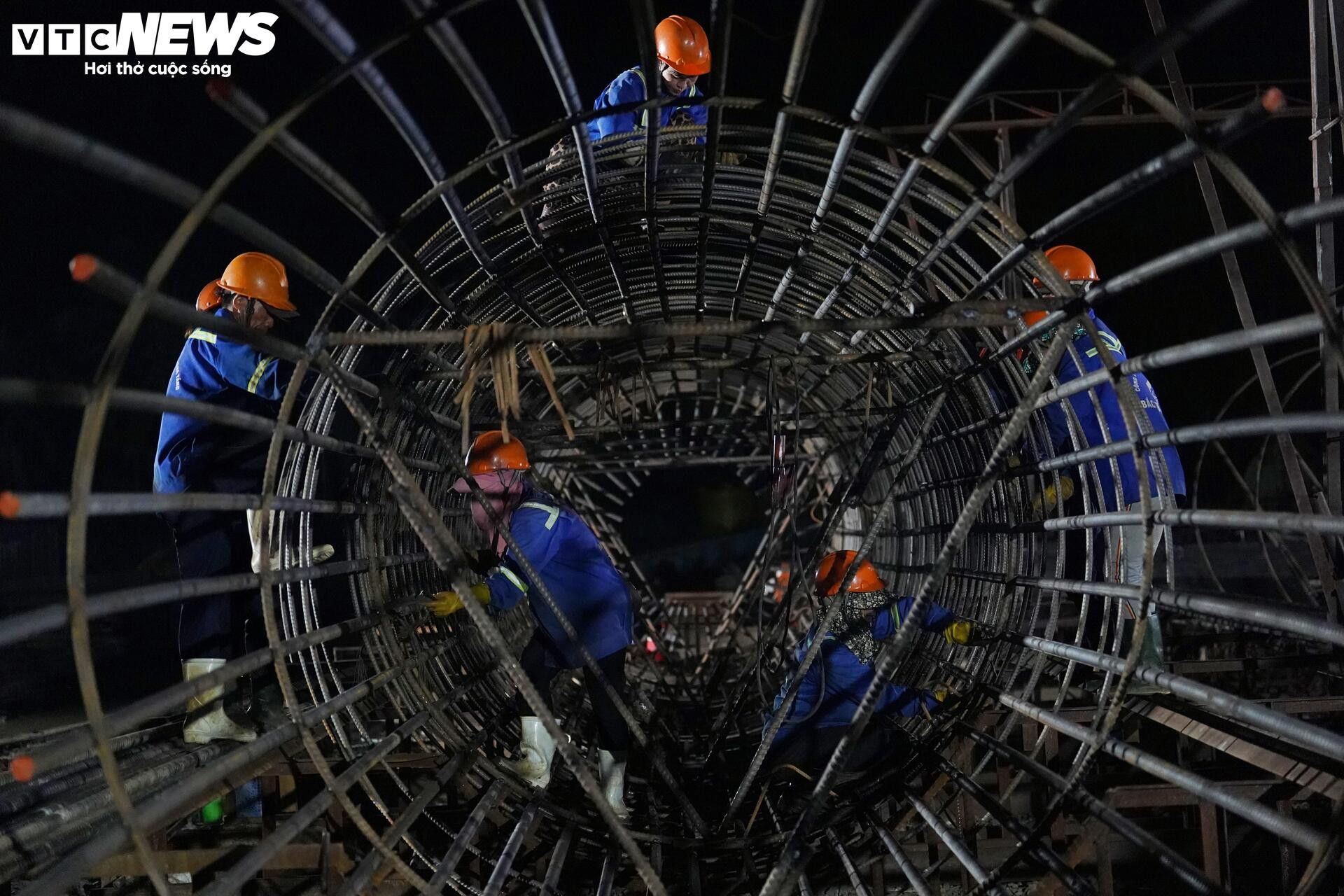
Workers weave steel cages overnight at pier B26.
Many workers have grown accustomed to the demanding overnight schedule. “Hearing the steady hum of machinery reassures us that progress is on track. Everyone is giving their all to meet deadlines,” shared one worker.
According to the Trungnam E&C – Bac Trung Nam joint venture, construction is approximately 91.82% complete, surpassing the plan by 39%, equivalent to a two-month lead. Work continues around the clock, even during holidays, with a “3 shifts – 4 teams” schedule.
Racing Against the Tide to Meet Deadlines
Currently, the project’s greatest challenge is the unpredictable tidal patterns of the Hau River, which directly impact pile driving, concrete pouring, and underwater formwork. Teams must precisely time their work during low tide to execute high-precision tasks.
As the water recedes, dozens of workers spring into action, placing base plates, reinforcing foundations, weaving steel cages, and preparing equipment. All operations must be swift and precise to complete tasks before the tide returns.
At the T23 and T24 main towers, work proceeds at a frenetic pace. Despite handling large volumes simultaneously, the towers’ progress differs by only two days. Nearly 100 workers per tower rotate in shifts, ensuring uninterrupted construction.
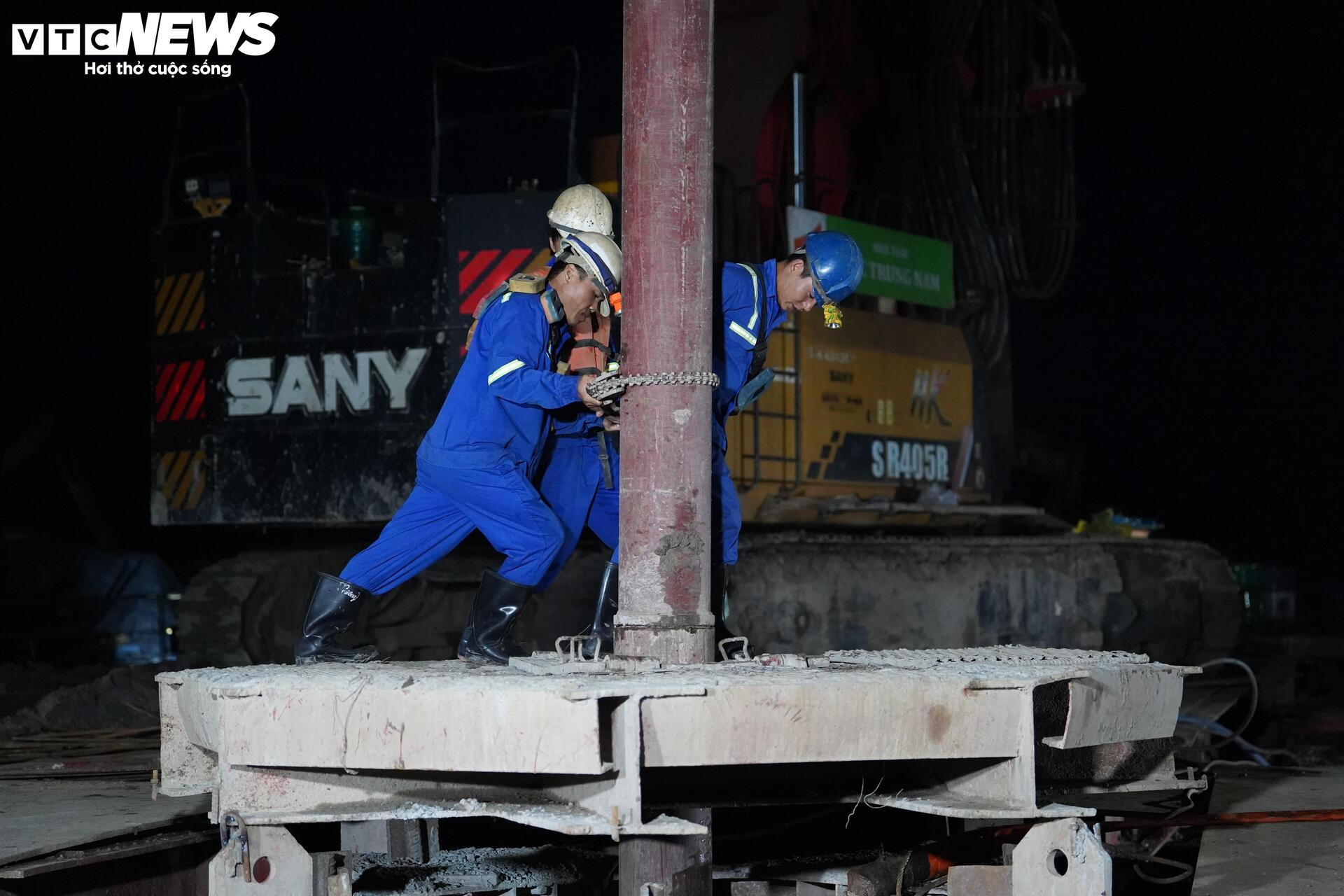
Engineers and workers construct the Dai Ngai 1 Bridge over the Hau River overnight.
At the anchor piers, approximately 60 workers are on constant standby. Supervisor Hoang Van Linh notes, “The fluctuating tides create immense pressure, but with thorough equipment and manpower preparation, we maximize every low tide to stay on schedule.”
To boost morale, the contractor offers daily and weekly performance bonuses. “Every additional task completed earns an immediate reward, keeping everyone highly motivated,” shared an engineer inspecting formwork at an anchor pier.
The project also provides stable livelihoods for local workers. Pham Thu Hong, a steelworker at pier B26, remarks, “Previously, my income was unstable. Now, with steady work at the site, I earn a reliable wage. I eagerly await the bridge’s completion to end ferry waits for locals.”
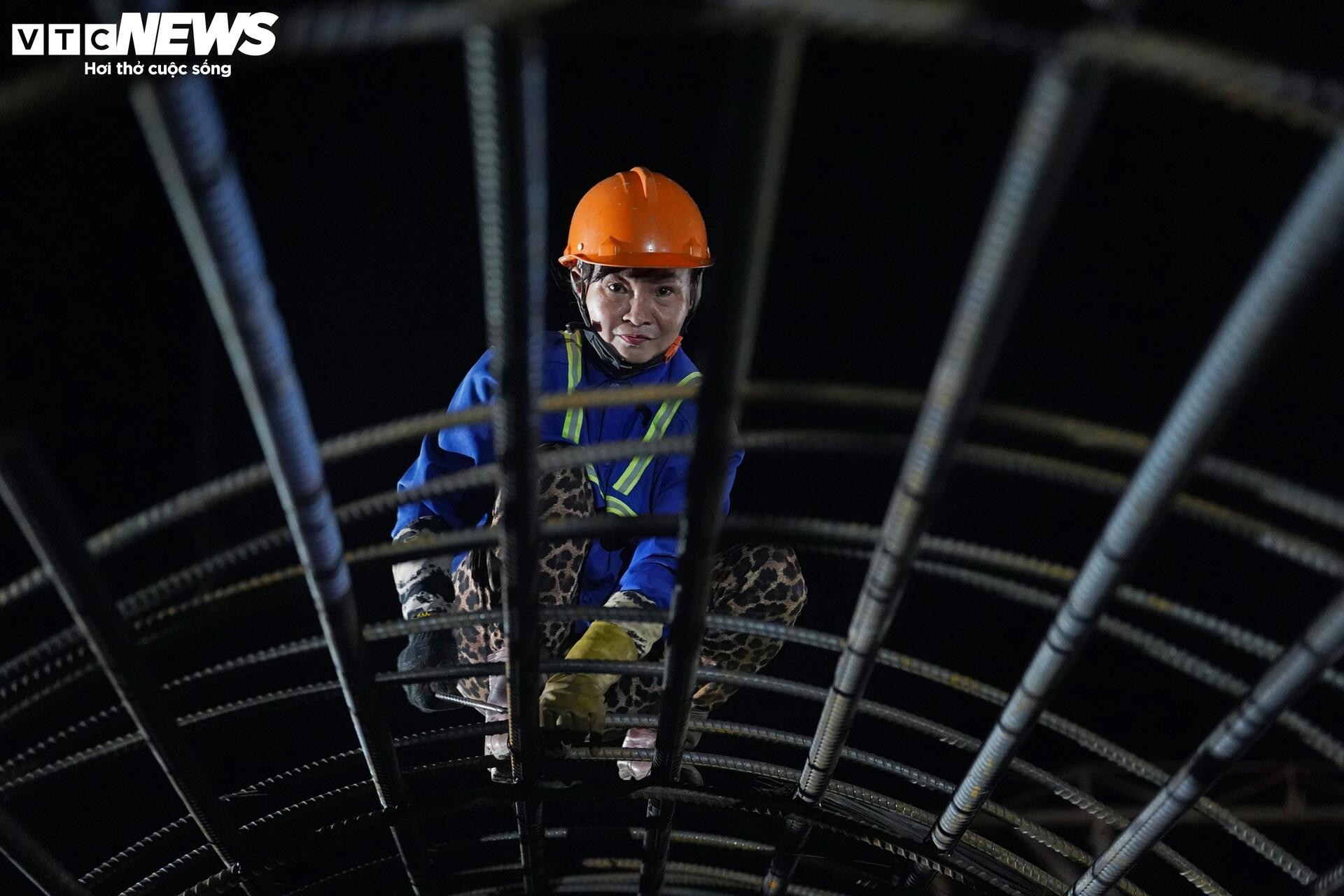
Despite monsoon rains and tidal challenges, contractors maintain a rigorous pace to meet project milestones.
Many workers have been with the project since its inception, some traveling from afar, others living along the Hau River. All share pride in contributing to this long-awaited bridge.
Upon completion, the Dai Ngai bridges will significantly reduce travel time between Vinh Long, Can Tho, and neighboring provinces, alleviating congestion on National Highways 1 and 60 and boosting regional trade.
Importantly, the project showcases Vietnamese engineers’ and consultants’ capabilities in designing and constructing large-scale cable-stayed bridges, marking a milestone for the nation’s infrastructure development.
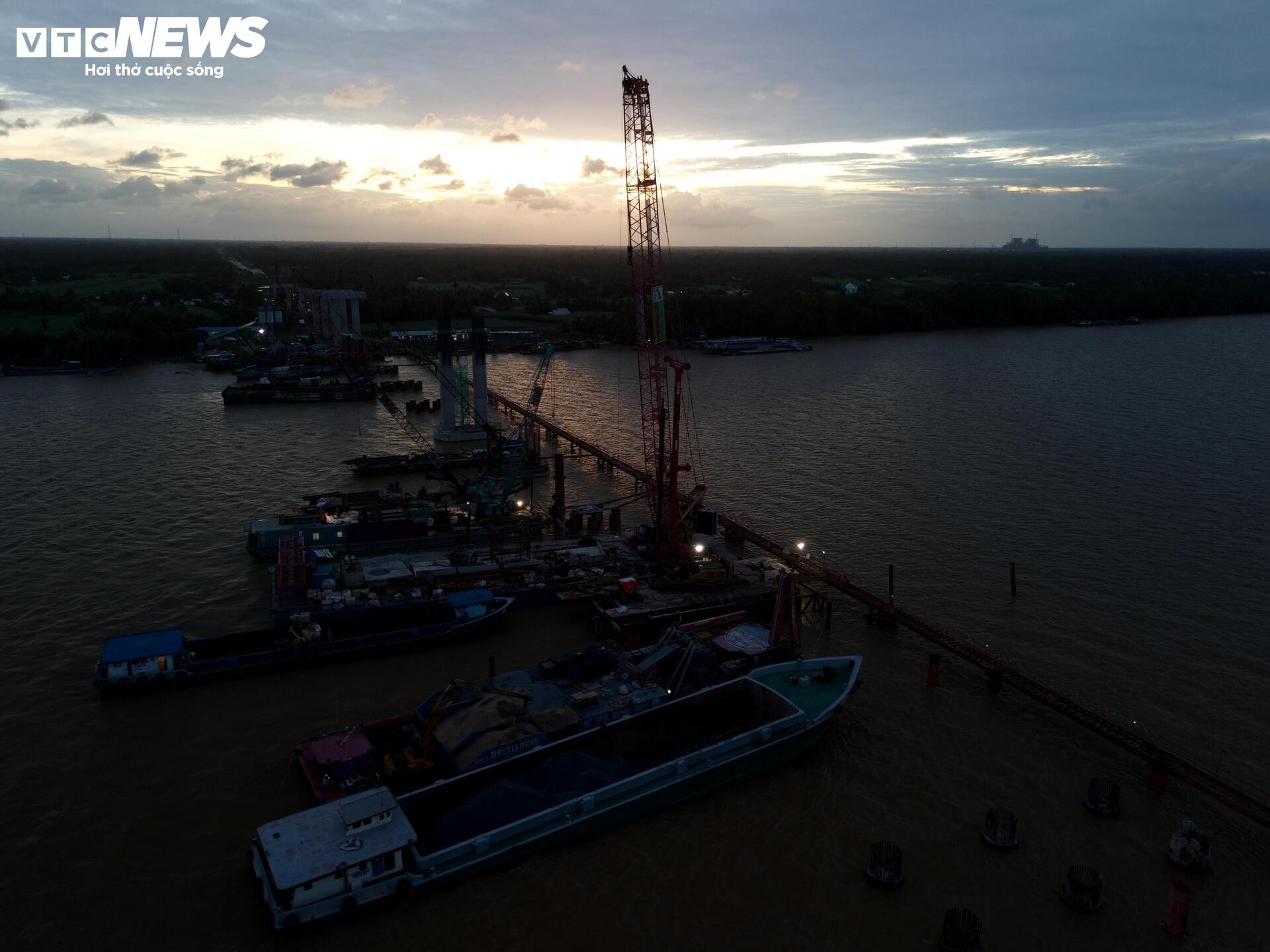
Once complete, the Dai Ngai Bridge will connect National Highway 60, reducing the distance from the Mekong Delta’s coastal provinces to Ho Chi Minh City by approximately 80 km.
As midnight approaches, lights from the T24 pier’s drilling rig continue to illuminate the river. The sounds of engines, steel, and workers’ calls merge into the distinctive rhythm of a fully operational megaproject. Each steel beam lifted, each tower extended, and each pile driven brings the project closer to its goal of timely, safe, and high-quality completion.
The Dai Ngai 1 Bridge is taking shape, not just through concrete and steel, but through the relentless dedication, responsibility, and effort of countless workers and engineers laboring day and night on the Hau River.
Package 15-XL commenced in December 2024, executed by a joint venture including Deo Ca Group JSC, Trung Nam Construction and Machinery Installation JSC, and Thai Yen Investment and Construction JSC. The 1,250-day construction period is set to conclude by June 2028.
$6.2 Billion Project by Billionaire Pham Nhat Vuong’s Vingroup Gets Green Light, Set to Become Largest in Vietnam’s Mekong Delta
The Ministry of Construction has approved the simultaneous development of a detailed zoning plan alongside the master plan for the Mekong Tourism and Resort Urban Area.
Unlocking Vietnam’s 100 Million Ton Annual “Gold Mine” Potential

The International Workshop on “Rice Straw Value Chain: Policies and Investment Opportunities,” jointly organized by the International Rice Research Institute (IRRI), the National Agricultural Extension Center, and the Vietnam Rice Industry Association (VIETRISA), took place in Can Tho. The event attracted over 100 delegates from Vietnam, Laos, Cambodia, Myanmar, and Thailand.
The Billion-Dollar Question: Is Tran De Mega Port Economically Viable?
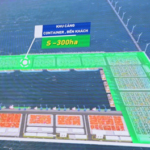
With an estimated investment of billions of dollars, the economic viability of the Tran De superport remains a critical consideration. Meanwhile, a more feasible alternative has emerged, offering a compelling solution.
Construction Buzz: Vietnam’s Longest Over-Sea Bridge Takes Shape
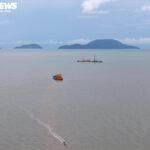
The bustling construction site of the 18km+ sea-crossing bridge and road project to Hòn Khoai Island is in full swing, poised to establish a new strategic transportation route at the southernmost tip of the nation.
Spectacular Milestone Achieved: Vietnam’s Second-Longest Main Span Bridge, Featuring a Tower Equivalent to a 35-Story Building, Surpasses Construction Timeline
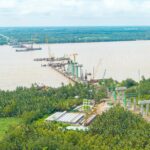
The construction site of the Dai Ngai 1 Bridge is currently operating 30 work fronts, mobilizing over 400 engineers, workers, and 150 pieces of machinery. It is anticipated that the pier body and cap beam sections will be completed before the Lunar New Year 2026.