

















According to the Vietnam Association of Seafood Exporters and Producers (VASEP), the EU is implementing Regulation 2023/2842—a new control system for imported seafood. The most significant change is the complete transition from paper documentation to digital management and real-time traceability. This marks one of the EU’s most substantial adjustments to the global seafood supply chain in nearly 15 years.
The new regulation mandates a certification system with significantly higher transparency than before. The entire journey of the product must be clearly documented, from catching or harvesting, purchasing, transportation, processing, to export. Each batch of exported seafood must include an electronic catch certificate with detailed data, such as vessel number, fishing area, gear type, catch date, volume, transportation route, intermediaries, and processing facilities.
Additionally, the EU is mandating the operation of the CATCH (Catch Certification Scheme) electronic management system on the TRACES platform—a shared database for controlling all imported seafood into the EU market. After the regulation takes effect, paper documentation will no longer be accepted. Businesses must submit electronic certificates and synchronize data with importers and relevant authorities.

The new regulation, effective from January 10, 2026, requires Vietnamese businesses to prepare thoroughly.
According to the timeline, the core provisions of Regulation 2023/2842 will take effect from January 10, 2026. From January 10, 2029, traceability requirements will extend to processed products such as canned fish, surimi, processed shrimp, mollusks, and seaweed. This leaves limited time for exporting countries, including Vietnam, to prepare.
“With seafood exports to the EU reaching billions of USD annually, Vietnamese businesses will need to transition from internal traceability models to a fully integrated data system, ensuring consistent information across fishing vessels, purchasing facilities, cold storage, processing plants, and export documentation. This will significantly impact Vietnam’s seafood export supply chain,” stated VASEP.
VASEP recommends that businesses proactively review their entire traceability data management processes and minimize manual, decentralized storage methods. Early adoption of global identification standards, information standardization, and data digitization will enhance compatibility with the EU’s system and reduce inspection risks.
Businesses are also advised to collaborate early with EU importers to align electronic submission procedures, avoiding last-minute rushes that could lead to delays or technical non-compliance. Preparation should involve coordination with the Ministry of Agriculture and Environment, industry associations, and port control agencies to ensure standardized catch certifications and value chain data from the outset.
Vietnam’s Seafood Exports Projected to Hit $10.5 Billion in 2023
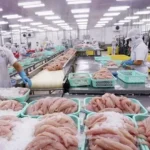
The Vietnam Association of Seafood Exporters and Producers (VASEP) forecasts that the country’s seafood export turnover will reach a record-breaking $10.5 billion this year.
Vietnam’s Underwater ‘Treasure’ Outshines Catfish and Tuna: Exports Surge Over 300% as Competitors Face U.S. Tariffs Exceeding 50%
This product has generated over $57 million in revenue since the beginning of the year.
Vietnam’s Affordable Superfood Sweeps Asia and Europe: Surging Past $200 Million in Sales as Thailand and South Korea Race to Secure Supplies

Thailand and South Korea have emerged as the two largest consumers of this product, solidifying their position as key markets in the industry.
Vietnam’s ‘Catfish King’ Seizes $42 Million Opportunity as China’s Tilapia Exports to the U.S. Stall

Amidst the challenges facing tra fish exports, Nam Viet Joint Stock Company (ANV) is emerging as a trailblazer, strategically pivoting to tilapia production. This shift capitalizes on the market gap in the U.S., where Chinese supply has dwindled due to elevated tariffs.
Aquaculture Experts Predict 2025 Seafood Exports Unlikely to Hit $11 Billion Target
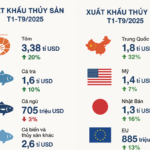
Despite Vietnam’s seafood exports surpassing $8 billion in the first nine months of the year, marking a nearly 16% increase compared to the same period last year and fueling optimism for a promising year, VASEP experts assert that achieving the $11 billion target by 2025 remains a significant challenge.