
















Funding Societies brings its extensive regional expertise in fintech innovation and digital lending infrastructure to the partnership, while Nam A Commercial Joint Stock Bank contributes its deep commercial banking capabilities and strong local network. Together, they aim to create a framework for exploring digital-first financial solutions, broadening access to capital, and enhancing financial inclusion for Vietnamese SMEs.
The collaboration between fintech and traditional banking is gaining momentum in Vietnam as the market becomes more competitive and SMEs demand faster, more flexible financing solutions. This partnership seeks to bridge existing gaps through innovation and tailored financial products for SMEs. Both organizations reaffirm their commitment to transparency and regulatory compliance, marking a strategic alliance.
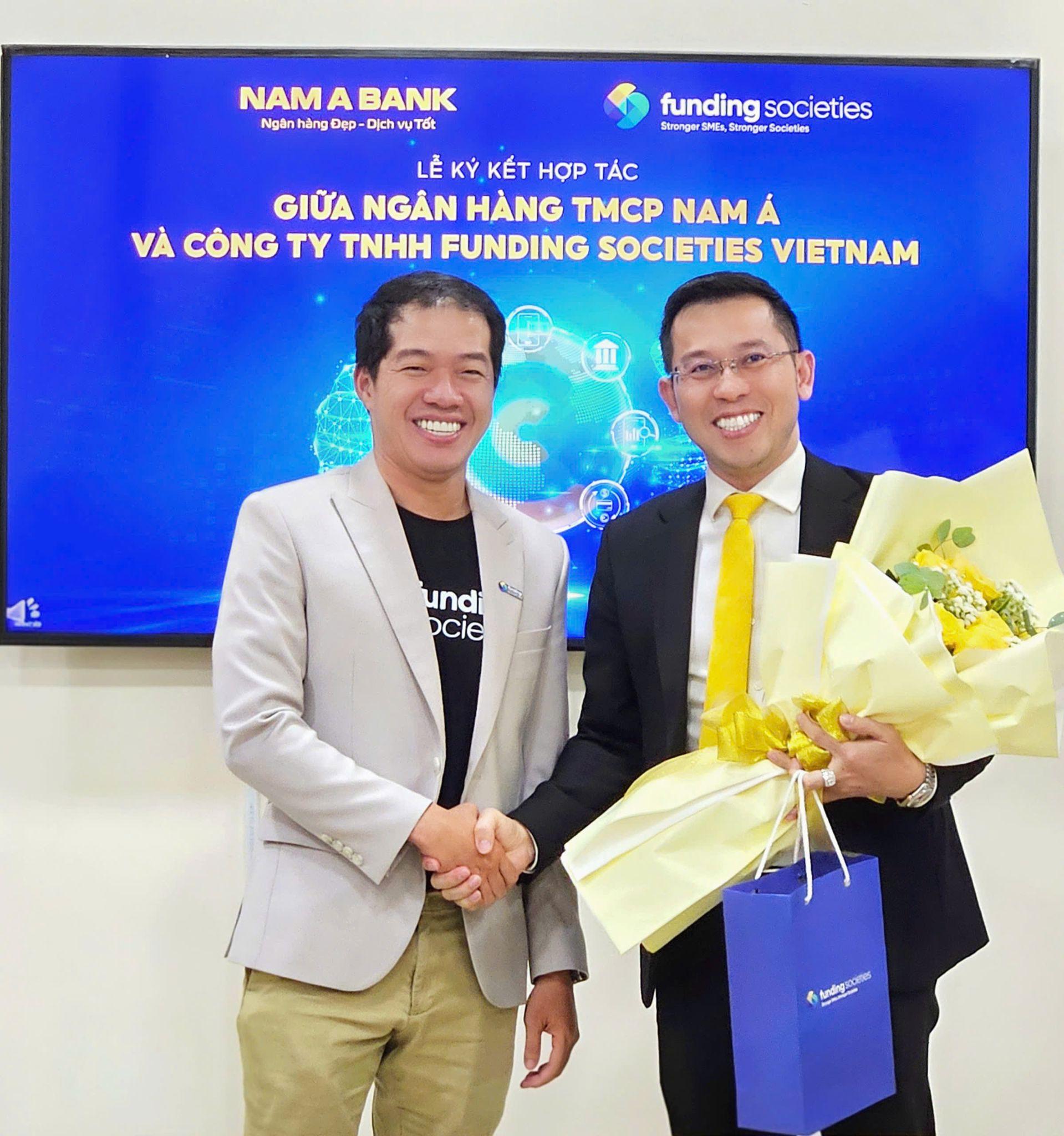
Mr. Vo Tien Anh presents a gift to Mr. Le Hoang Lam, Director of Nam A Bank – An Dong Branch.
“We are thrilled about this meaningful partnership, which aims to help Vietnamese SMEs overcome capital constraints and expand their businesses. This collaboration reinforces Funding Societies’ commitment to delivering technology-driven solutions for sustainable business growth in Vietnam,” said Mr. Vo Tien Anh, Director of Funding Societies Vietnam.
“We are confident that today’s strategic partnership with Funding Societies Vietnam will serve as a strong bridge, amplifying Nam A Bank’s presence within the SME community. Nam A Bank – An Dong Branch is dedicated to supporting Funding Societies Vietnam by providing transparent capital account management solutions, fully compliant with current regulations. We will also offer Funding Societies Vietnam’s clients the most modern and superior financial and banking services,” shared Mr. Le Hoang Lam, Director of Nam A Bank – An Dong Branch.
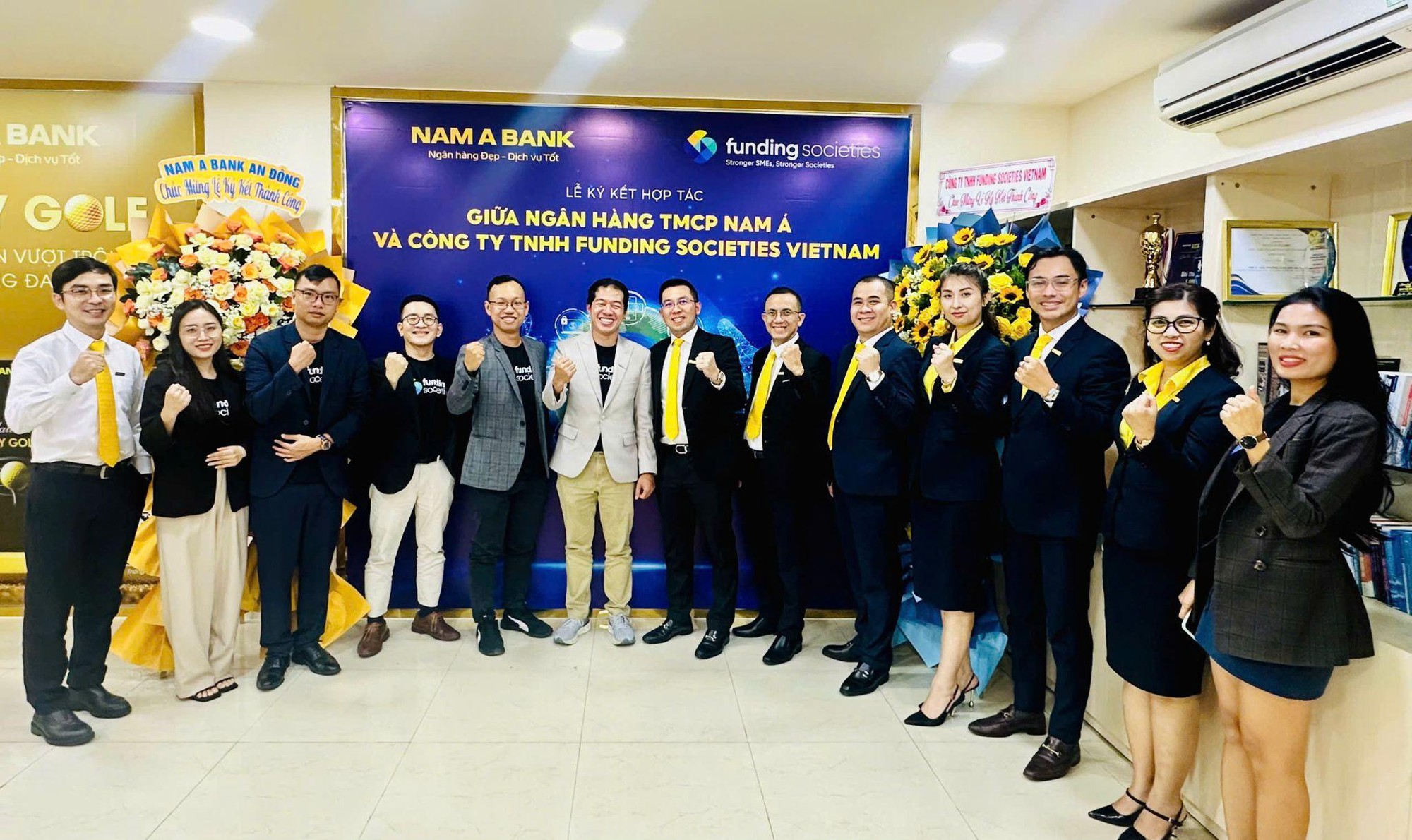
Representatives from Funding Societies Vietnam and Nam A Bank pose for a commemorative photo.
Since its inception in 2015, Funding Societies has disbursed over USD 4 billion in business financing, positively impacting more than 100,000 businesses across Singapore, Indonesia, Malaysia, Thailand, and Vietnam. Additionally, it processes USD 1.6 billion in annual payment transaction value (GTV) since entering the payments sector in late 2022.
About Funding Societies
Funding Societies is Southeast Asia’s leading unified digital financial platform for SMEs. Licensed in Singapore, Indonesia, Thailand, registered in Malaysia, and operating in Vietnam, it provides USD 1 billion in annual business financing to regional SMEs. Following the acquisition of CardUp’s payment technology in December 2022, the company also offers payment solutions, increasing its total payment transaction value (GTV) from USD 0.3 billion to over USD 1.6 billion.
Funding Societies | Modalku is backed by Peak XV Partners (Sequoia India), SoftBank Vision Fund 2, Golden Gate Ventures, EDBI Singapore, Cool Japan Fund, Khazanah Nasional Bhd, SMBC Bank, Maybank, VNG Corporation, Rapyd, and other investors. The company has received numerous awards, including the Financial Times and Statista’s High-Growth Companies Asia-Pacific 2024 and 2025, IFC’s Global SME Excellence Award (2021, 2023), and the Monetary Authority of Singapore’s Fintech Award (2016, 2021).
For more information, visit: https://fundingsocieties.vn/
Interest Rates Under Intense Pressure

In the first half of November alone, numerous commercial banks have increased their deposit interest rates.
Empowering Small Businesses in Vietnam: A Cashless Revolution Through Strategic Partnerships

Visa, in collaboration with leading Vietnamese banks Sacombank, Vietcombank, and VPBank, is revolutionizing the way you pay with the introduction of smartphone-based contactless payments. This innovative solution promises a seamless, secure, and convenient payment experience for consumers across Vietnam.
International Financial Hub: Localizing Innovation, Not Replicating It

Vietnam’s ministries, agencies, and localities are working diligently to finalize the legal framework and infrastructure necessary for the country’s International Financial Center to commence operations in November. Experts emphasize that while Vietnam has the advantage of learning from international experience, it must focus on localization rather than mere replication.
Unveiling Barron Trump’s Assets: A Closer Look at His Wealth and Holdings

Barron Trump, the youngest son of former President Donald Trump, is making headlines as his personal net worth is estimated to have reached a staggering $150 million, surpassing even that of his mother, former First Lady Melania Trump.
Unlocking Potential: A Breakthrough Strategy for Ho Chi Minh City’s International Financial Center to Rival Singapore and Hong Kong

Aspiring to become an international financial center (IFC), Ho Chi Minh City still lags significantly behind regional leaders like Hong Kong and Singapore. The latest data highlights a substantial gap, necessitating a transformative strategy, particularly in the realm of digital finance.