








According to the 2023 Identity Card Law, significant changes have been made regarding the issuance, replacement, and validity of citizen identity cards. These changes particularly affect specific age groups required to replace their cards and those eligible for indefinite validity cards starting from 2025.
Age Groups Required to Replace Identity Cards in 2025
Clause 2, Article 18 of the 2023 Identity Card Law stipulates that identity cards will clearly display the issuance date and expiration date. Upon reaching the expiration date, citizens must apply for a new card.
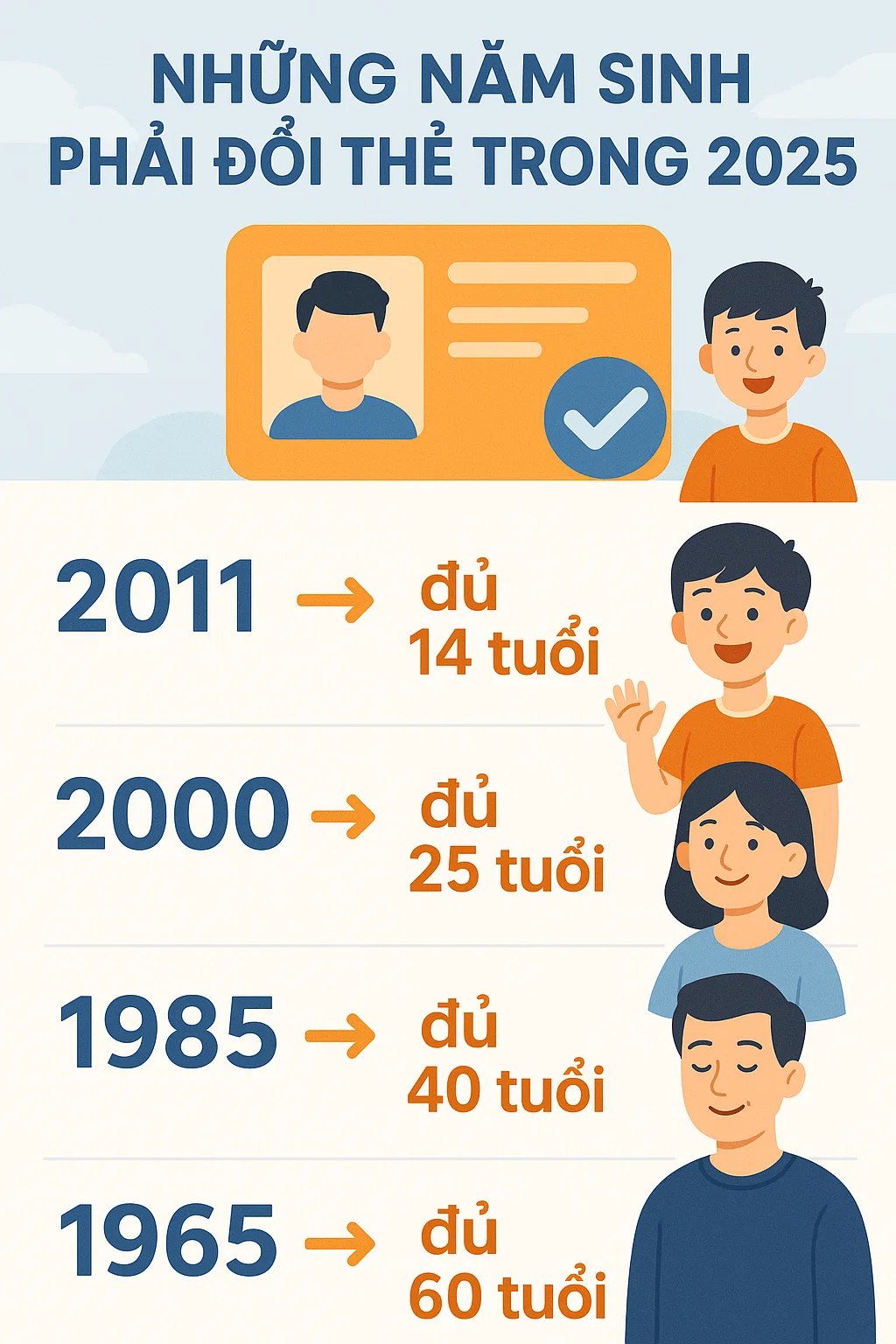
Article 21 of the 2023 Identity Card Law outlines four age milestones when citizens must replace their identity cards: 14, 25, 40, and 60 years old.
Additionally, if a card is issued, replaced, or reissued within two years before reaching an age milestone, it remains valid until the next milestone, rather than expiring on the date printed on the card.
For example:
Individuals issued a card between the ages of 23–25 will use it until they turn 40.
Those issued a card between 38–40 will use it until they turn 60.
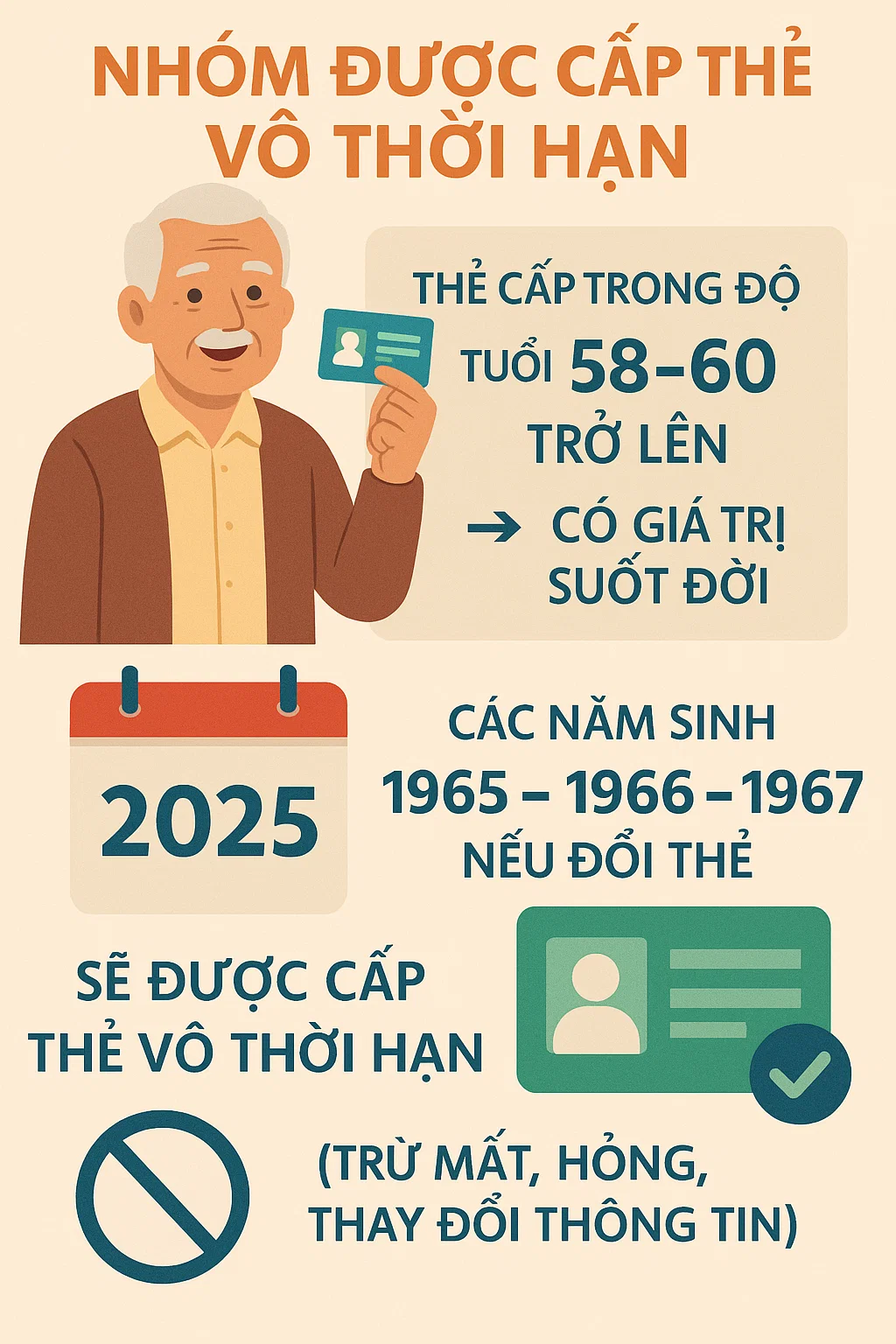
Notably, the new Identity Card Law states: Cards issued to individuals aged 58 to 60 and above will have indefinite validity.
In 2025:
Individuals born in 1965 will turn 60.
Those born in 1966–1967 will be in the 58–60 age group.
Thus, citizens born in 1965, 1966, and 1967 who replace their cards in 2025 will receive an indefinite validity identity card, eliminating the need for further replacements unless the card is lost, damaged, or requires updated personal information.
Note: The “eligible age” is calculated when the citizen reaches their exact birthdate, month, and year.
Identity Card Replacement Procedure in 2025
Step 1 – Request for Identity Card Replacement
Citizens visit the Ministry of Public Security’s identity management office to request a card replacement. Provide details including full name, personal identification number, and residence for verification against the National Population Database.
Step 2 – Prepare Identity Card Replacement Documents
Officers retrieve citizen information from the National Population Database to prepare the replacement documents.
If no changes are needed, existing database information is used.
If updates are required, citizens must first amend their details in the National Population Database before proceeding with the card replacement.
For replacements due to administrative rearrangements, officers use the most recent biometric data and existing database information.
If ineligible for replacement, citizens receive a rejection notice (Form CC03, issued with Circular No. 53/2025/TT-BCA dated July 1, 2025, by the Ministry of Public Security).
Step 3 – Biometric Data Collection
Fingerprint, facial photo, and iris scans are collected for citizens aged 6 and above, except in cases of administrative rearrangements.
Step 4 – Confirm Information Receipt Form
The Information Receipt Form is printed, reviewed, and signed by the citizen or their representative (for those under 14).
Step 5 – Issue Appointment Slip
The old card is collected, fees (if applicable) are paid, and an appointment slip (Form CC02, issued with Circular 17/2024/TT-BCA) is provided.
Step 6 – Receive Results
Collect the new card directly from the identity management office or via postal service to the specified address.