On November 27th, during the 10th session, National Assembly delegates discussed the amended Investment Law in the chamber.
Reducing the “Ask-Grant” Mechanism
During the session, many delegates commented on conditional business sectors and special investment procedures, aiming to institutionalize investment freedom, create a transparent environment, and strategically reduce the “ask-grant” mechanism.
Delegate Lê Hoàng Anh (Gia Lai Province) supported removing unsuitable sectors, eliminating the need for business licenses. He suggested narrowing certain sectors, like food business, which overlaps with existing food safety standards. Technical conditions should be moved to decrees for flexibility.
He cited examples like animal feed, environmental products, and veterinary services, where quality control is managed through registration and standards, making conditional sectors unnecessary at the law level.
Delegate Phạm Văn Hòa (Đồng Tháp) urged further cuts in conditional sectors, noting inconsistencies like auditing being conditional while accounting is not. The Ministry of Finance should address this.
Minister Nguyễn Văn Thắng confirmed the ministry’s commitment to streamlining and cutting at least 50 conditional sectors. Post-law implementation, ministries will shift to post-checks and standards, ensuring consistent business freedom.
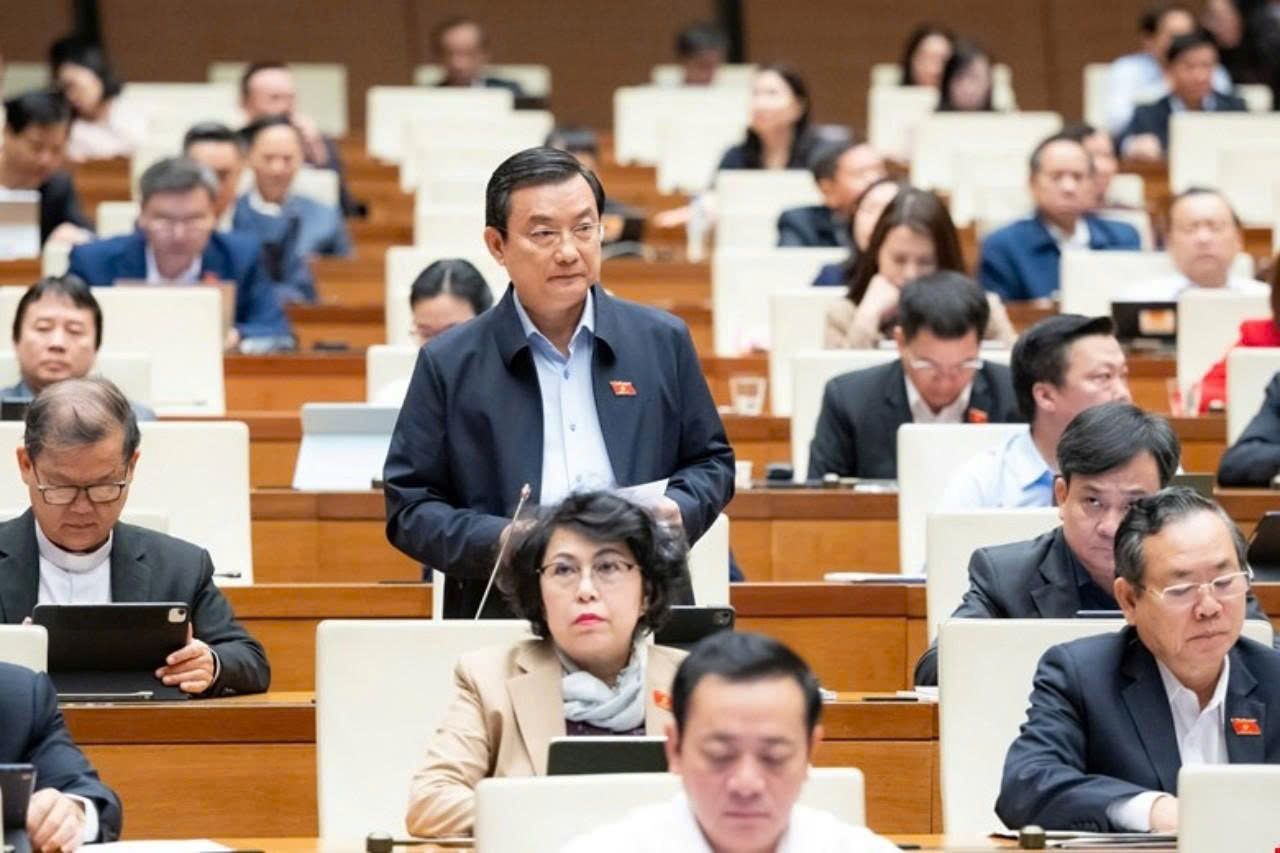
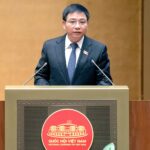
Delegate Phạm Trọng Nhân (Ho Chi Minh City) speaking at the session. Photo: PHẠM THẮNG
Concerns Over the “5-No Market”
Delegates also discussed banning e-cigarettes, heated tobacco, and recreational nitrous oxide to protect public health and social order.
Delegate Phạm Trọng Nhân (Ho Chi Minh City) urged banning recreational nitrous oxide and new psychoactive substances, calling the nitrous oxide market a “5-no market”: no license, no quality standards, no toxicity checks, no traceability, and no health reports.
Citing health risks, especially to youth, he proposed an absolute ban under the amended Investment Law. The government should identify new psychoactive substances and review industrial gases to prevent misuse.
Delegates supported banning e-cigarettes and heated tobacco to protect youth. Delegate Nguyễn Hoàng Uyên (Tây Ninh) noted a rise in youth usage, from 2.6% in 2019 to 8.4% in 2023, with strong neurostimulants often disguised in these products.
Minister Nguyễn Văn Thắng confirmed the ban, with transitional provisions for export-only production projects approved before Resolution 173/2024.
On the same day, delegates discussed the Thrift and Waste Prevention Law and the Artificial Intelligence Law.
On November 28th, the National Assembly will discuss the amended Planning Law and adjustments to the 2021-2030 National Master Plan. They will also review amendments to the Urban and Rural Planning Law.
Finance Minister Proposes Cutting 50 Conditional Business Sectors
The Minister of Finance has announced that the ministry is conducting a comprehensive review to streamline and reduce the number of conditional business sectors and occupations.
Revamping Investment Laws: Ending the ‘One-Size-Fits-All’ Approach
Members of Parliament have proposed a new philosophy for the revision of the Investment Law, advocating a shift towards risk management and the reduction of regulations that hinder business freedom.
Streamlining Procedures, Empowering Investors

Streamlined investment approval regulations are essential, serving as the foundation for investors to navigate subsequent procedures with ease.
Exciting News: Rice Exports, Accounting Services, and 23 Other Industries Proposed by the Government to Operate Without Business Licenses
The government has submitted a draft amendment to the Investment Law to the National Assembly, proposing the elimination of conditional business requirements for 25 sectors, including accounting services and rice exports. This move aims to significantly shift from ex-ante to ex-post inspection, fostering greater business freedom and streamlining regulatory processes.
Finance Minister Unveils Critical Proposal for National Railways

For national and local railway projects, investors are granted extended operation timelines in accordance with the legal provisions on investment, as outlined in the government’s proposal.