










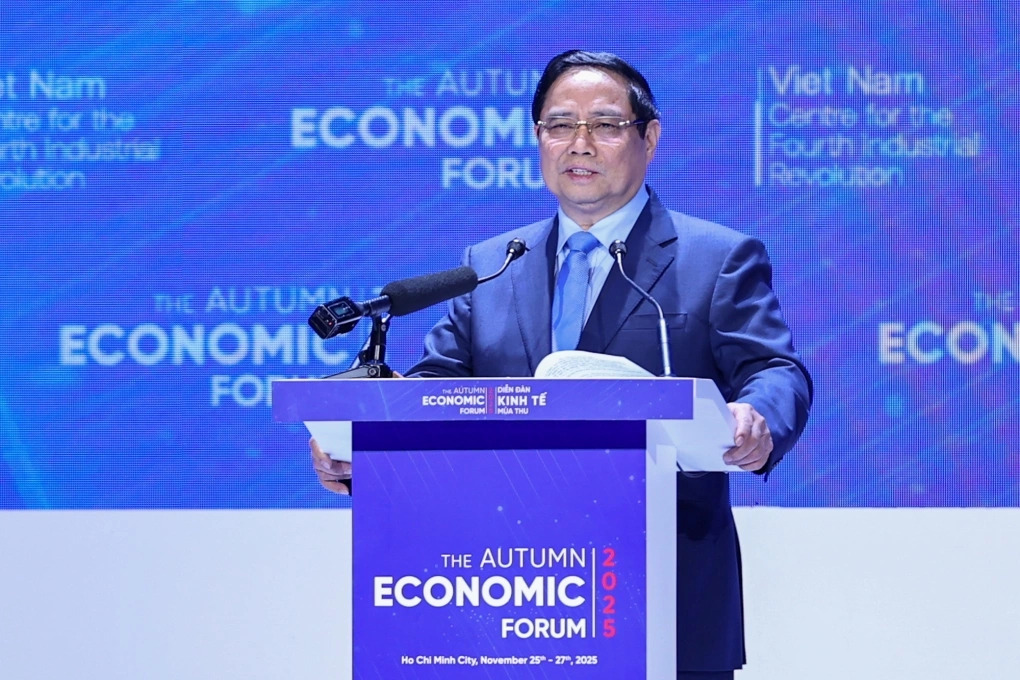
Prime Minister Pham Minh Chinh delivers a speech at the Autumn Economic Forum 2025 held in Ho Chi Minh City. Photo: VGP
“Vietnam is committed to rigorously implementing the Millennium Development Goals and achieving net-zero emissions by 2050. We are ready to open our market and establish a legal framework to attract green capital, green technology, and digital technology from international partners.” – This is an excerpt from Prime Minister Pham Minh Chinh’s keynote address at the opening and plenary session of the Autumn Economic Forum 2025 (November 24–30), themed “Green Transition in the Digital Era.”
Addressing a forum of over 1,500 domestic and international delegates, Prime Minister Chinh emphasized Vietnam’s readiness to collaborate closely with countries, partners, and businesses under the principle of “harmonious benefits and shared risks.”
Simultaneously, Vietnam will maximize support for investors while adopting smart governance and advanced global management practices tailored to the country’s context.
Experts at the forum highlighted that green transition is no longer a trend but a necessity for sustainable development. Effective capital mobilization mechanisms are essential to drive this transition.
TTXVN cited a report by the Ho Chi Minh City Institute for Development Studies and international partners, predicting that Ho Chi Minh City will require approximately VND 990 trillion (USD 38 billion) over the next decade to achieve its green and digital transition goals. This equates to an annual capital need of around USD 4 billion for the city alone.
Meanwhile, Vietnam’s updated Nationally Determined Contributions (NDC) report indicates that the country needs roughly USD 28 billion for green transition by 2030.
To meet this demand, Deputy Minister of Finance Do Thanh Trung outlined three key solutions: developing the green financial market, allocating state budgets for green initiatives, and expanding international capital mobilization alongside legal reforms.
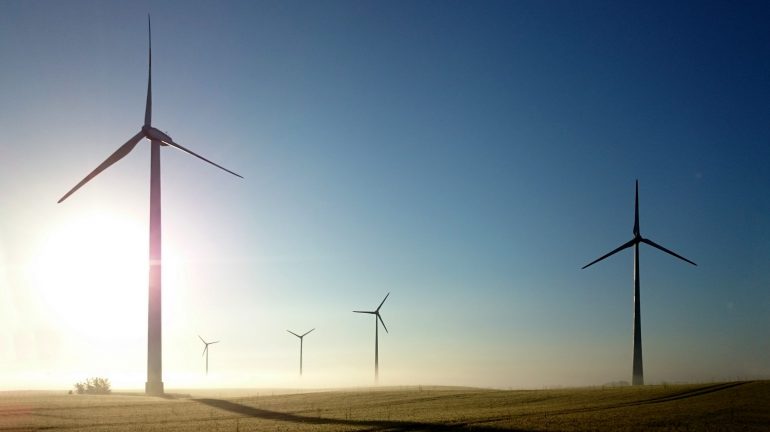
Key green finance projects include: Renewable energy and energy efficiency; Pollution prevention and control; Biodiversity conservation; Circular economy initiatives; Sustainable use of natural resources and land. Illustration: IE Med
According to the World Economic Forum (WEF), green finance refers to any structured financial activity—products or services—designed to deliver environmentally beneficial outcomes.
It encompasses loans, debt mechanisms, and investments aimed at fostering green projects, mitigating the climate impact of conventional projects, or both.
In its 2025 report, PwC noted that green finance has become a mainstream trend, with ESG (Environmental, Social, and Governance) criteria increasingly integrated into investments. Green finance has evolved from niche initiatives to a critical component of the global financial market, driven by the need to address environmental challenges and transition to a low-carbon economy.
The Autumn Economic Forum 2025, held from November 24 to 30, was organized by Ho Chi Minh City, the Ministry of Foreign Affairs, and the World Economic Forum (WEF). It brought together over 1,500 domestic and international delegates.
Finance Ministry Proposes Tax Rate Revisions: Good News for Earners Between $430 – $2,600 Monthly
The Ministry of Finance has proposed a significant tax reduction, lowering the tax rate from 15% to 10% for bracket 2 and from 25% to 20% for bracket 3.
Special Administrative Units: Hanoi and Ho Chi Minh City
The government has introduced new regulations on administrative unit classification standards, designating Hanoi and Ho Chi Minh City as special-class provincial-level administrative units.
Unveiling T&T Homes’ Luxurious Sales Gallery in Ho Chi Minh City

T&T Homes’ new Sales Gallery in Ho Chi-Minh City is nearing its final completion stage, unveiling a sophisticated and meticulously crafted space that embodies the brand’s unwavering commitment to elegance and refinement.
Ministry of Industry and Trade Announces National Power Grid Operation Plan for 2026

To empower organizations in proactively developing detailed plans to ensure a stable electricity supply for economic, social, and public needs in 2026, the Ministry of Industry and Trade issued Decision No. 3477/QĐ-BCT on November 28, approving the National Power System Operation Plan for the year 2026.
Afternoon of November 27: Gold Ring Purchase Prices Continue to Decline

In today’s trading session, a leading gold retailer further reduced the buy-in price of gold rings to 149.5 million VND per tael.