“Waiting” Wastes Opportunities and Erodes Trust
On November 28th, the National Assembly discussed the amended Law on Planning and the adjustment of the National Master Plan for the 2021-2030 period, with a vision to 2050.
Regarding the process of planning, appraisal, and approval, Delegate Nguyen Tam Hung (Ho Chi Minh City) noted that the draft law stipulates a lengthy procedure involving multiple rounds of feedback, appraisal, and approval.
To shorten approval times while ensuring quality, he suggested legalizing a synchronized electronic submission mechanism with mandatory response deadlines for each agency.
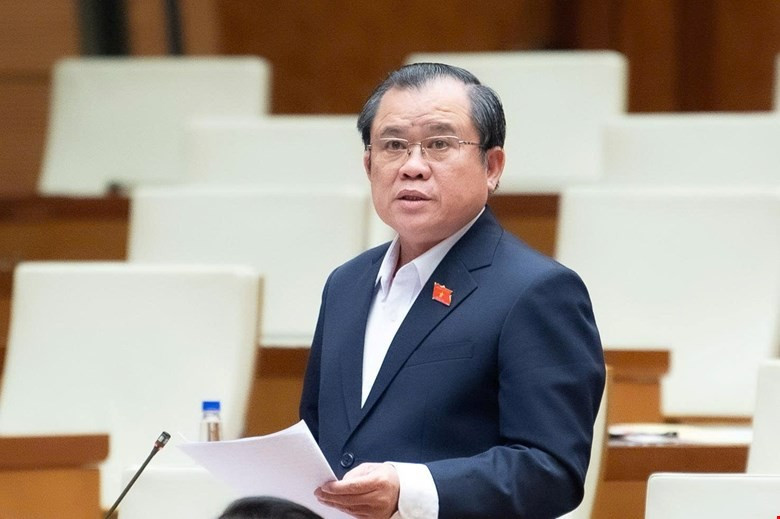
National Assembly Delegate Nguyen Tam Hung (Ho Chi Minh City).
He emphasized that many key projects are delayed due to prolonged internal procedures, increasing costs and reducing the economy’s competitiveness. This burden falls on investors and businesses.
Investors report that even fully completed detailed plans must undergo multiple internal reviews across different agencies, rather than a true one-stop process, Hung noted.
In this context, businesses and investors are forced to race against time, repeatedly visiting state agencies to clarify content already detailed in electronic files.
According to Hung, some projects wait months for feedback from a single department, then face further delays as agencies re-examine everything. This not only wastes opportunities and time but also erodes trust, discouraging many investors and forcing them to suspend or withdraw from projects.
Urgent Need to Define Timeline for Ho Chi Minh City – Can Tho Railway Project
During the discussion, Delegate Nguyen Manh Hung, a specialist member of the National Assembly’s Committee on Economics and Finance, supported the goal of achieving double-digit GDP growth in the 2026-2030 period.
Regarding socio-economic zoning, development orientation, and regional connectivity, he stressed their importance in designing development space and allocating national resources.
Agreeing with the draft resolution on regional development planning, he proposed adding content to ensure institutional and coordination mechanisms for regional linkages.
He also suggested including the connectivity of regions with neighboring countries on land and sea borders, as well as regional and global economic corridors. Examples include the East-West Economic Corridor from Myanmar through Thailand and Laos to Da Nang, and the North-South Economic Corridor from Kunming (China) through Laos and Myanmar to Hanoi, Hai Phong, and Quang Ninh.
Meanwhile, Delegate Nguyen Anh Tuan (Can Tho) called for breakthrough investments in transport and irrigation infrastructure in Can Tho. He urged focusing resources on completing the Chau Doc – Can Tho – Soc Trang expressway and key transport connections.
The Can Tho delegation also urged defining a post-2030 investment timeline for the Ho Chi Minh City – Can Tho railway to enhance bulk transport capacity and reduce logistics costs.
Finance Minister Proposes Cutting 50 Conditional Business Sectors
The Minister of Finance has announced that the ministry is conducting a comprehensive review to streamline and reduce the number of conditional business sectors and occupations.
National Assembly Debates Amendments to National Master Plan Today
This morning, the National Assembly convened in the main hall to deliberate on the amended Planning Law and the adjustments to the National Master Plan for the 2021-2030 period, with a vision extending to 2050.
Novaland and Hung Thinh Land’s Projects Awaiting Land Use Fee Payments
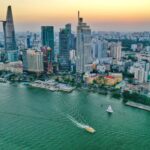
According to the Chairman of HoREA, Ho Chi Minh City currently has approximately 100 commercial real estate and housing projects awaiting land use fee announcements and additional payments. Notable developers include Novaland, with 13 projects, and Hung Thinh Land, with 8 projects.
General Secretary: Without Food Safety, No Number of Hospitals Will Be Enough
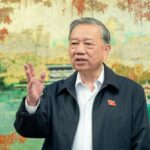
Emphasizing the critical role of primary healthcare, General Secretary Tô Lâm asserted that without ensuring food safety and hygiene, no amount of hospitals built or doctors trained could ever suffice to address the issue.
Unlocking Ho Chi Minh City’s Potential: Annual Investment of $8–12 Billion Required, Resolution 98 Amendments Approved

The draft Resolution amending and supplementing Resolution 98 on special mechanisms and policies for Ho Chi Minh City’s development has received feedback and unanimous approval from the National Assembly Standing Committee to be submitted to the National Assembly under expedited procedures.