Question:
Currently, my uncle and I are co-owners on a land certificate for a total area of 236.7m², which includes 169m² of residential land and 67.7m² of agricultural land. We wish to divide it so that each of us has 84.5m² of residential land, and I have 38.5m² of agricultural land, while my uncle has 29.2m² of agricultural land. According to the law, to divide the land, we must first convert the entire 67.7m² of agricultural land into residential land, which is costly and beyond our budget. Is there any other way to divide the land without incurring such high costs? Thank you!
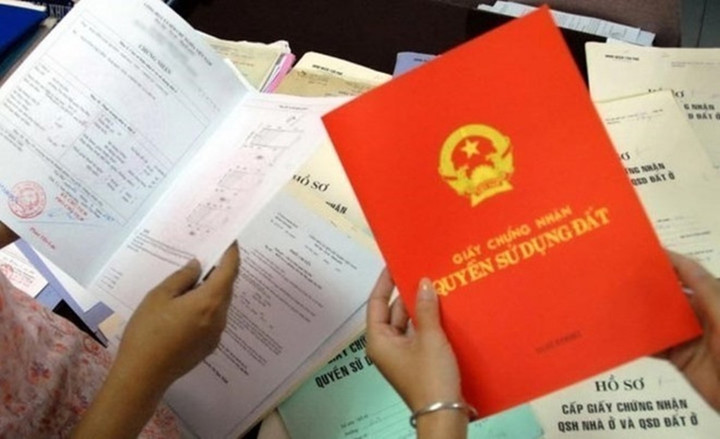
Illustrative image. (Source: Internet)
Answer:
Dear Sir/Madam,
Regarding your inquiry, please refer to the following regulations:
Article 220 of the Land Law outlines the principles and conditions for land subdivision as follows:
Article 220. Land Subdivision and Consolidation
1. Land subdivision and consolidation must adhere to the following principles and conditions:
a) The land plot must have been issued one of the following certificates: Certificate of Land Use Rights, Certificate of Home Ownership and Land Use Rights, Certificate of Land Use Rights and Ownership of Property Attached to Land, or Certificate of Land Use Rights and Ownership of Assets Attached to Land;
b) The land plot must be within its usage period;
c) The land must not be subject to disputes, seizure for enforcement of judgments, or temporary emergency measures by competent state agencies. If the land is disputed but the disputed area and boundaries are clearly identified, the non-disputed portion may be subdivided or consolidated;
d) Subdivision or consolidation must ensure access to public roads, water supply, drainage, and other necessary utilities. If a portion of the land is allocated for access, it is not required to change the land use purpose for that portion.
2. For land subdivision, in addition to the conditions in clause 1, the following must be met:
a) The resulting land plots must meet the minimum area requirements for the type of land use as stipulated by the Provincial People’s Committee. If a plot is smaller than the minimum, it must be consolidated with an adjacent plot;
b) If a portion of the land is converted to a different use, the resulting plot must meet or exceed the minimum area for the new land use type. For plots with both residential and other land types, subdivision is not mandatory unless requested by the land user.
3. For land consolidation, in addition to the conditions in clause 1, the following must be met:
a) The consolidated plots must have the same land use purpose, usage period, and lease payment method, except for consolidating residential land with other land types within the same plot or with adjacent residential plots;
b) If consolidating plots with different land use purposes, usage periods, or lease payment methods, simultaneous procedures for land use conversion, usage period adjustment, and lease payment method change must be completed to unify them according to the law.
4. The Provincial People’s Committee, based on clauses 1, 2, and 3, and other relevant laws, as well as local customs, shall specify the conditions and minimum area requirements for land subdivision and consolidation for each land type.
Please refer to these regulations to proceed with the correct procedures. Thank you!
Prime Relocation Spots: Mapping Companies Moving Out of Hanoi’s City Center, Anticipated Land Use Beyond Residential High-Rises
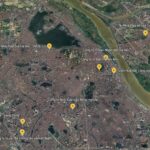
According to the proposal, the first phase will involve the relocation of 66 manufacturing facilities, agency headquarters, units, and hospitals. This includes 51 industrial production facilities (comprising 9 facilities listed in Resolution 17/NQ-HĐND dated July 8, 2022, by the City People’s Council and 42 new facilities) and 15 agency and unit headquarters.
Ho Chi Minh City Pilots 63 New Residential Projects on Agricultural Land
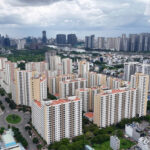
In Ho Chi Minh City, 56 land plots span approximately 564 hectares, including around 310 hectares designated for residential use. Plans are underway to reallocate 77 hectares of rice fields for alternative purposes. Meanwhile, the former Ba Ria – Vung Tau area comprises 7 land plots totaling roughly 291 hectares, with about 129 hectares allocated for housing. Here, 28,638 square meters of rice fields are slated for re-purposing.
Exclusive Pilot Program: 54 Agricultural Plots in Ho Chi Minh City Approved for Commercial Housing Development

Ho Chi Minh City boasts 54 land plots spanning over 6 million square meters, with nearly 213,000 square meters of rice fields repurposed for residential development. These plots are primarily located in the former Ba Ria – Vung Tau area, totaling more than 6.3 million square meters. The unified deadline for all projects is March 31, 2030.
Penalties for Misuse or Unauthorized Resale of Social Housing Can Reach Up to 120 Million VND
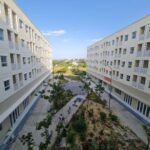
The Ministry of Construction has proposed fines ranging from 80 to 120 million VND for buyers or lease-purchasers of social housing who misuse the property or resell it in violation of regulations.
Land Conversion to Residential: Are Exemptions Eligible for Land Fee Refunds?
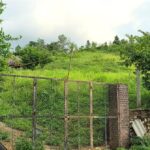
Having paid the full land use fee when converting agricultural land to residential land and received the new ‘red book’, residents only then discovered they qualified for exemptions. Can they now have the reduced fee recalculated and receive a refund on the land use fee?