Today, the National Assembly discussed the draft Law on Amendments and Supplements to the Law on Geology and Mineral Resources.
Delegate Trinh Xuan An (Dong Nai) emphasized that in the current context, managing rare earth elements and mastering rare earth technology will help affirm Vietnam’s self-reliance and resilience.
Mr. An noted that Vietnam has significant rare earth reserves. Globally, nations and powers sometimes use rare earths as strategic bargaining chips or to exert pressure, particularly in defense and security. Therefore, he believes this factor must be addressed in the draft law.
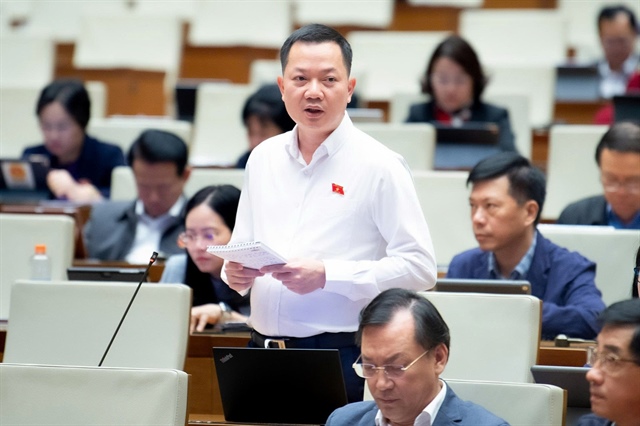
Delegate Trinh Xuan An. Photo: National Assembly |
“In defense and the national defense industry, rare earths are the foundation for many weapons systems, core technologies, and high-precision weaponry,” he stressed, proposing dedicated rare earth mines or reserves for defense and security purposes.
Additionally, he suggested regulations for controlling rare earth-related technology and data, especially concerning defense and security.
“Data and rare earths may need to be classified as state secrets,” he opined.
Regarding rare earth management, he called for clarifying the roles of the Ministry of Defense and the Ministry of Public Security in mining approvals and national program decisions. Specifically, he urged clear zoning for defense and security purposes, hoping the draft law would balance management with national development.
“Reviewing laws in China, Japan, and the U.S., I see strict provisions on rare earths for defense and security, especially defense. This is an opportunity to assert Vietnam’s position on rare earths,” he added.
Delegate Dieu Huynh Sang (Dong Nai) also affirmed that rare earths are a strategic resource, essential for modern life. Seventeen rare earth metals are used in critical technologies. Global demand has risen with the green transition and AI development.
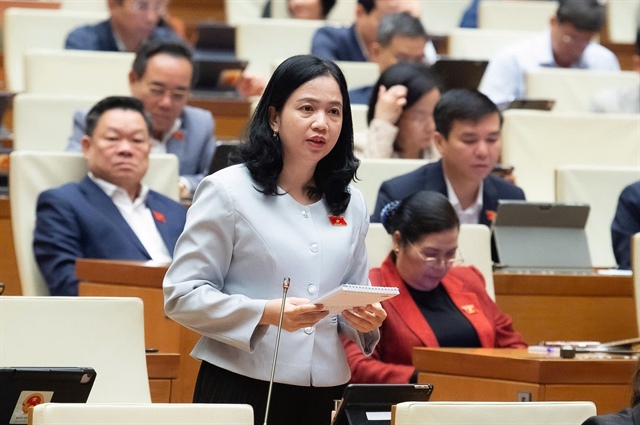
Delegate Dieu Huynh Sang. Photo: National Assembly |
Ms. Sang cited international data showing rare earths’ strategic role in emerging industries like high-tech, energy transition, and defense.
“Rare earths are a special commodity, significantly impacting defense, security, and diplomacy. Thus, a robust management mechanism for related activities is required,” she urged.
Minister of Agriculture and Environment Tran Duc Thang stated that Vietnam ranks 2nd or 3rd globally in rare earth reserves, found in 21 provinces. His ministry has delineated and tightly managed these areas as directed by the government and senior leaders.
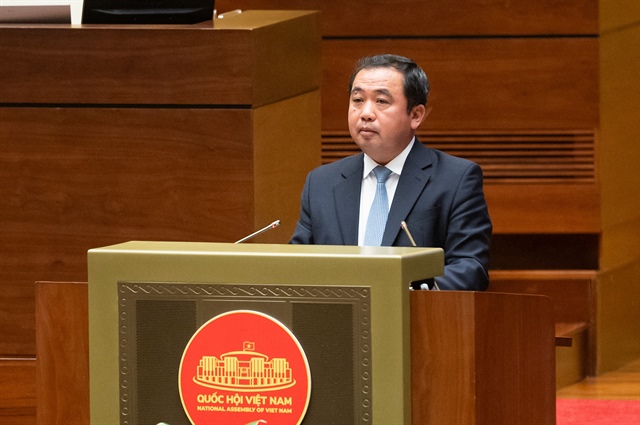
Minister Tran Duc Thang clarifies issues raised by delegates. Photo: National Assembly |
“We are leading the development of a national rare earth strategy with other ministries,” he said. The strategy will be submitted to the government for approval in early 2026.
After delineating rare earth deposits, the minister stressed the importance of deep processing for national benefit. “This step is crucial,” he noted.
The draft law separates rare earths into a dedicated chapter with specific regulations for government guidance.
“We believe rare earths will become a key resource for Vietnam’s development, creating a closed value chain and minimizing raw mineral exports,” he concluded.
Tran Thuong
– 15:10 01/12/2025
CADIVI’s Medium-Voltage Subsea Cables Make a Splash at the 2025 Power Conference

At the 2025 National Power Science and Technology Conference held on November 27-28, 2025, CADIVI’s electrical cables captured the attention of industry experts and businesses, particularly with their innovative medium-voltage underground cable solutions.
What to Watch in VHC, BCM, and HHV?
Securities firms recommend monitoring VHC due to its slow growth, impacted by tariffs and competitive pressures. BCM shows promise, driven by its residential real estate and industrial zone segments, which are expected to sustain recovery momentum in 2026. HHV is a buy recommendation, as its BOT segment is anticipated to maintain steady growth throughout 2026.
How Are Samsung’s Four Major Vietnamese Factories Faring Post-Trump’s Tariffs and Natural Disasters in Thai Nguyen?
South Korean conglomerate Samsung has unveiled its Q3 2025 business results, highlighting the performance of its four key manufacturing facilities in Vietnam: Samsung Thai Nguyen (SEVT) in Thai Nguyen province, Samsung Bac Ninh (SEV), Samsung Display Vietnam (SDV) in Bac Ninh province, and Samsung Electronics HCMC CE Complex (SEHC) in Ho Chi Minh City.
Vietnam Surges into Top 15 Global Trade Powerhouses: A New Launchpad for Growth
As of November 15, 2025, Vietnam’s total import-export turnover has surpassed $801 billion, marking an all-time high and significantly exceeding the Ministry of Industry and Trade’s September forecast of $800 billion.
Unmet Demand: The Vast Opportunity in Vietnam’s Senior Care Real Estate Market
The current elderly care system is still in its infancy, with fewer than 30% of communes and wards offering support models for seniors. Nationwide, the number of specialized care centers remains under 100, highlighting significant gaps in meeting the growing needs of the aging population.