Once again, regulations related to conditional investment and business sectors are heating up parliamentary discussions.
The current Investment Law has established a crucial legal foundation, particularly by clearly defining conditional business sectors. This is seen as the “key” to controlling investment activities.
However, the careless expansion of this list could create additional barriers for businesses, increase unnecessary administrative procedures, and reduce the competitiveness of the business environment.
Room for further reduction remains
Reporting to the National Assembly during the plenary session on November 27, Minister of Finance Nguyen Van Thang stated that after a review, the ministry plans to reduce business licenses for at least 50 sectors, up from the initial draft proposal of 25 conditional business sectors.
The Minister emphasized that this is a significant effort, and the Prime Minister has tasked the Ministry of Finance with coordinating with other ministries and sectors to continue reviewing and reducing these sectors.
Once the law is passed and takes effect, the Government will instruct ministries and sectors to further amend business conditions, shifting to a management mechanism based on standards and norms. Minister Thang affirmed that the goal is to ensure the full and consistent realization of the freedom to do business for individuals and enterprises.
Under current law, 234 sectors require a business license, many of which could be managed through output standards and norms. In the latest draft amendment submitted to the National Assembly, the Government proposes reducing 25 conditional business sectors, meaning no business license would be required. These sectors include accounting services, rice exports, and temporary import-re-export of frozen food.
According to Nguyen Duy Hoang, Director of the Administrative Procedures Control Department (Government Office), the Government has issued Resolution 66 on reducing and simplifying administrative procedures related to production and business activities, aiming to abolish at least 30% of unnecessary business investment conditions by 2025.
Mr. Hoang affirmed that this goal could be achieved by 2025 if ministries, sectors, and localities strictly implement the solutions and task groups outlined in Resolution 66.
According to Mr. Hoang, there are 234 conditional business investment sectors, but upon review, some sectors not on this list still impose business investment conditions, causing difficulties for businesses. For example, in the logistics services sector.
“I believe there is still room to study and reduce unnecessary business investment conditions,” Mr. Hoang emphasized.
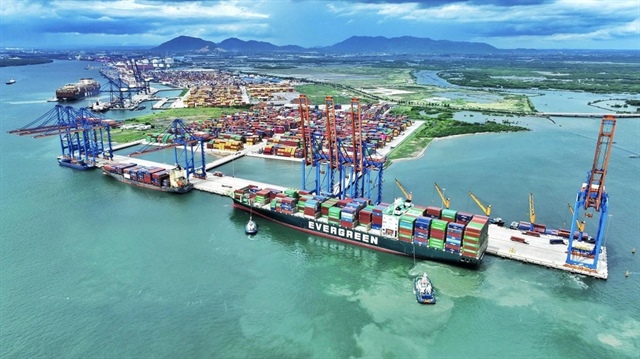
Many believe there is still room to reduce conditional business sectors that are not truly necessary. |
Not just reducing conditions, but also reducing sectors
According to Nguyen Minh Thao, Head of the Business Environment Department (CIEM), instead of just reducing conditions, the number of sectors should be reduced entirely. Because once a sector is listed, the risk of additional sub-conditions arising is very high. Additionally, the criteria for determining conditional business investment sectors need to be clearly defined to avoid abuse.
According to Ms. Thao, if sectors are not reduced, business conditions cannot be reduced. To cut 30% of business conditions, more than 30% of sectors must be reduced.
She believes the list of conditional business investment sectors needs further detailed review. Because this list has expanded significantly and is very comprehensive, it needs to be reviewed in conjunction with specialized laws to see how many sectors there are, their content, and regulations, and then propose reductions.
“If not clarified, overly broad sector names will make adding new sectors extremely easy.”
A comprehensive review is needed
According to Hoang Manh Phuong, Deputy Director of the Legal Department (Ministry of Finance), some new sectors with complex risks to security, order, and public health are not classified as conditional business investment sectors, making state management difficult and allowing businesses to exploit loopholes to violate the law.
Experts are referring to sectors like personal data-sharing platforms and deepfake technology businesses.
“This will be a comprehensive review of conditional business sectors, based on which regulations on conditional business investment sectors and conditions will be improved, and some unnecessary or unreasonable sectors will be reduced,” Mr. Phuong emphasized.
He also frankly admitted that despite efforts and determination to eliminate unreasonable business investment conditions that cause obstacles, the implementation has not fully achieved its goals.
In fact, the Ministry of Finance discovered that the number of conditional business sectors in practice is larger than the number listed in Appendix IV of the Investment Law. And in reality, some sectors do not need to be controlled through ex-ante mechanisms.
Additionally, many sectors have “formal licensing but non-substantive operations,” so a condition announcement and ex-post mechanism would ensure more effective state management than license control.
Some business investment conditions set excessive requirements, creating market entry barriers and limiting competition.
Mr. Phuong also affirmed that once these issues are clearly identified, solutions will certainly be found to remove them, thereby promoting business market entry efforts.
|
Earlier, the National Assembly discussed in groups the amended Investment Law, with many delegates supporting the reduction initiative. They also requested the Government to instruct ministries and sectors to regularly review and propose the abolition or addition of conditional business sectors; because besides reductions, there are sectors that “previously did not require business conditions but now need to be added immediately.” Delegate Hoang Van Cuong (Hanoi Delegation) proposed dividing conditional business sectors into two groups. Group one, requiring ex-ante licensing, includes sectors related to security, defense, and consumer health. Group two comprises most other sectors, and management should focus on ex-post checks. Notably, Mr. Cuong suggested considering removing business conditions for accounting services and tax procedures. Because those declaring taxes must sign documents and take responsibility, they need to be controlled. This is especially important as business households are expected to switch from presumptive tax to tax declaration. “If not conditioned, it could lead to some people declaring taxes arbitrarily, aiding tax evasion,” Mr. Cuong noted. |
|
Proposed abolitions remain modest, need to continue According to the Vietnam Chamber of Commerce and Industry (VCCI), the number of sectors proposed for abolition is still quite modest. The Ministry of Finance needs to continue reviewing and proposing reductions. Because many sectors on the list do not truly meet the Investment Law’s criteria for being classified as conditional business investment sectors. For example, the Ministry of Finance analyzed that classifying “accounting services” as a conditional business sector seems unreasonable. Before the 2014 Accounting Law, accounting services were considered a normal business sector. Throughout that time, no significant adverse risks to public interests were recorded. This shows that in practice, this business activity does not need to be controlled by business conditions. Customs procedure services also do not impact public interests to the extent of requiring business condition control. Risks from customs agents only affect the interests of those hiring them (a private relationship that can be resolved under civil law), with almost no significant impact on public or state interests. Importantly, the mechanism for overseeing the implementation of business investment condition reform is still inadequate and ineffective. |
MINH TRÚC
– 09:56 30/11/2025
Streamlining Administrative Procedures and Business Conditions: Urgent Reforms Needed

By 2025, all business-related administrative procedures will be fully digitized, allowing 100% online completion. Additionally, a plan to streamline and reduce 2,269 business conditions has been approved.
What Dialogue is Hanoi About to Initiate with Citizens Regarding Social Housing?

On December 3rd, Hanoi will host a dialogue session with residents to address and resolve challenges related to purchasing social housing.
Maximizing Incentives Without Technology Transfer: The Risk of Remaining a Manufacturing Hub

Delegate Hà Sỹ Đồng proposed that if the commitment to transfer is not fulfilled, incentives should be revoked, and a double penalty on the amount of incentives received could be imposed.
Streamlining Business: Eliminating 50 Conditional Industries and Professions
There’s no need to maintain conditional industries or professions at the legislative level. Instead, such specifics should be delegated to specialized laws or detailed decrees.
Finance Minister Proposes Cutting 50 Conditional Business Sectors

The Minister of Finance has announced that the ministry is conducting a comprehensive review to streamline and reduce the number of conditional business sectors and occupations.