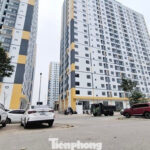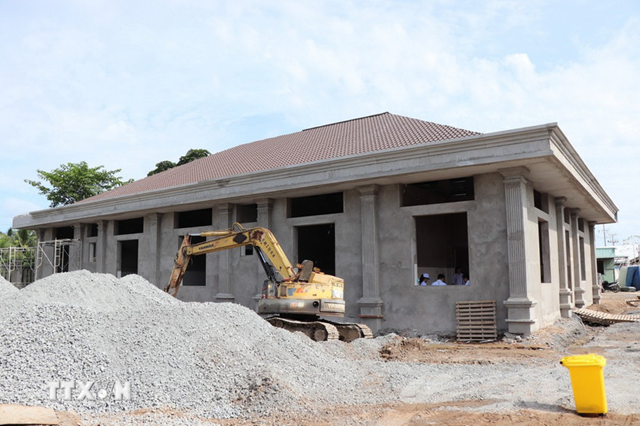
A senior living project in Can Tho. (Photo: Thu Hien/TTXVN)
|
Vietnam is rapidly entering an aging population phase, giving rise to a burgeoning market with vast potential: real estate tailored for senior care.
Experts predict this segment will become the “next wave” in the property sector, driven by demographic forecasts and the market’s current gaps.
According to the General Statistics Office (Ministry of Finance), Vietnam will officially become an aging population in 2038, when the proportion of people aged 60 and above exceeds 20%.
The United Nations Population Fund (UNFPA) forecasts that by 2050, one in every six Vietnamese will be over 65 years old. This aging rate surpasses most countries in the region.
Meanwhile, the current senior care system is in its infancy, with fewer than 30% of communes and wards offering support models for the elderly. There are fewer than 100 specialized care centers nationwide. Notably, 80% of seniors prefer home-based care, but professional services remain inadequate.
Savills Vietnam highlights that urbanization and improved healthcare access are fueling the growth of senior-focused housing and services across all three regions. Though still small, the market is growing rapidly and is expected to double within the next decade.
Their research indicates the market could expand from $2.3 billion in 2024 to $3.6 billion by 2032, a CAGR of 5.81%. Promising models include wellness resorts, integrated healthcare housing, and internationally standardized retirement facilities.
Compared to countries like Japan or Singapore, where senior living real estate is a billion-dollar industry, Vietnam has only a few pilot projects, underscoring its immense growth potential. However, models must align with Vietnamese culture and needs.
Emily Fell, Senior Living Sectors Expert for Asia-Pacific at Savills, suggests Vietnam adopt a unique strategy, blending Australia’s lifestyle-focused model with Japan’s intensive care approach. This hybrid would suit the growing support needs of Vietnamese seniors, especially in major cities.
Policy frameworks—from legal corridors for public nursing homes to sustainable payment mechanisms for specialized care through public or private insurance—are also crucial.
Investors should focus on operational capabilities rather than just building structures, emphasizes Emily Fell.
She also highlights Singapore’s “vertical village” model, which integrates senior housing into urban complexes, optimizing land use and fostering community connections—ideal for Vietnam’s urbanizing context.
Le Quoc Huan (WeCare247) notes that East Asian culture, policies, and workforce capabilities significantly influence senior care service models. However, infrastructure—from healthcare connectivity to synchronized real estate—is the key determinant of market growth.
Sharing this optimism, Olivia Wood (Lotus Advisory Group Vietnam) observes that Vietnam is becoming an attractive destination for investment in senior living. The market’s gaps present opportunities for early entrants to establish competitive advantages.
With rapid aging, high demand, and limited supply, Vietnam’s senior-focused real estate market is entering its “emergence” phase. To achieve breakthroughs, experts stress the need for a comprehensive policy framework, professional workforce, and culturally aligned operational models.
If these elements are refined, senior living real estate will not only unlock billion-dollar opportunities for investors but also address a pressing societal need: providing sustainable and humane care for the elderly.
Thu Hang
– 15:14 30/11/2025
T&T Homes Unveils Its First Sales Gallery in Ho Chi Minh City

On November 28, 2025, T&T Homes, the esteemed real estate brand under T&T Group, proudly unveiled its first Sales Gallery in Ho Chi Minh City. This milestone signifies a new chapter in the brand’s expansion into the Southern market, while reinforcing its commitment to delivering standardized consulting services and elevating customer experiences through cutting-edge technology and advanced virtual reality simulations.
Luxury Condos in Ho Chi Minh City Hit Staggering 450 Million VND/m² Mark

Despite luxury and high-end apartment projects in Ho Chi Minh City reaching staggering prices of 120-200 million VND per square meter, with some even hitting 450 million VND, interest has surged by 168% in the past quarter.
High-Speed Rail Project: Company Urges Immediate Action with $100 Billion Funding Pledge

Mr. Truong stated that he has submitted an urgent petition regarding his exclusion from the North-South High-Speed Railway project meeting. He has requested a direct meeting to present and clarify his investment proposal and capital plan.
Stunning Home Prices: Projects Surge by 100 Million to 500 Million VND/m² in Just a Few Years

HUBA Vice President Phan Đình Tuệ highlights the staggering surge in housing prices, noting that many condominium projects once priced at 100 million VND per square meter now command up to 500 million VND per square meter.
Vietnam Joins Top 15 Global Trade Powerhouses with $801 Billion in Total Trade, Poised to Surpass India

“At the current growth rate, Vietnam could very well surpass India in just one to two years,” stated Mr. Nguyễn Tuấn Việt, CEO of VIETGO Export Promotion Company.