
After 15 years of development, looking back on the journey, what is the greatest achievement of Bach Viet, sir?
Recently, Bach Viet organized a series of workshops to reflect on its 15-year journey. Alongside business results, the most important thing we’ve gained is our spiritual foundation and corporate culture.
Bach Viet Group was founded on the initial idea of two classmates who wanted to “do something meaningful and exciting.” During our development, working with centuries-old foreign companies taught us that everything can change: leaders may leave or retire, industries may shift, and products and services may evolve. However, one thing that must be preserved is corporate culture.
Corporate culture is our guiding lighthouse, our business philosophy, and the values we cherish and uphold. It’s like the sun—as long as we look to it, we’ll find our direction. Over the past 15 years, Bach Viet is proud to have built a cultural foundation based on proactiveness, mutual support, and responsibility in our work, alongside a spirit of “perseverance and resilience.”
In the real estate sector, what drives your passion after more than a decade of development?
Bach Viet is a diversified group with four pillars: Real Estate, Education, Trade and Services, and Agriculture. Real estate has been our starting point, and we plan to keep it as our core business for at least the next five years. Over the past 15 years, Bach Viet has made its mark with the strategy of “using the upstream to nourish the downstream,” focusing on niche markets in provincial areas.
Currently, our completed projects are primarily in industrial provinces bordering Hanoi. These are highly promising markets where Bach Viet has been a pioneer for decades, delivering leading real estate products in each region.
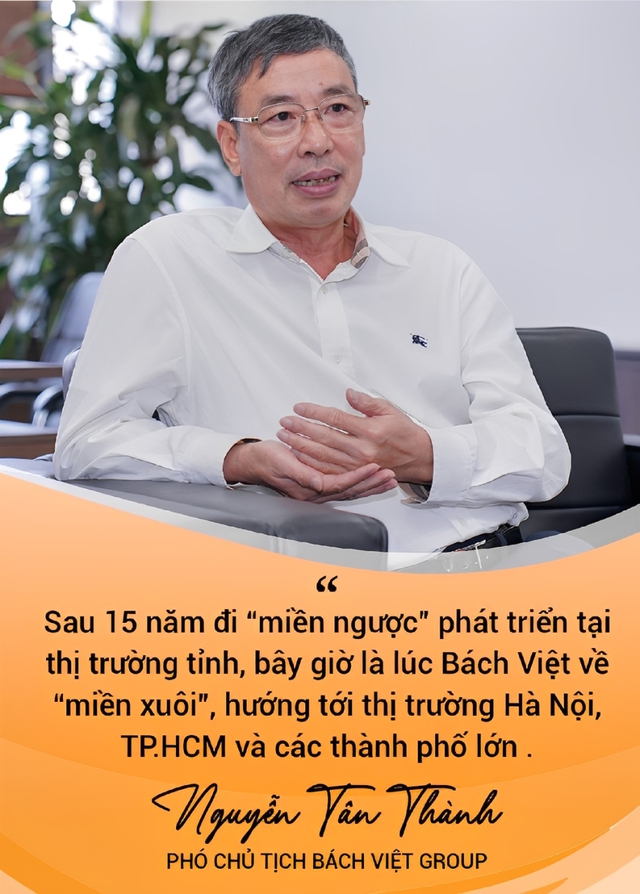
Take the Bach Viet Lake Garden project in Bac Giang, for example. In the early 2010s, provincial markets were dominated by subdivided land plots, with only a few developers from Hanoi like Park City, Gamuda, or Ciputra building integrated urban areas. Bach Viet learned from these foreign developers, bringing structured urban development to Bac Giang, investing in landscaping and amenities to create truly sustainable projects with long-term vision. Our goal was to ensure that even centuries later, the planning, infrastructure, and landscaping wouldn’t become outdated. That’s what we aimed for when entering these “upstream” markets.
Over the years, Bach Viet Lake Garden hasn’t just been a source of pride for us but has become a model urban area for the entire province. Whenever central agencies or other provinces visit, local leaders often showcase Bach Viet Lake Garden as an urban model. Even though Bac Giang now attracts many large developers with new urban projects, we remain proud of the value Bach Viet Lake Garden has brought.
Looking back on your journey, do you have any regrets? If you had the chance to start over, what would you do differently to improve?
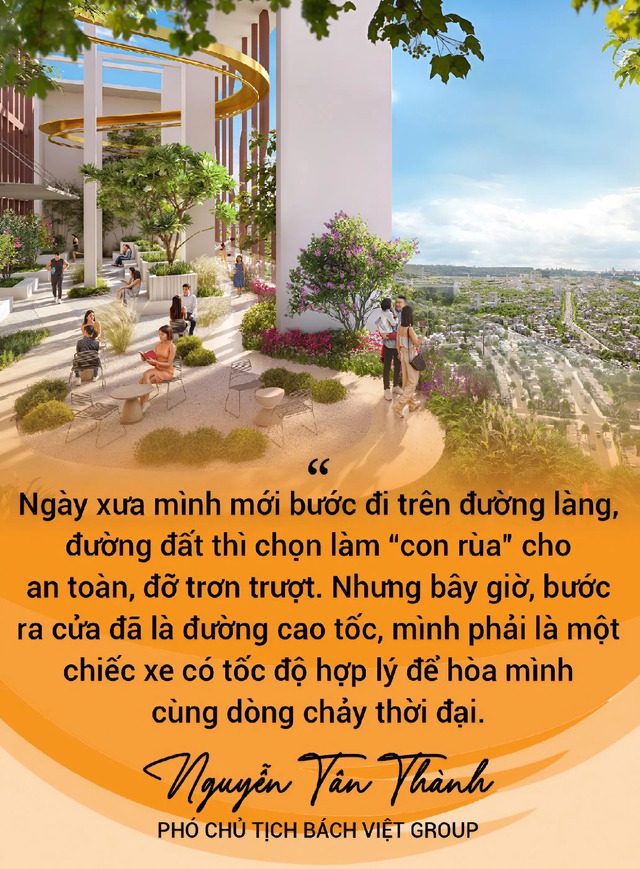
Both in work and life, I’m very cautious—like a “turtle spirit.” At Bach Viet Group, we plan meticulously but act swiftly once we decide. With that mindset, there’s truly nothing to regret after 15 years. Because when you’ve planned carefully and put in the effort, even if you fail, you accept it without regret. You only regret when you realize you didn’t try hard enough, asking yourself, “Why didn’t I push harder?” But here, we’ve always given our best and planned thoroughly, so we’re content with whatever comes our way.
However, there’s always room for improvement. If you think you’re already great, you’ll stop progressing. Some strategies were suitable for their time but may not fit the current context. We’ve proactively adjusted and changed many plans to align with reality.
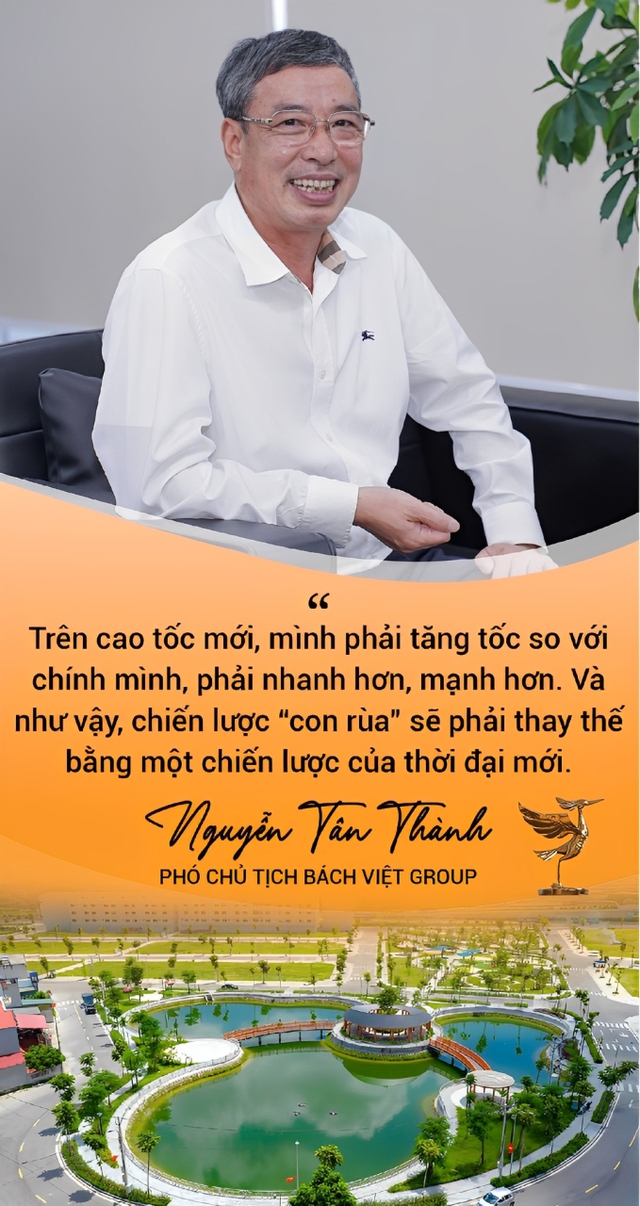
Looking ahead, Bach Viet Group can’t remain a “turtle.” The new context no longer suits that approach. In the past, when we were just starting on village paths, being a turtle was safe. But now, stepping onto the highway, moving at a turtle’s pace won’t work. We need to be a vehicle with a reasonable speed to keep up with the times.

The era of national advancement is like a highway for private enterprises to develop. Everything is changing rapidly, from provincial mergers to government policies supporting private businesses. On this highway, what is Bach Viet Group’s direction?
This highway belongs to the nation and the era, not just to us. As the entire nation enters a new era of advancement, Bach Viet is part of that flow. Especially as entrepreneurs, we bear the responsibility of driving economic development.
Vietnam has nearly 100 million people but fewer than a million businesses, mostly small and micro-enterprises. Entrepreneurs must lead the way, fostering economic growth to help the country achieve double-digit growth and become a developed, high-income nation by 2045.
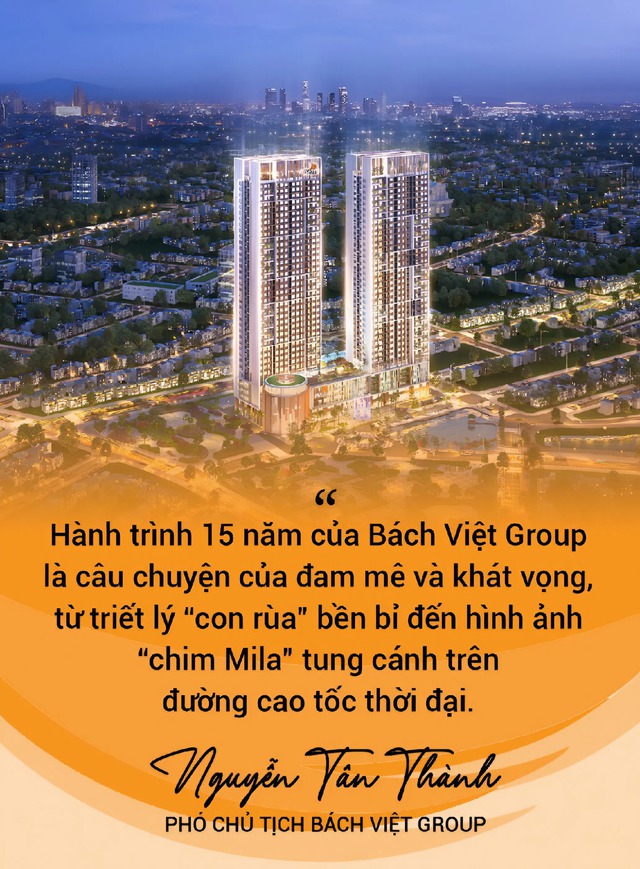
For Bach Viet, our core goal remains preserving our spiritual foundation while adapting flexibly to the BANI era. We focus on growth and improvement compared to our past selves, not others. Our strategy, once likened to a turtle, is now embodied by the Mila bird—able to fly fast or slow, advance or retreat, run or walk, depending on the context. This symbolizes our flexible development strategy.
Mila, inspired by the Lac bird on the Dong Son drum, represents wisdom, ambition, and unity. It’s our new spiritual symbol, reflecting our adaptability and aspirations.
On this new journey, what opportunities and challenges do you see for Bach Viet Group?
Every opportunity comes with risks and challenges. On the highway, potholes can damage your vehicle. So, while we embrace opportunities, we remain cautious, always managing risks. If we only focus on accelerating without braking, we risk accidents.
In real estate, the government is actively removing barriers, from social housing policies to legal reforms. Over 2,000 stalled projects are being addressed, and numerous decrees and laws are being revised. This creates immense opportunities for the market to boom but also brings potential risks and challenges.
Long-term, BV Land, our real estate arm, will focus on high-quality, affordably priced projects. We aim to meet real demand—for living or renting—creating value and cash flow. Speculative, hoarded properties will eventually saturate. We believe government policies will also shift to prevent resource wastage.
High-quality homes at good prices—does this mean accepting lower profits?
High quality and good prices mean setting reasonable profit targets. For instance, we aim for 20–25% annual growth, a balanced profit margin. We invest in top-tier design, landscaping, and construction, partnering with leading firms like Aedas, EGO, Daikin, Bosch, and Panasonic. Our Diamond Hill project in Thai Nguyen, designed by Aedas and landscaped by EGO, is the first EDGE-certified green residential project in the province, yet remains competitively priced and well-received.
What challenges do you face in developing social housing, a major government initiative?
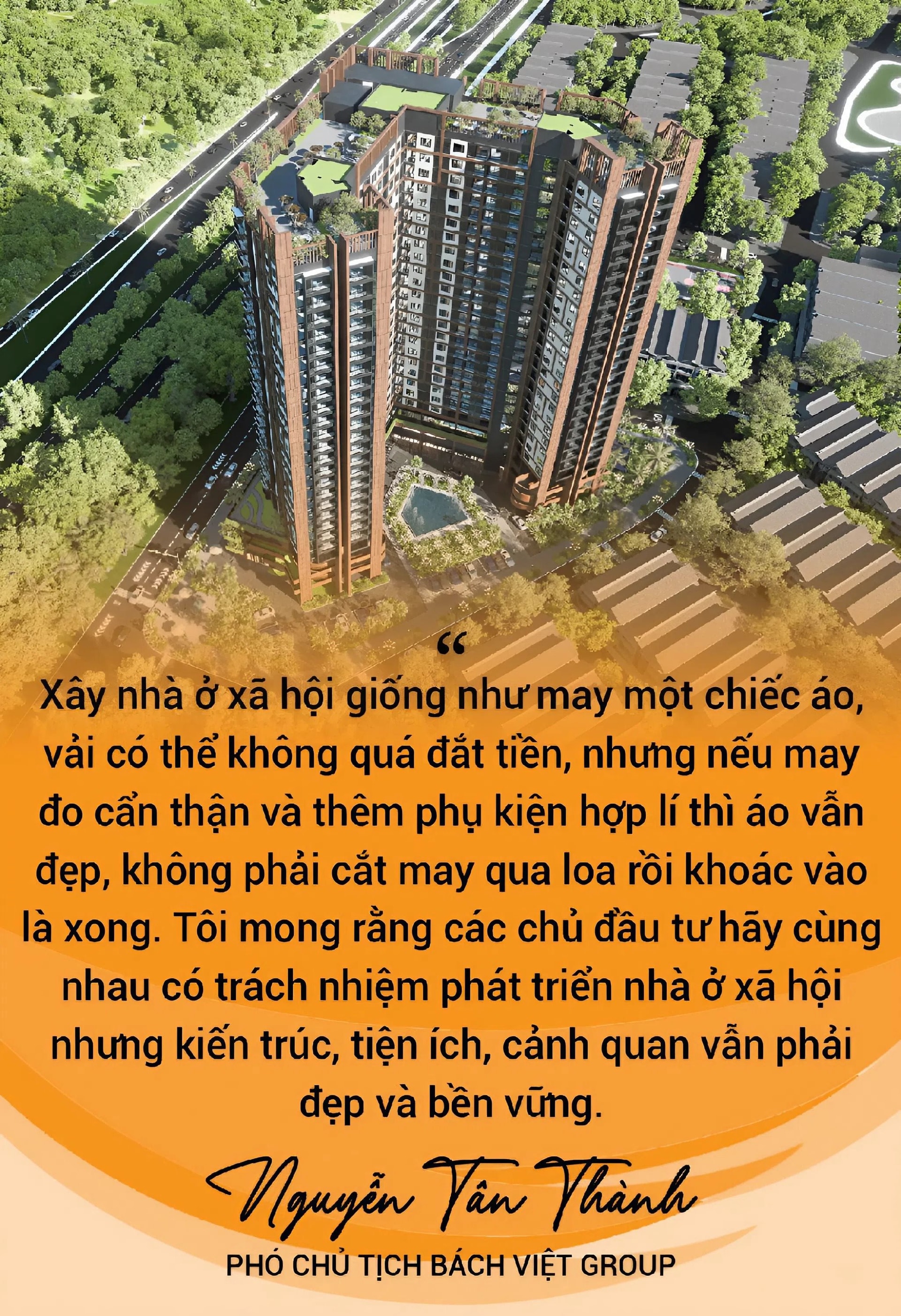
Social housing is often associated with low quality. BV Land aims to change that by developing high-quality social housing with thoughtful design, not just basic concrete blocks. We use affordable materials but focus on architecture, shared spaces, and modern landscaping. It’s like a well-tailored outfit—the fabric may not be expensive, but with good craftsmanship and accessories, it still looks great.
Our social housing projects include amenities like pools, green spaces, and modern designs, challenging the stereotype of temporary, poorly built homes. We aim to create vibrant, sustainable communities, not just provide shelter. If developers prioritize design and community, social housing can rival commercial projects in quality, differing only in material choices and government subsidies.

What’s your future strategy for Bach Viet Group?
In today’s rapidly changing world, Bach Viet must remain adaptable while staying true to our core values and culture. We focus on self-improvement, not just competing with others. Just as Samsung evolved from agriculture to tech, we must explore new directions without being confined to the present.
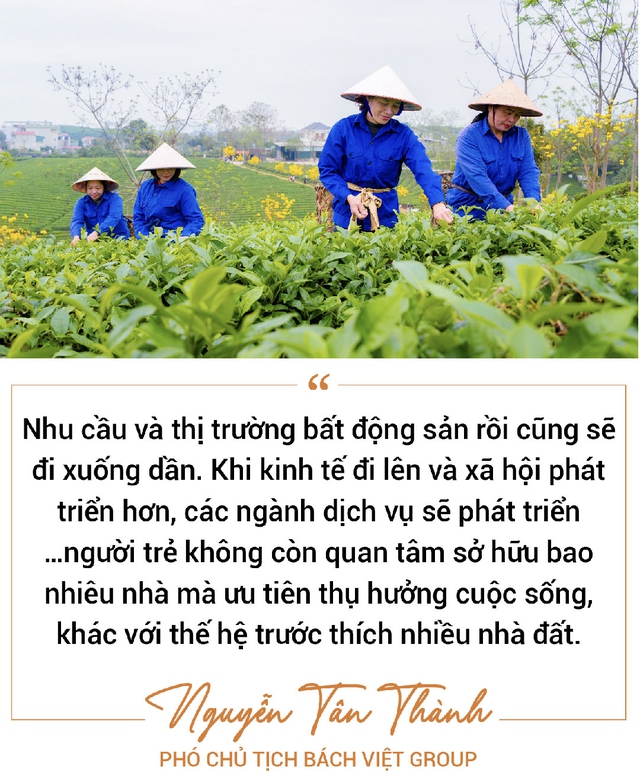
Looking ahead, real estate demand may decline as societies prioritize quality of life over property accumulation. In 10–20 years, tech, services, and healthcare will likely dominate. Bach Viet is preparing by diversifying into trade and services through BV Life, which includes auto distribution, equipment sales, and office rentals. We’re also expanding into tea production and exploring M&A opportunities in promising sectors.
If real estate is no longer the focus, what will Bach Viet prioritize?
BV Life, our trade and services arm, will lead our shift toward enhancing quality of life. We’re expanding into auto distribution, including electric vehicles, and exploring manufacturing opportunities. Additionally, we’re growing our tea business, aiming to export and develop consumer products. M&A remains a key strategy, as we’ve successfully acquired four companies in the past 15 years.
And what about education?
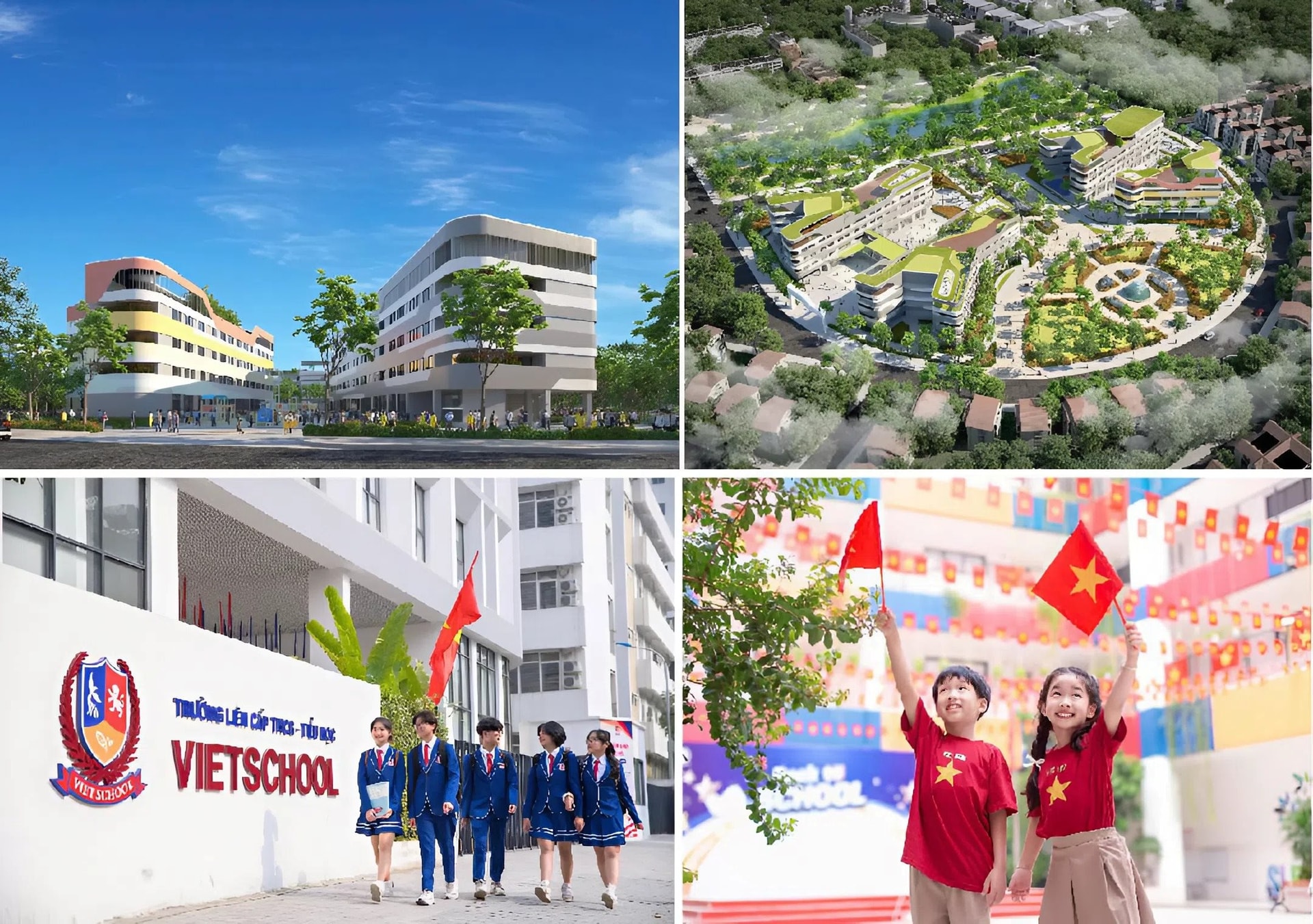
Our education division, Vietschool, operates successfully in Thanh Xuan, Hanoi, and we’re expanding with new campuses in Dang Xa and Dai Mo. These projects will solidify our reputation and meet growing demand.
Do you aim for Bach Viet to be a top 10 diversified company?
Our goal is to lead in quality, brand, and reputation, not just market rank. We focus on growth and self-improvement, believing that internal progress is more important than external comparisons.
How does social responsibility fit into Bach Viet’s journey?
For 15 years, we’ve not only built projects but also nurtured communities. In 2018, we established the Green Moon Fund to deepen our social impact. From schools and scholarships to bridges and community support, we’ve created a culture of giving within Bach Viet. For us, sustainability starts with caring for people and society today.

What’s been your greatest joy and challenge as an entrepreneur?
If you measure success solely by wealth, the journey can feel arduous. But with a deeper purpose, the challenges become fulfilling. Money is a means, not an end. Finding your guiding light makes the journey meaningful. Entrepreneurs thrive when they’re passionate about their work, not when they’re idle.

Thank you!
Article: Nam Anh – Ngọc Đẹp
Photos: Ngọc Đẹp
Design: Hải An
National Housing Fund Established: Empowering the Poor and Youth to Secure Affordable Housing?
The National Housing Fund is poised to be more than just a timely initiative; it represents a strategic approach to ensuring long-term social welfare.
Skyrocketing Prices: Hanoi’s Social Housing Units Surge to 90 Million VND/m², a Fivefold Increase
Social housing projects, once a beacon of affordability, are now commanding staggering prices on the secondary market. Just a few years after launch, units are being listed at 80-90 million VND/m², a 4-5 fold increase from their initial prices. This surge brings them on par with high-end condominiums, effectively pricing out the very low-income earners they were intended to serve.
Exclusive Partnership: Top 4 Market Leaders Unite to Distribute Dasong Village Project
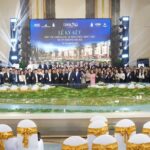
On November 25, 2025, at the Dasong Village Sales Office, four prestigious real estate distribution and development firms—MSH Group, Đất Xanh Miền Bắc, Trung Thực Land, and AHS Property—formally entered into a strategic partnership with the project’s developer, Big One Group (BOG).
Haiphong Increases Social Housing Target to 49,455 Units Post-Boundary Merger
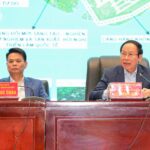
The Executive Committee of the Hai Phong City Party Committee has unanimously agreed to amend Resolution 09-NQ/TU, updating the social housing development targets by 2030 to align with the city’s new administrative boundaries and project implementation pace, as Hai Phong enters a new phase of growth.
Hanoi Allocates Infrastructure Budget for Standalone Social Housing Projects

Continuing the agenda of the 28th session, on the morning of November 27th, the Hanoi People’s Council delegates voted to adopt a resolution outlining the use of budget funds for investing in the construction of essential technical infrastructure frameworks and social infrastructure within independent social housing projects across Hanoi.