Mobilizing the Entire Nation to Build a National Logistics Infrastructure
In recent times, Viettel Post has made numerous new moves, which you refer to as the socialization strategy of logistics infrastructure. What does this mean in simple terms?
Mr. Phung Van Cuong: In our view, the socialization of logistics infrastructure simply means mobilizing the entire population and society to participate in building the national logistics infrastructure.
Previously, infrastructure projects in energy, telecommunications, and even digital infrastructure were primarily undertaken by the government, large organizations, and entities, without much involvement from the general public. However, we believe that the national logistics infrastructure can be developed differently.
To explain this perspective more clearly, we must first understand what logistics is. According to our redefined concept, logistics essentially ensures the flow of physical goods within society. Wherever there is a flow of goods, logistics will be present. Thus, logistics reaches every individual and household, serving as the lifeblood of the economy.
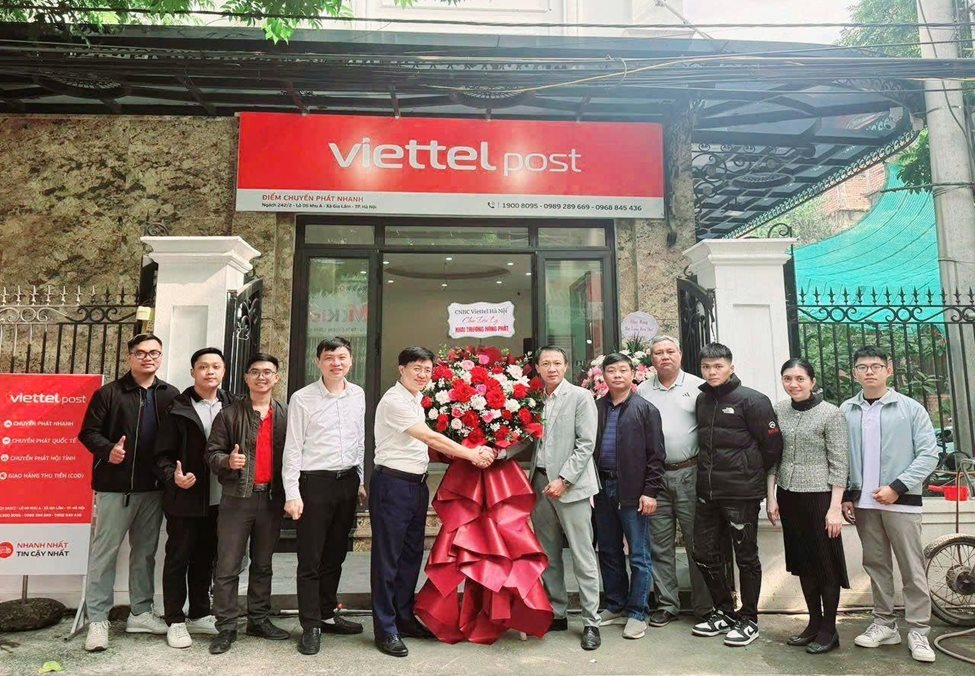
One of the authorized agencies operated in Hanoi last November
Structurally, logistics infrastructure consists of two layers.
The first layer is foundational, known as the trunk layer, operating at the regional and national levels. The second layer comprises the branch components, such as post offices, which serve as the final points for customer service, and transportation means like motorcycles and small trucks that deliver goods to individual homes.
Notably, there is also the digital logistics infrastructure, which we refer to as smart lockers. These are intelligent delivery points that operate without human intervention. Our goal is to equip all residential buildings, apartments, and homes with these smart systems, thereby establishing a comprehensive digital logistics infrastructure.
With this model, how will Viettel Post and the “entire nation” collaborate?
In logistics, both the trunk and branch layers of infrastructure are equally important. Having a trunk network and warehouses without branch connections means customers cannot receive their goods. As a major enterprise, we will focus on developing the trunk infrastructure, including core technologies, large hubs, and major operational zones. The branch infrastructure will be socialized.
What does this mean? If you live in an apartment complex and see the need for a smart locker, you can invest 70-100 million VND to install one. This locker will be integrated into Viettel Post’s logistics network.

Up to 80% revenue sharing when investors self-fund, with Viettel Post operating the smartbox
Not limited to smart lockers, if you invest in a small truck or minivan costing 300-400 million VND, it can also be connected to Viettel Post’s network to become a freight vehicle. Alternatively, if you own a plot of land and wish to convert it into a warehouse or post office for handling goods, it can be integrated as a service point within Viettel Post’s network, with revenue shared between both parties.
This platform model is similar to Grab or Uber, but instead of transporting people, we are building a platform that connects various logistics components. This is how the entire nation can participate in developing the branch infrastructure.
Abroad, this model is known as franchising, but its essence is socialization. We hope other companies will adopt this model, as no single entity can do everything alone.
DEAD TIME AND THE NON-STOP ECONOMY
What is the biggest bottleneck in Vietnam’s logistics today, and can the digital infrastructure you mentioned resolve this issue?
One of the most significant bottlenecks in Vietnam’s logistics is the excessive “dead time.” The current model requires delivery personnel to visit post offices to pick up items. They then deliver orders based on customer addresses.
Our analysis shows that the most time-consuming aspect of the logistics supply chain is waiting. Before reaching a customer’s home, delivery personnel must call to confirm their presence and availability. Upon arrival, they often have to wait, sometimes for an hour or more, for nearly every order.

In China, the global leader in logistics, they speak of a non-stop economy—one without any waiting. Achieving this requires synchronized infrastructure.
On average, a Chinese delivery person handles 1,000 to 1,500 orders per day, compared to 70-80 orders per day in Vietnam. Their productivity is about 20 times higher. Delivery personnel can bring hundreds of orders to a single building without calling each recipient, thanks to smart lockers. They can deposit hundreds of packages into these lockers within just 15 minutes.
If successful, will digital logistics infrastructure revolutionize Vietnam’s current delivery system?
Absolutely. Traditionally, deliveries required face-to-face interactions. However, this approach is not always feasible in terms of timing, location, or recipient availability.
We adhere to the “3 Any” philosophy, inspired by telecommunications: Anyone can use it, Anytime, and Anywhere.
With smart lockers in residential buildings, customers can collect their packages at 2 a.m. if needed. Even if you’re abroad, you can still receive your items without canceling or rescheduling deliveries. Such innovations reduce congestion and optimize logistics flow.
Initially, we offer free locker usage for the first 24 hours, with fees applying thereafter.
After one year of implementation, what are Viettel Post’s results?
We are focusing on major cities like Hanoi and Ho Chi Minh City for pilot projects and have begun expanding to other provinces. Previously, it took us 28 years to establish 1,500 post offices independently. With the socialization model, we’ve opened 700 post offices in just one year—an astonishing rate.
During our expansion, Bac Ninh province stood out. Even after merging with Bac Giang, its leadership remained enthusiastic and sought cooperation with Viettel Post.
Initially, all government offices and state-owned buildings will adopt smart lockers. Next, we target industrial zones, where workers often face restrictions on leaving during their 8-10 hour shifts but have high delivery demands.
THE PAIN POINTS OF VIETNAM’S LOGISTICS AND THE ASPIRATION FOR UNIVERSAL DIGITAL LOGISTICS
Foreign companies dominate Vietnam’s logistics market. Can Viettel Post’s efforts shift this balance?
We anticipate that our socialization strategy will reshape the logistics landscape within 1-2 years. The entity with the most extensive network will emerge victorious.
Currently, Vietnam’s logistics sector faces a critical challenge: foreign companies operate highly professionally with substantial capital, often engaging in costly market share battles. E-commerce platforms and their affiliated logistics providers are particularly aggressive. Once competitors are eliminated, the dominant player raises prices significantly.
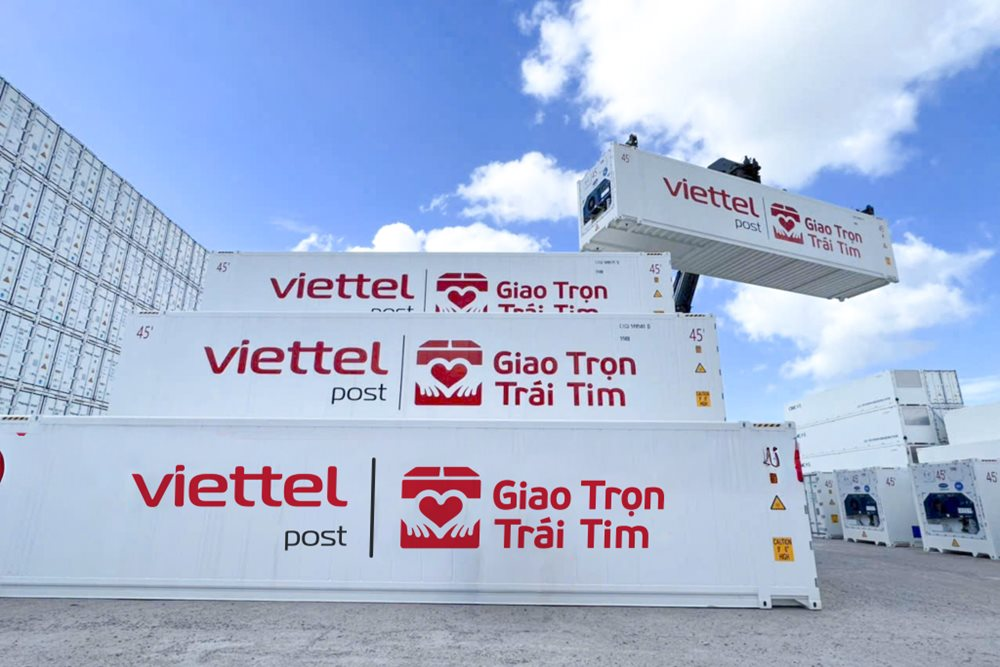
Vietnamese companies, with limited capital, cannot sustain such long-term competition.
Socialization changes this dynamic. First, local participation accelerates network expansion far beyond what foreign companies can achieve. Second, leveraging societal resources reduces costs compared to companies training their own personnel.
Most importantly, local knowledge is invaluable. Employing local staff who understand the area and its people enhances operational efficiency. We believe socialization harnesses the power of Vietnam’s 100 million citizens.
Last-mile delivery in Vietnam is predominantly urban, leaving rural areas largely untapped. Does Viettel Post plan to target rural markets as it did in telecommunications?
In China, with 1.5 billion people, the average individual places 160 orders annually—about 13-14 per month.
In Vietnam, this figure is only 2-3 orders per month, primarily among urban youth and middle-aged adults. Other demographics, especially in rural and remote areas, lack access or familiarity with these services.
We aim to universalize digital logistics services, similar to developed markets and akin to Viettel Group’s telecommunications revolution. Socialization is key to realizing this vision.
Success in this strategy will narrow Vietnam’s logistics gap with China and the world while creating livelihoods for countless households.
Thank you, Mr. Cuong!
Crowdsourcing Logistics: Empowering Everyone to Build Infrastructure and Grow Businesses with Viettel Post
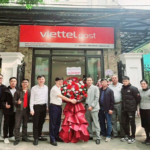
Viettel Post’s CEO, Phung Van Cuong, unveiled a groundbreaking strategy: “Socializing Logistics Infrastructure.” This innovative approach aims to engage the community in building a robust logistics network, empowering every individual to become an integral part of the operational chain. By fostering this collaborative model, the goal is to significantly reduce delivery wait times and progressively enhance the efficiency of Vietnam’s logistics sector.
Unraveling Vietnam’s Logistics Bottlenecks: Prime Minister Highlights Six Critical Choke Points

By 2025, Vietnam is projected to rank among the top 10 emerging logistics markets globally, according to international assessments. However, the country’s logistics sector has yet to fully capitalize on its vast potential and inherent advantages.
Emerging Urban Corridor: Economic Hub Development from Da Nang Airport to Chu Lai
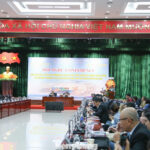
Da Nang City has identified the eastern region, stretching from Da Nang Airport to Chu Lai Airport, as the foundation for a coastal urban corridor and a key socio-economic hub. This strategic area will drive development and support growth in the western region.
Exciting News for Ha Tinh: Viettel Post Surveys Land, Plans 550 Billion VND Logistics Center
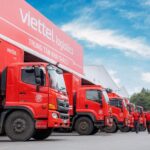
Viettel Post, a leading postal and logistics company, has recently conducted a site survey for a 21-hectare logistics center investment in Ha Tinh province, Vietnam. With a substantial capital of approximately VND 550 billion, this project aims to leverage its strategic location, offering direct connectivity to the North-South railway and serving as a gateway to Laos.
The Inevitable Shift: Port Cities as the Future of Ho Chi Minh City’s Real Estate Market

The development of Ho Chi Minh City into an international maritime hub is reshaping its urban landscape, shifting focus toward key trade gateways. These areas seamlessly integrate logistics infrastructure, industrial zones, and residential communities, creating a perfect convergence of commerce and living. This transformation not only redefines the city’s structure but also unlocks new opportunities in the real estate market, particularly for waterfront and port-adjacent regions.