Voters in Ho Chi Minh City have raised concerns about the high land use fees, which pose financial challenges for many households and individuals, especially those in difficult circumstances, when subdividing land or building homes for their children. They struggle to afford the conversion of land use purposes to residential land.
As a result, voters have proposed reviewing land use conversion fees to make them more reasonable. They also suggest reducing personal income tax on real estate transfers, particularly with exemptions or reductions for households facing financial hardships. Additionally, they recommend implementing a long-term installment payment mechanism for land use conversion fees to help residents stabilize their housing and focus on work and production.

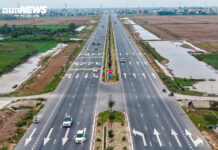
Illustrative image
Regarding these concerns, the Ministry of Finance stated that Article 156, Clause 1 of the Land Law No. 31/2024/QH15 stipulates: “When changing land use purposes, land users must pay land use fees or land rent in a lump sum for the entire lease period, equivalent to the difference between the land use fees or land rent of the new land type and the previous land type.”
Decree 103/2024/NĐ-CP, issued on July 30, 2024, outlines the calculation of land use fees for households and individuals changing land use purposes, following the principles of Article 156, Clause 1 of the 2024 Land Law.
Accordingly, households and individuals converting agricultural land to residential land must pay the difference between residential land prices and agricultural land prices at the time of the conversion approval.
Recently, the Ministry of Finance has received feedback from local authorities and media reports indicating that land prices in the new price list under the 2024 Land Law have surged in some areas compared to the previous list (under the 2013 Land Law), particularly for residential land relative to agricultural land.
Consequently, when converting agricultural land to residential land, citizens face significantly higher land use fees than before. There have been proposals to adjust these fees to reduce the financial burden on residents.
In response, the Ministry of Finance has drafted a Government Resolution to address issues related to land use fee calculations for households and individuals converting agricultural land to residential land. This draft is being finalized after review by the Ministry of Justice and will be submitted to the Government for approval.
Regarding the proposal for long-term installment payments for land use conversion fees, the Ministry of Finance noted that current land use fee regulations already include several exemptions and reductions to support those in difficult situations and policy beneficiaries.
Specifically, Decree 103/2024/NĐ-CP (Articles 18 and 19) exempts land use fees for implementing housing policies for disabled veterans or war invalids without work capacity, and households of martyrs without primary laborers.
It also provides exemptions or reductions for the poor, ethnic minorities, and those displaced due to state land reclamation for safety reasons.
For long-term installment payments, Decree 103/2024/NĐ-CP and Decree 101/2024/NĐ-CP allow land users to defer land use fee payments when receiving land use right certificates for the first time, with specific procedures for debt recording.
Additionally, current laws offer exemptions and reductions for the poor, policy beneficiaries, and those facing genuine hardships.
Articles 18 and 19 of Decree 103/2024/NĐ-CP detail exemptions and reductions for residential land within allocated limits for the poor, policy beneficiaries, and those in genuine hardship, including disabled veterans, martyr households, the poor, ethnic minorities, displaced persons, and individuals with meritorious service under the law.
What is the Most Expensive Road in Ho Chi Minh City According to the New Land Price List?

The highest land prices in the current land price table are attributed to three prestigious streets: Nguyen Hue, Le Loi, and Dong Khoi, each commanding an impressive rate of 687.2 million VND per square meter. The consulting unit’s surveyed price for the new land price table stands at 954.3 million VND per square meter, while the proposed price for implementation from January 1, 2026, remains at 687.2 million VND per square meter.
Land Use Fee Installment Proposal: Ministry of Finance Responds
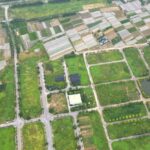
In response to local and public appeals for installment payments on land use fees to alleviate financial burdens, the Ministry of Finance has stated that current legislation does not permit such arrangements. However, they have indicated that this issue will be considered during the revision of relevant decrees.
Proposed Abolition of Market-Based Land Valuation Starting 2026
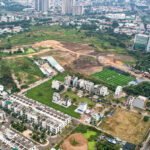
“Implementing the Ministry of Finance’s proposed land price table guidelines will streamline the process, allowing for swift and efficient adjustments using the K coefficient. This approach eliminates restrictions on the frequency of adjustments when resolving land use fees,” stated Dr. Pham Viet Thuan, Director of the IEEr Institute.
Hanoi Officially Approves New Land Price List, Outskirts See Significant Fluctuations

The Hanoi People’s Council has approved a new land price table effective from January 1, 2026. Prime locations along central streets will see land prices set at 702 million VND per square meter. Suburban areas have experienced the most significant adjustments, with the highest increase recorded at approximately 26%.
Agile Group Stock (HAG) Faces Uncertainty: What’s Next for Bầu Đức’s Shares?
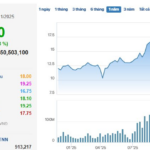
HAG’s positive momentum was evident on the day of its Investment Roadshow, where the company unveiled its restructured strategy and highlighted investment opportunities within the group.