On the afternoon of December 1, the National Assembly held a plenary discussion on the draft Resolution outlining mechanisms and policies to address challenges in implementing the Land Law.
Citizens to Receive Compensation Differential for Low Land Valuations
A key point of discussion among National Assembly delegates was the regulation concerning land reclamation, compensation, support, and resettlement in cases where land is acquired through negotiated agreements for project implementation.
Specifically, if land use rights have expired or the extension period has ended, and over 75% of the land area and more than 75% of the land users have reached an agreement, the Provincial People’s Council will consider and decide on reclaiming the remaining land area to allocate or lease it to the investor (Clause 2, Article 3 of the draft law).
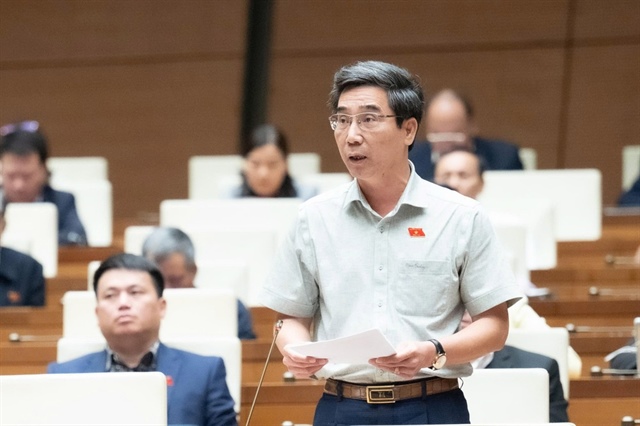
Delegate Trần Chí Cường (Da Nang). Photo: QH |
Discussing this issue, Delegate Trần Chí Cường (Da Nang) emphasized the necessity of land reclamation by the state to resolve bottlenecks and prevent project delays, which negatively impact socio-economic development. However, the state must ensure the lawful rights and interests of citizens whose land is reclaimed.
“Therefore, I propose adopting Option 2 in the draft. Under this option, if the total compensation, support, and resettlement costs calculated per square meter are lower than the average market price, the affected citizens will receive the shortfall. This differential will be covered by the investor and included in the project’s total expenses,” he suggested.

Delegate Nguyễn Thị Việt Nga (Hai Phong). Photo: QH
|
Similarly, Delegate Nguyễn Thị Việt Nga (Hai Phong) expressed support for Option 2, noting that while Option 1 simplifies procedures and reduces costs for investors, it creates significant disparities in benefits among households in the same reclaimed area.
She highlighted that Articles 78 and 79 of the 2024 Land Law stipulate that land reclamation prices are determined based on the state-published land price list at the time of reclamation for compensation and support calculations.
“Thus, 75% of the area agreed upon earlier at market prices, while the remaining 25% reclaimed later at state-listed prices, often much lower than market rates. This leads to comparisons, unfairness, and difficulties in reaching consensus, potentially resulting in complaints and delays in land clearance,” Delegate Nga stressed.
She analyzed that this regulation could be exploited, as after investors secure agreements for 75%, they might deliberately delay agreements for the remaining 25% to apply the lower state-listed reclamation prices, reducing costs.
Meanwhile, Option 2 ensures a balance of interests among the state, affected landowners, and investors. This option guarantees that citizens in the remaining area receive compensation no lower than the average previously agreed-upon rate, fostering fairness among households in the same area.
“This not only protects the legitimate rights of those whose land is reclaimed but also reduces the risk of disputes and complaints, while limiting investors’ exploitation of policies for profit,” Delegate Nga emphasized.
Call for Review of Land Reclamation Thresholds
Delegate Hà Sỹ Đồng (Quang Tri) addressed the mechanism for land reclamation when a project achieves over 75% of the land area and 75% of land user agreements. He noted that while this is an important and sensitive provision, it directly impacts citizens’ property rights protected by the Constitution.
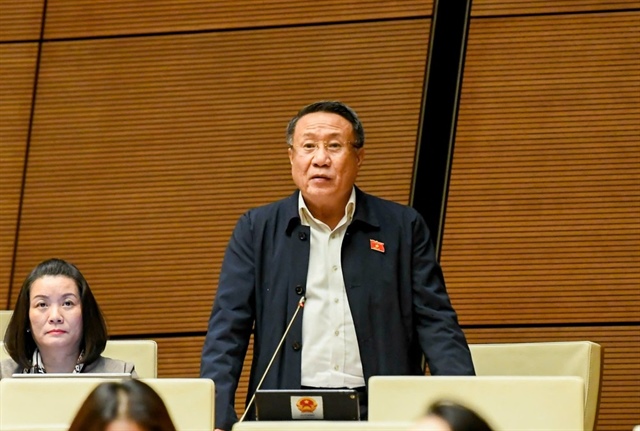
Delegate Hà Sỹ Đồng (Quang Tri). Photo: QH |
He warned that if the regulation is not tightly drafted, prolonged complaints, lack of consensus, and even social hotspots could arise. Therefore, he suggested careful consideration: either raising the threshold to 80–85% to enhance legal safety and social persuasiveness, or applying it only to national key projects, strategic infrastructure projects, or long-delayed compensation projects, rather than universally.
According to him, the critical factor lies not solely in the percentage but in the compensation determination mechanism, dialogue mechanisms, resettlement mechanisms, and independent oversight mechanisms.
“I propose legislating the requirement for an independent negotiation council, inviting reputable land valuation organizations, and fully disclosing all records to ensure citizens see the policy as a fair agreement, not coercion. A land policy is only valuable when citizens feel their rights are respected before the state reclaims land for development,” he stressed.
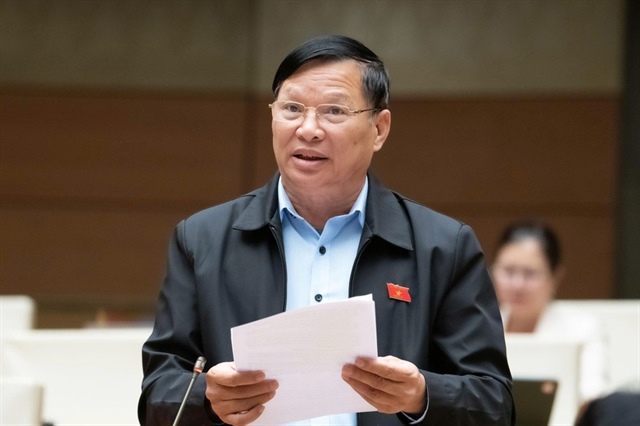
Delegate Trần Văn Tiến (Phu Tho). Photo: QH |
Sharing similar concerns, Delegate Trần Văn Tiến (Phu Tho) noted that this regulation is difficult to implement, as projects must simultaneously meet both conditions: agreements exceeding 75% of the land area and 75% of land users.
He questioned, “Why choose 75% instead of 60%?”
Delegate Tiến stated that the drafting committee surveyed and evaluated projects subject to agreements. Results showed that very few projects met both criteria, consistent with findings from previous pilot projects.
Appropriate Option to Be Selected
In response, Minister of Agriculture and Environment Trần Đức Thắng noted that many supported the regulation allowing the state to reclaim land areas where investors have secured over 75% of the land area and user agreements.
Some suggested raising the consensus threshold to enhance social equity and reduce risks and disputes, while others proposed lowering it below 75% or requiring only one of the two conditions, not both.
“The drafting agency recognizes this as a special case requiring careful consideration from multiple perspectives: socio-economic, security, social order, and protection of citizens’ lawful rights,” he said.
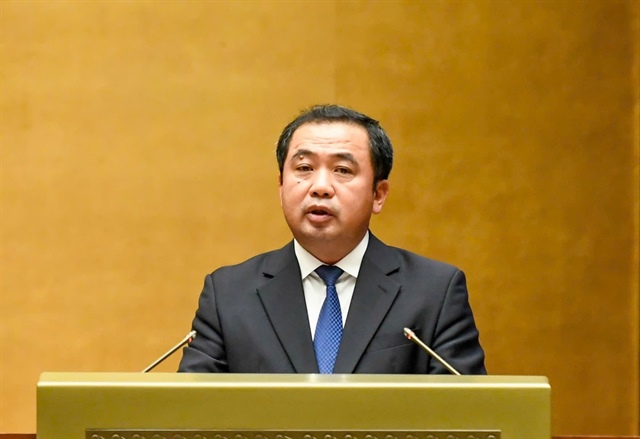
Minister of Agriculture and Environment Trần Đức Thắng. Photo: QH |
Accordingly, Minister Thắng stated that the draft resolution tasked the People’s Council and state authority representing the people’s will with reviewing and deciding on land reclamation when investors secure over 75% of the land area and user agreements. Additionally, Clause 7 of Article 3 in the draft presents two options as proposed by delegates.
First, regarding compensation, support, and resettlement for the remaining land area, the draft offers two options. Option one applies standard state land reclamation procedures for compensation, support, and resettlement.
Option two stipulates that if the total compensation and support per unit area is lower than the average agreed-upon land price, affected citizens will receive the differential. Investors are responsible for covering this differential, which is included in the project’s investment costs.
“Based on today’s group discussions and plenary session, the Government will collaborate with the appraisal agency to study and select the most suitable option,” said the Minister of Agriculture and Environment.
REPORTING TEAM
– 18:14 01/12/2025
Unblocking Land-Related Bottlenecks: A Comprehensive Solution

The National Assembly is considering the adoption of a resolution introducing new mechanisms and policies regarding land reclamation and land valuation. These measures aim to address existing challenges and meet the practical demands of the current situation.
Unlocking Land Law Implementation: National Assembly Deliberates Solutions to Overcome Challenges

The draft resolution of the National Assembly, outlining mechanisms and policies to address challenges in the implementation of the Land Law, will be discussed by delegates during this week’s session.
Revised Title:
“Legislative Review: Proposed Amendments to Special Development Mechanisms for Ho Chi Minh City and Da Nang”
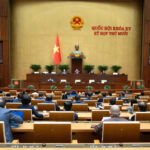
At the recently updated session agenda, the National Assembly will review and supplement resolutions on special mechanisms and policies for the development of Ho Chi Minh City and Da Nang City.
Dong Nai: Criticism Directed at the People’s Committees of Dong Tam, Tan Loi, and Nghia Trung Communes
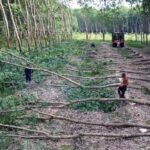
The People’s Committee of Dong Nai Province has issued a reprimand and corrective action to three units for failing to meet their implementation deadlines: the People’s Committees of Dong Tam, Tan Loi, and Nghia Trung communes.
Đà Lạt Valley Flower Estate Owner Loses Over 1.5 Hectares of Land to Lâm Đồng Province’s Reclamation
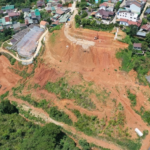
The People’s Committee of Lam Dong Province has officially reclaimed the entire 15,214 square meters of land previously allocated to Saigon Construction and Investment Trading Company Limited. This land, originally designated for the development of the Da Lat Flower Valley residential project, is now fully under the province’s control.