Ms. Tong Thi Hanh, Director of the Department of Housing and Real Estate Market Management (Ministry of Construction), stated that the establishment of a national housing fund will address the challenging issue of land allocation for social housing development. Vietnam is aggressively implementing a plan to build 1 million social housing units, with the primary challenge being to expand supply while conserving land and ensuring housing reaches those genuinely in need.
The national housing fund is expected to ensure the sustainability of the real estate market.
Prioritizing the development of rental social housing will create a more efficient usage cycle. Once tenants qualify to purchase commercial housing, they will return their units, allowing others to benefit. This mechanism optimizes resources, expands housing access, and strengthens social welfare sustainability.
Mr. Nguyen Van Dinh, Vice Chairman of the Vietnam Real Estate Association, emphasized that the real estate market is currently imbalanced, with a severe shortage of affordable and social housing. Establishing a national housing fund is seen as a solution to meet the housing needs of policy beneficiaries and low-income workers, enabling them to “settle down and thrive.”
Additionally, the fund will promote economic development, particularly in industrial zones and major cities, while addressing supply-demand imbalances and ensuring the real estate market’s sustainability.
Dr. Vo Tri Thanh, Director of the Institute for Brand and Competition Strategy Research, agreed that rapid urbanization, rising property prices, and limited incomes make it difficult for many, especially middle- and low-income earners and young people, to secure housing.
The national housing fund is not just a temporary solution but a strategic initiative to ensure social welfare, address housing issues, and stabilize the lives of middle- and low-income urban residents.
Furthermore, the fund will increase the supply of affordable housing, promote the sustainable development of the real estate market, and reduce the significant gap between luxury and affordable housing segments.
Mr. Dinh Minh Tuan, Sales Director at PropertyGuru Vietnam, analyzed that building 1 million social housing units by 2030 is an ambitious goal. However, relying on traditional methods, such as encouraging businesses and banks to contribute, may hinder its realization.
“If we establish a fund demonstrating the government’s proactive role in providing capital for social housing purchases and supporting developers, it will be a dual measure to accelerate the social housing market,” said Mr. Tuan.
According to Mr. Tuan, the fund’s first impact will be providing developers with capital to expedite social housing projects at more affordable prices.
The second impact will be supporting residents. Currently, homebuyers must pay high-interest rates, consuming a significant portion of their income. However, the national housing fund’s new loan package offers longer terms and lower payments, making homeownership more accessible.
Dr. Tran Xuan Luong, Deputy Director of the Vietnam Real Estate Market Research Institute, offered a more cautious perspective. While the fund’s establishment is highly regarded, its actual market impact requires further validation. Given the lag between housing supply and demand, the policy will initially influence investor sentiment.
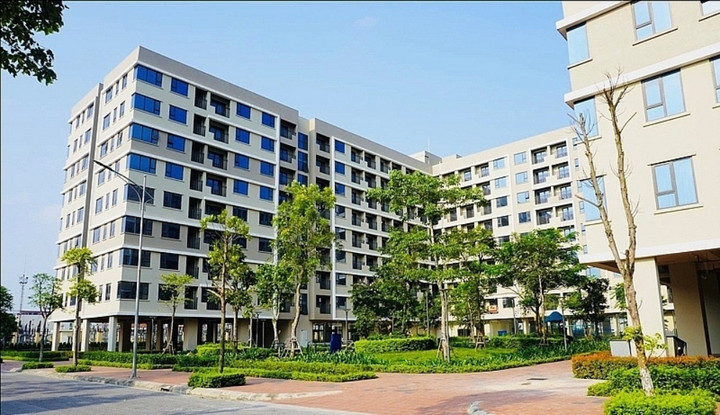
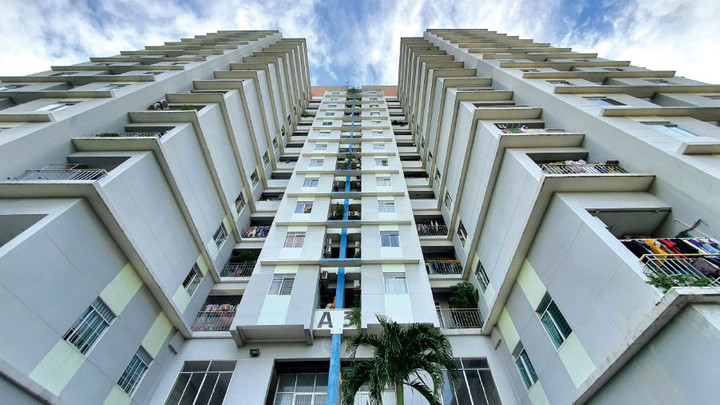
The poor and young will have better housing opportunities if the national housing fund operates effectively. (Illustrative image)
Moreover, the fund’s effectiveness heavily relies on implementation. If executed properly, it can expand rental opportunities for low-income groups facing housing access barriers. Conversely, if operations lack transparency, supply delays will persist, and initial goals may not be achieved.
Need for Coordinated Solutions
Ms. Do Thu Hang, Senior Director of Research & Consulting at Savills Hanoi, advised that to maximize the national housing fund’s effectiveness, clear objectives, diversified funding sources, and transparent management are essential.
The fund should focus on financially supporting those needing to buy or rent housing at affordable prices. Many low-income workers cannot qualify for social housing or afford commercial housing, especially in major cities.
In addition to contributions from workers, businesses, and the state budget, real estate companies should be encouraged to participate. In return, the government can offer incentives like tax exemptions and financial support to attract investment in social housing.
Dr. Can Van Luc also suggested that authorities expedite the completion of legal frameworks, land and real estate databases, and measures to address rapid property price increases.
“Beyond establishing the national housing fund or taxing second homes, comprehensive solutions are needed, such as controlling real estate credit, preventing speculation and price manipulation through databases, and diversifying funding sources and products,” proposed Mr. Luc.
Dr. Nguyen Van Dinh affirmed that for the national housing fund to be effective long-term, it must be tailored to market specifics and domestic financial resources. The government must first establish clear land use plans and allocations for fund development.
Additionally, the fund requires not only state resources but also contributions from workers through small payroll deductions. This highly socialized approach demonstrates individual responsibility toward the community.
Real estate companies must also contribute by allocating profits from commercial projects to build social or rental housing, addressing low-income workers’ housing needs.
The government issued Decree 302/2025, establishing the national housing fund—a non-budget state financial fund with legal status tasked with investing in social housing development, increasing supply, and stabilizing the real estate market. The fund operates at two levels: centrally managed by the Ministry of Construction and locally by provincial People’s Committees.
The fund will invest in constructing or acquiring affordable apartments, social rental housing, dormitories, and official residences; units will be rented, not sold, and managed non-profitably to preserve capital and recycle investments; it will primarily serve low-income earners, workers, young professionals, public servants, military personnel, and migrant workers.
Skyrocketing Prices: Hanoi’s Social Housing Units Surge to 90 Million VND/m², a Fivefold Increase
Social housing projects, once a beacon of affordability, are now commanding staggering prices on the secondary market. Just a few years after launch, units are being listed at 80-90 million VND/m², a 4-5 fold increase from their initial prices. This surge brings them on par with high-end condominiums, effectively pricing out the very low-income earners they were intended to serve.
Haiphong Increases Social Housing Target to 49,455 Units Post-Boundary Merger

The Executive Committee of the Hai Phong City Party Committee has unanimously agreed to amend Resolution 09-NQ/TU, updating the social housing development targets by 2030 to align with the city’s new administrative boundaries and project implementation pace, as Hai Phong enters a new phase of growth.
CEO Vu Cuong Quyet: Skyrocketing Property Prices Pose Significant Concerns for Real Estate Professionals

Following a series of sharp price hikes, the real estate market typically enters a phase of price corrections and stagnation, according to Mr. Vu Cuong Quyet, CEO of Dat Xanh Northern Region. Consequently, he anticipates a shift toward sustainable development and steady growth in the market.
Exciting News: Multi-Billion Infrastructure Projects Nearing Completion, a Major Boost for Western Ho Chi Minh City’s Real Estate Market

One of the key drivers propelling the real estate development in the western region of Ho Chi Minh City over the past years has been the robust investment in inter-regional transportation infrastructure.
Hanoi Allocates Infrastructure Budget for Standalone Social Housing Projects

Continuing the agenda of the 28th session, on the morning of November 27th, the Hanoi People’s Council delegates voted to adopt a resolution outlining the use of budget funds for investing in the construction of essential technical infrastructure frameworks and social infrastructure within independent social housing projects across Hanoi.