Optimal Route Planning
Alongside the expedited construction of several highway projects, including Bến Lức – Long Thành, Biên Hòa – Vũng Tàu, and the expansion of the TPHCM – Long Thành expressway, authorities are also accelerating the development of a metro line directly connecting two major airports.
According to the People’s Committee of Ho Chi Minh City (HCMC), the most feasible plan to link Tân Sơn Nhất and Long Thành airports involves utilizing Metro Line 2 (Tham Lương – Bến Thành, Bến Thành – Thủ Thiêm) and the Thủ Thiêm – Long Thành railway. The Bến Thành – Tham Lương segment (approximately 12 km) has completed land clearance and is slated to begin construction in 2025, with completion expected before 2032.
At Bà Quẹo station, the Trường Chinh and Tân Kỳ – Tân Quý roads are being expanded, with completion anticipated by 2029. This will facilitate seamless passenger transfers from Tân Sơn Nhất Airport to Bà Quẹo station.
The shorter Bến Thành – Thủ Thiêm segment (about 6 km) is planned to run underground along major traffic arteries like Hàm Nghi and Mai Chí Thọ streets, ensuring swift land acquisition and implementation.
The Thủ Thiêm – Long Thành line will largely follow the TPHCM – Long Thành – Dầu Giây expressway corridor and Ring Road 3, which are primarily undeveloped areas. In Đồng Nai Province, the route will utilize the median strip along Provincial Road 25B, minimizing land clearance challenges. HCMC authorities highlight this route’s advantage in connecting central HCMC via Bến Thành station, a hub for Metro Lines 1, 2, 3, and 4.

HCMC is preparing land for the commencement of Metro Line 2 in early 2026. Photo: Duy Anh
Additionally, Metro Line 6, which will directly connect all three terminals of Tân Sơn Nhất Airport (T1, T2, T3), will intersect with Metro Line 2 at Bà Quẹo station and the Thủ Thiêm – Long Thành railway. This integration will create an additional transport corridor between the two airports, alleviating congestion in central HCMC.
Completion Targeted Before 2030
During a mid-November meeting, Trần Lưu Quang, Secretary of the HCMC Party Committee and Head of the Urban Railway Network Development Steering Committee, emphasized the priority of completing three key lines (Metro Line 2 Bến Thành – Tham Lương, Metro Line 2 Bến Thành – Thủ Thiêm, and Thủ Thiêm – Long Thành) before 2030.
Mai Thanh Tùng, Deputy Head of the Planning and Investment Department at the HCMC Department of Construction, stated that HCMC is concurrently advancing multiple critical urban railway projects. Metro Line 2 (Bến Thành – Tham Lương) is undergoing project adjustments, with construction expected to start in January 2026. The Bến Thành – Thủ Thiêm segment of Line 2 is also under study.
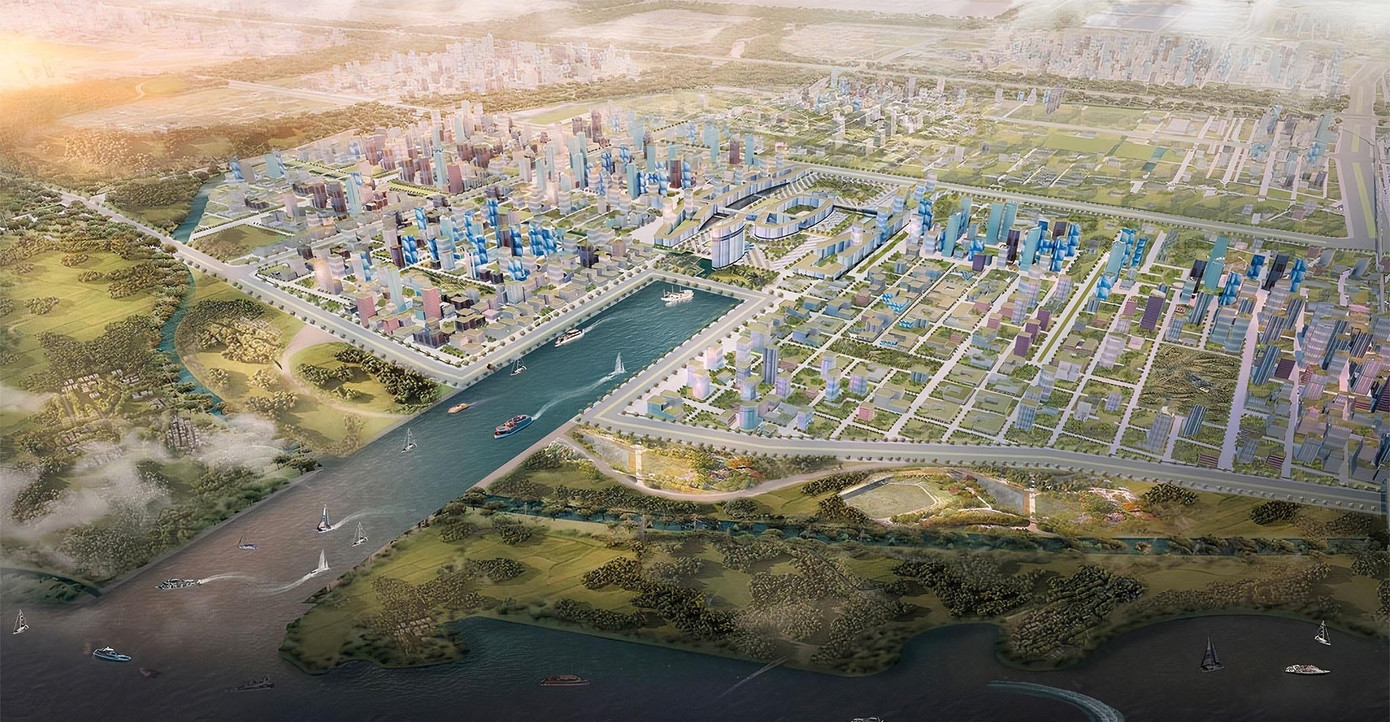
The area surrounding Long Thành Airport is zoned into five synchronized districts.
Mai Thanh Tùng noted that HCMC is implementing mechanisms to attract resources through land fund exploitation, private sector mobilization, and enhanced risk management to prevent issues encountered in Metro Line 1.
For the Thủ Thiêm – Long Thành line, the final pre-feasibility study report has been completed. “The central government has approved HCMC’s implementation of this project. The city is closely coordinating with Đồng Nai Province to finalize related procedures,” Tùng added.
Given limited public funding, HCMC is focusing on private investment. Tùng remarked, “Private investment in urban railways is imperative and aligns with Central Resolution 68. Several companies have expressed interest, including Trường Hải Group, which has proposed PPP investments in the Bến Thành – Thủ Thiêm and Thủ Thiêm – Long Thành lines. HCMC authorities are thoroughly evaluating these proposals to ensure feasibility and efficiency.”
Tùng emphasized the immense workload ahead as HCMC simultaneously develops three key lines. “The timeline is tight, and capital and inter-agency coordination pose significant challenges. However, with new mechanisms, PPP models, TOD development around stations, and strong political commitment, HCMC is well-positioned to meet the 2030 target,” he concluded.
Tomorrow Afternoon (November 26th): Vinspeed, THACO, Masterise Group, Sovico to Meet with Ho Chi Minh City People’s Committee on Key Urban Rail Projects
The meeting is scheduled to take place at 2:00 PM on November 26th.
Ho Chi Minh City Upgrades Resolution 98 to Attract Global Giants: Part 2 – A Radical Shift in Mindset and Decentralization

Experts and policymakers advocate for a fundamental shift in policy-making mindset, emphasizing the need to refine investor selection criteria and implement effective decentralization and delegation of authority.
Ho Chi Minh City to Invest in 10 Railway Lines by 2035
The city aims to expand its project portfolio by prioritizing investment in three metro lines connecting to the Bình Dương and Bà Rịa – Vũng Tàu regions.
Aspiring to Launch the Nhon – Hanoi Railway by the End of June 2024
Vice Prime Minister Tran Hong Ha has urged the Hanoi People’s Committee to strive for the inauguration of the elevated section of the Nhon – Hanoi Railway Station route by the end of June 2024.
Establishment of Working Group to Supervise the Implementation of Hanoi and Ho Chi Minh City Urban Railways
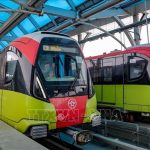
Prime Minister Pham Minh Chinh, Head of the National Steering Committee on Major National Projects and Key Programs, Ministry of Transport, has recently signed Decision No. 62/QD-BCDCTTDG to establish a working group to assist the Steering Committee and lead the progress of implementing urban railway projects in Hanoi and Ho Chi Minh City (the Work Group).