At the Vietnam and Indices program, Mr. Nguyen Quoc Hiep, Chairman of the Board of Directors of GP Invest JSC, shared that the significant interest stems from land being a fundamental need for everyone. The 2024 Land Law introduces a new pricing method, but the market has not responded positively as the approach leans heavily toward market dynamics. The shift from state-specific land valuation by consulting units to a state-determined land price list is a correct direction, aligning with the nature of public ownership, where the state acts as the representative owner.
However, Mr. Hiep noted a confusion between “market-aligned land prices” and “land valuation based on market principles.” Valuation should harmoniously combine free market principles with state regulation, but it currently tilts toward market factors. Regulatory bodies must carefully consider this to avoid enacting laws that require frequent amendments, which could complicate the economy.
Mr. Nguyen Chi Thanh, Vice Chairman of the Vietnam Real Estate Brokerage Association (VARS), pointed out that current land and housing prices are too high compared to the majority’s affordability. Moreover, the market-aligned pricing approach leads to land prices in subsequent periods being higher than previous ones, failing to reflect the market’s natural fluctuations. If prices are uniformly increased, especially in underdeveloped urban areas, investment attraction and business production will be negatively impacted.
Land Prices Dictate Housing Costs
According to Mr. Hiep, land costs are the most critical component in real estate pricing, accounting for 25-30% of low-rise housing costs and 12-16% of apartment costs. Rising land prices directly affect housing prices and can impact the entire economy.
“High land prices increase budget revenue and compensation for displaced individuals. However, excessively high land prices create imbalances for businesses, raising input costs and hindering effective operations,” said Mr. Hiep. He suggested differentiating between regular land prices and those of projects with infrastructure investments, along with establishing reasonable coefficients for long-term commercial land or new projects.
Regarding social welfare, Mr. Hiep highlighted that housing price growth far outpaces income growth. An average-income earner would need 27 years to buy a home if using their entire salary or 80 years if paying in installments, an unreasonable situation that the state must address. The state’s role is to balance budget interests, businesses, and citizens.

Mr. Nguyen Quoc Hiep – Chairman of the Board of Directors of GP Invest JSC
|
Mr. Thanh observed that many new urban areas are developed with products priced significantly higher than local incomes. Using a single project as the benchmark for an entire area distorts the land price list, driving housing prices up sharply over the past two years. Therefore, coefficient flexibility is needed to avoid mechanisms that inflate prices based on a few specific projects.
Additionally, for the land price list to truly integrate into daily life, the participation of directly affected groups in its development should be expanded. In areas needing investment, excessively high compensation prices reduce investment opportunities. Thus, social welfare and long-term goals must be prioritized.
Flexible Coefficients Are Essential
Mr. Nguyen Quoc Hiep explained that businesses base investment decisions on input costs, requiring an internal rate of return (IRR) of at least 11% to proceed. In practice, land prices within a single project often increase over time, causing significant financial fluctuations and potential bankruptcy. Therefore, businesses strongly desire stable and predictable land prices.
According to Mr. Hiep, businesses eagerly await the coefficient list rather than the land price list, as it is a critical factor. Coefficients should clearly categorize land types, such as long-standing commercial land, investment-encouraged land, industrial land, service land, and residential land.
Mr. Nguyen Chi Thanh assessed that the biggest risk for businesses, especially small and medium-sized ones, is negotiating compensation based on market prices. A lack of price consistency across localities can stall or derail projects. It is crucial for coefficients to be flexible, allowing both increases and decreases, to maintain market stability and avoid shocks.
Mr. Thanh also warned that the new land price list could create a price increase effect due to market expectations. Without sufficient local authority and regulatory mechanisms, this shock could force businesses to halt projects due to reduced profitability.
Land Price Lists Influence Market Psychology
Regarding reducing taxes and fees to offset high land prices, Mr. Nguyen Quoc Hiep argued that this does not address the root cause, as market psychology has the greatest impact. When Hanoi’s land prices surge, residents tend to buy preemptively. Simultaneously, rising bank interest rates significantly reduce the purchasing power of middle-income groups, weakening liquidity and increasing inventory.
“Interest rates typically rise in the third quarter and early fourth quarter, with hopes of cooling by early 2026. Although 2025 interest rates are not high, recent spikes have significantly affected the market,” said Mr. Hiep.
On dual pricing, Mr. Nguyen Chi Thanh noted that Vietnam’s ongoing digitalization and land data cleanup will enhance transparency, making dual pricing unsustainable in stable areas. However, strong state regulation is needed to manage price increase expectations.
To control selling prices, Mr. Hiep mentioned that developers’ selling prices are not audited or regulated, but progressive taxes based on profit margins can curb excessive increases, preventing market overheating.
Experts predict that real estate prices will likely continue rising after the new land price list is implemented. Buyers should focus on project locations. For large-scale projects with prices significantly above market averages, buyers should exercise caution, as developers may need to adjust sales policies.
To ensure the land price list is both realistic and shock-free, experts recommend that provincial People’s Committees construct it with utmost caution, accompanied by clear coefficient tables, enabling businesses to calculate effectiveness.
Furthermore, broadening the participation of stakeholders and empowering provincial community representatives to approve land price adjustments will enhance transparency, support investment attraction, and ensure social welfare.
– 17:22 02/12/2025
December 2, 2025: Warrant Market Continues to Show Divergence
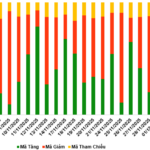
As the trading session closed on December 1, 2025, the market witnessed 136 stocks advancing, 116 declining, and 36 remaining unchanged. Foreign investors continued their net selling streak, offloading a total of VND 1.73 billion worth of shares.
Navigating the Dual Burden: Implications of New Land Pricing Policies Taking Effect
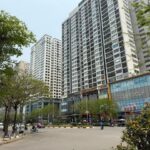
The newly released land price list for 2026 has sparked concerns over soaring costs, potentially impacting residents, businesses, and Hanoi’s real estate market.
Market Outlook for Warrant Trading Week 01-05/12/2025: A Bearish Sentiment Prevails
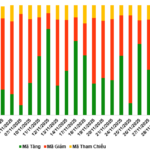
As the trading session closed on November 28, 2025, the market witnessed a mixed performance with 57 stocks advancing, 198 declining, and 33 remaining unchanged. Foreign investors resumed net selling, recording a total net outflow of VND 4.38 billion.
Land Use Fee Installment Proposal: Ministry of Finance Responds

In response to local and public appeals for installment payments on land use fees to alleviate financial burdens, the Ministry of Finance has stated that current legislation does not permit such arrangements. However, they have indicated that this issue will be considered during the revision of relevant decrees.
Soaring Land Prices: Will the Real Estate Market Cool Down?

According to experts, the significant increase in land price adjustments will make it challenging for the real estate market to cool down.