Today (December 1st), according to the agenda of the 10th session, the National Assembly will discuss in the plenary hall the draft Resolution of the National Assembly stipulating certain mechanisms and policies to address difficulties and obstacles in the implementation of the Land Law (draft).
Considering New Regulations on Land Reclamation
The draft resolution, prepared by the Government, focuses on key areas such as: Planning; land reclamation, compensation, support, and resettlement; land allocation, lease, change of land use purpose, and land valuation.
A notable point is the draft resolution’s proposal to add three cases where the State can reclaim land for socio-economic development. One of these cases includes situations where the investor has negotiated over 75% of the area and more than 75% of the landowners agree, allowing the Provincial People’s Council to reclaim the remaining 25%. This proposal aims to resolve difficulties related to the land reclamation mechanism, which primarily relies on agreements between investors and residents, especially for commercial housing and urban area projects.
In practice, some projects have achieved very high consensus but still face obstacles with a few households refusing compensation or unresolved issues. However, this proposal has raised concerns among many delegates about its feasibility and potential issues during implementation.

The Government proposes a series of policies to address obstacles in the implementation of the Land Law. Photo: MINH PHONG
Delegate Nguyễn Hữu Toàn (Lai Châu Province) noted that the biggest obstacle lies in the “remaining 25%,” mainly due to demands for higher prices or unresolved legal issues, such as long-standing residential land without land titles. He suggested separating two groups: cases involving pricing can be handled through the resolution, applying compensation based on state prices. Cases with unclear legal status must be resolved definitively according to regulations. According to Delegate Toàn, if 75% of households agree to prices higher than state prices, the remaining 25% forced to accept state prices could lead to disparities and complaints. Applying the mechanism to reclaim the remaining land, similar to urgent or national defense projects, without approving compensation plans, may cause double losses for residents.
Delegate Trần Thị Hoa Ry (Cà Mau Province) pointed out that over 60% of complaints and accusations arise from land reclamation and compensation. If the new mechanism is not tightly designed, the risk of creating new bottlenecks is very high. She also opposed reclaiming land before approving compensation plans, as even with approved plans, many localities still face repeated complaints, and reclaiming land beforehand increases risks.
Meanwhile, Delegate Huỳnh Thanh Phương (Tây Ninh Province) proposed two solutions to increase consensus and reduce risks. Specifically, raising the consensus threshold to 80%-85% in terms of area or number of land users (meeting one of the two conditions) to ensure social consensus; or maintaining 75% as per the draft but applying it only to important projects serving public and social interests, with strict supervision of voluntary and lawful agreements.
Reducing Financial Burdens on Residents
In the draft resolution, the Government also proposes amending regulations on land use fees when converting garden, pond, and agricultural land to residential land, to reduce financial burdens on residents. Specifically, under the 2024 Land Law and current regulations, when converting garden, pond, or agricultural land to residential land, residents must pay 100% of the difference between residential land prices and agricultural land prices. With many localities adjusting land prices close to market rates, the difference is substantial. In some cases, households must pay billions of dong just to change land use purposes.
According to the Government’s proposal, when converting agricultural land to residential land, for areas within the local land allocation limit, the minimum fee is 30% of the difference between residential and agricultural land prices based on local land price tables. For areas exceeding the local land allocation limit, the minimum fee is 50% of the difference but not exceeding the local residential land limit. For areas exceeding the residential land limit, the fee remains at 100% of the difference.
Land valuation issues are also identified as a major bottleneck needing urgent resolution. Delegate Trần Văn Khải (Ninh Bình Province) noted that state-set land prices are often lower than market prices, leading to low compensation for residents, prolonged complaints, and budget shortfalls. Businesses also face difficulties, having to supplement costs beyond compensation plans to gain resident acceptance, resulting in increased investment costs. Conversely, applying state prices disadvantages residents, leading to complaints and project delays.
“In the draft, the Government proposes land price tables by land type, area, and location. For areas with digital cadastral maps and land price data, land price tables can be developed down to individual plots. This is an important step toward more realistic land prices, increasing budget revenue, ensuring fair compensation for residents, reducing grievances, and helping businesses estimate costs more proactively, avoiding risks,” Delegate Khải observed.
Delegate Khải also praised the proposal to allow Provincial People’s Councils to decide on land price tables, to be announced and applied from January 1, 2026, with the ability to amend as needed instead of following long cycles. He believes this decentralization helps localities update land prices more closely aligned with actual conditions.
Reviewing to Avoid Issues in Applying Land Price Tables
Regarding regulations related to land price tables and land price adjustment coefficients, the National Assembly’s Economic and Financial Committee emphasized the state’s role in controlling and determining land prices. The Committee requested the Government to review transitional regulations to avoid issues when applying new and current land prices and to supplement more specific principles and guidelines for issuing adjustment coefficients.
Agenda for the 7th Week of the National Assembly Session
Today, December 1st, the 10th session of the 15th National Assembly enters its 7th week and 32nd working day. On the first day (December 1st), the National Assembly will discuss in the plenary hall: the draft Law Amending and Supplementing Certain Articles of the Law on Geology and Minerals; the draft Law on Digital Transformation; and the draft Resolution of the National Assembly stipulating certain mechanisms and policies to address difficulties and obstacles in the implementation of the Land Law.
On December 2nd, the National Assembly will broadcast live the discussion on: the draft Resolution of the National Assembly on certain breakthrough mechanisms and policies for public health protection, care, and improvement; the investment policy for the National Target Program on Health Care, Population, and Development for 2026-2035; and the investment policy for the National Target Program on Modernizing and Improving Education Quality for 2026-2035.
On December 3rd, the National Assembly will continue live broadcasts as Deputy Prime Minister Nguyễn Hòa Bình, Chief Justice of the Supreme People’s Court, Prosecutor General of the Supreme People’s Procuracy, and Auditor General present reports on the implementation of certain National Assembly resolutions from the 14th and 15th terms on thematic supervision and questioning. Afterward, the National Assembly will discuss these reports in the plenary hall. In the afternoon, the National Assembly will vote to adopt the Law on Emergency Situations.
On December 4th, the National Assembly will dedicate the entire day to discussing in the plenary hall: the Reports on the 2021-2026 term of the State President, Government; and the draft Report on the 15th term of the National Assembly…
On December 5th, the National Assembly will discuss in the plenary hall the investment policy for the National Target Program on New Rural Development, Sustainable Poverty Reduction, and Socio-Economic Development in Ethnic Minority and Mountainous Areas until 2035.
On the same day, the National Assembly will vote to adopt the following laws: Forensic Expertise (amended); Civil Judgment Enforcement (amended); amendments to certain articles of the Law on Criminal Records; amendments to certain articles of the Law on Citizen Reception, Law on Complaints, and Law on Denunciations.
Unlocking Land Law Implementation: National Assembly Deliberates Solutions to Overcome Challenges

The draft resolution of the National Assembly, outlining mechanisms and policies to address challenges in the implementation of the Land Law, will be discussed by delegates during this week’s session.
Revised Title:
“Legislative Review: Proposed Amendments to Special Development Mechanisms for Ho Chi Minh City and Da Nang”
At the recently updated session agenda, the National Assembly will review and supplement resolutions on special mechanisms and policies for the development of Ho Chi Minh City and Da Nang City.
Dong Nai: Criticism Directed at the People’s Committees of Dong Tam, Tan Loi, and Nghia Trung Communes

The People’s Committee of Dong Nai Province has issued a reprimand and corrective action to three units for failing to meet their implementation deadlines: the People’s Committees of Dong Tam, Tan Loi, and Nghia Trung communes.
Đà Lạt Valley Flower Estate Owner Loses Over 1.5 Hectares of Land to Lâm Đồng Province’s Reclamation
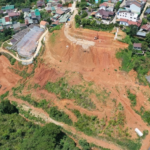
The People’s Committee of Lam Dong Province has officially reclaimed the entire 15,214 square meters of land previously allocated to Saigon Construction and Investment Trading Company Limited. This land, originally designated for the development of the Da Lat Flower Valley residential project, is now fully under the province’s control.
Vietnamese National Assembly Approves Amendments to Resolution 98 on Pilot Mechanisms and Special Policies for Ho Chi Minh City’s Development
The National Assembly is set to review and amend Resolution 98, piloting special mechanisms and policies for Ho Chi Minh City’s development. Additionally, tailored policies will address challenges and bottlenecks related to projects, land issues, inspection conclusions, audits, and court rulings in Ho Chi Minh City, Da Nang City, and Khanh Hoa Province.