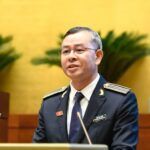
State Auditor General Ngo Van Tuan – Photo: VGP |
Strict enforcement of audit result disclosure and the list of organizations, individuals delaying implementation.
On the morning of December 3rd, at the National Assembly, summarizing the results of implementing the resolutions of the 14th and 15th National Assembly sessions on specialized supervision and questioning by the State Audit Office, State Auditor General Ngo Van Tuan affirmed that based on the tasks assigned in the National Assembly’s resolutions, the State Audit Office has seriously implemented, disseminated, and synchronously deployed solutions for execution.
Specifically, the State Audit Office has intensified administrative reforms, innovated auditing methods and organization, and vigorously applied information technology in all activities, particularly using artificial intelligence and big data analysis in auditing.
Strict enforcement of audit result disclosure and the list of organizations, individuals delaying or not implementing audit recommendations. Timely urging and resolving difficulties and obstacles in the process of implementing audit recommendations.
The State Audit Office has also closely coordinated with the Government Inspectorate, ministries, sectors, and localities in handling overlaps between inspection and auditing activities, providing timely audit reports to serve the supervision, inspection, investigation, and examination by the National Assembly and related agencies.
The State Audit Office has focused on auditing hot issues of public and voter concern, areas with high potential risks, prone to corruption, waste, and negativity. Simultaneously, to strengthen auditing of urban land use planning and management, the State Audit Office has selected audit themes focusing on evaluating planning, construction licensing, land revenue management, and the arrangement and handling of land and properties.
Particularly, to enhance anti-waste auditing, the State Audit Office has issued many guiding documents, directing implementation, requiring each audit to clearly identify wasteful behaviors and manifestations, specify subjective and objective causes, and the responsibilities of related organizations and individuals, while recommending handling and remedial measures.
Strengthening specialized audits, focusing on “hot” issues.
Additionally, State Auditor General Ngo Van Tuan candidly pointed out that audit results still reveal some limitations. Specifically, in regular expenditures: Budget allocation is slow, repeated, and not aligned with reality; there are cases of allocation without sufficient conditions, leading to non-disbursement and budget cancellation; some allocations exceed limits; and funds are used for unauthorized purposes.
In development investment expenditures, there are still cases of capital allocation without sufficient conditions, not included in the medium-term public investment plan, exceeding implementation capacity or actual needs; low disbursement rates, requiring adjustments or capital plan cancellations; many projects are not cost-effective in design; delayed implementation and usage reduce investment efficiency, wasting resources.
In public asset management and use, there are still cases of abandoned land and properties, misuse, or inefficiency; delayed implementation of rearrangement and handling plans for land and properties. Encroachment, land disputes, joint ventures, leasing, and unauthorized asset lending still occur in many places.
Furthermore, there are still instances of land allocation and leasing violations; land use without decisions or lease contracts; undeclared or unpaid land rent, unadjusted rental rates after the stability period; inappropriate land pricing and plot positioning; and unauthorized exemptions or reductions in land rent.
Through audits, the State Audit Office has also identified inadequacies and limitations in mechanisms, policies, and economic-technical norms not aligned with reality, recommending amendments and supplements to improve the policy and legal framework.
In the coming time, State Auditor General Ngo Van Tuan stated that the State Audit Office will continue to closely follow the leadership of the Party and the National Assembly, comprehensively innovate audit content and methods, strengthen operational and specialized audits, focusing on “hot” issues of voter and public concern; emphasize identifying mechanism and policy inadequacies for improvement recommendations; and contribute to the fight against corruption, waste, negativity, and the practice of thrift and waste prevention.
Hai Lien
– 12:34 03/12/2025
Why Is the Disbursement of Social Housing Credit and Worker Housing Funds Delayed?

The issue was raised by National Assembly delegate Nguyễn Thị Việt Nga (Hải Phòng) during her feedback on the government’s report regarding the implementation results of resolutions on questioning and supervision in the banking sector.
Government Inspectorate Uncovers Series of Violations in Ministry of Foreign Affairs Headquarters Project
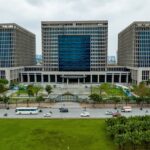
The Inspector General’s audit report has uncovered numerous irregularities in the implementation of the Ministry of Foreign Affairs’ headquarters project. Five cases with potential criminal violations have been referred to the Ministry of Public Security for further investigation and clarification.
Adaptive Auditing Organization: Navigating Unprecedented Challenges Beyond Forecasts
Over the past period, audit organization has been managed with remarkable flexibility, adeptly adapting to rapid, complex, and unprecedented challenges that often exceeded initial forecasts.
Snail-Paced Progress: 10 Provinces and Cities Grappling with Surplus Public Assets

The Ministry of Finance reports that several localities have yet to finalize asset allocation decisions, regardless of whether handover minutes are complete or not. The affected provinces include: Nghệ An, Hưng Yên, Đắk Lắk, Tây Ninh, Vĩnh Long, An Giang, Ninh Bình, Thanh Hóa, Ho Chi Minh City, and Đồng Tháp.
Ho Chi Minh City Successfully Auctions Over 1,600 Violating Vehicles, Generating Over 3 Billion VND in Revenue
Ho Chi Minh City successfully auctioned 1,606 seized vehicles, including motorcycles, tricycles, and makeshift trailers, generating over 3.23 billion VND in revenue, which will be fully allocated to the city’s budget.