The VinFuture Science and Technology Week 2025 (December 2–6) officially kicks off today. Over five years, from 599 nominations in its inaugural year (2021), VinFuture has recorded 1,705 nominations in its fifth season, nearly tripling in just five years. The number of official nominating partners has also increased twelvefold, from approximately 1,200 scientists in the first season to nearly 15,000 in 2025.
On this occasion, we had a quick interview with Professor Đặng Văn Chí, a member of the VinFuture Awards Council, a leading cancer researcher, and the Scientific Director of the Ludwig Institute for Cancer Research (USA). As one of the key decision-makers, Professor Chí shared fascinating insights about the VinFuture Awards ahead of the fifth season’s ceremony.
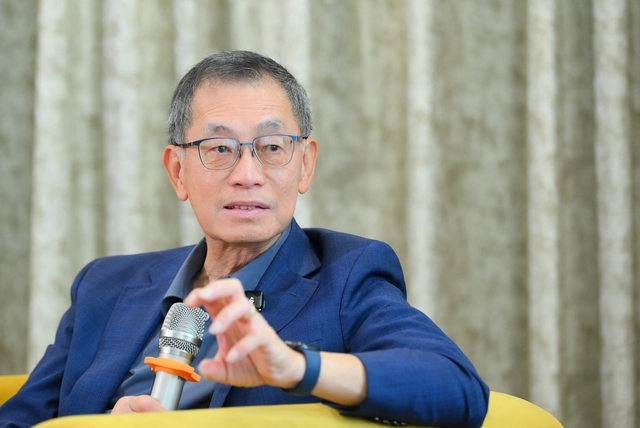
Professor Đặng Văn Chí, member of the VinFuture Awards Council.
Many VinFuture Laureates Have Gone on to Win the Nobel Prize
As someone closely involved with the VinFuture Awards for the past five years, how would you assess the international community’s interest in this award?
In its first year (2021), many were unfamiliar with the VinFuture Awards since it was new. Initially, we focused on spreading awareness and introducing the award to the global community.
Looking back over the past five years, the laureates and their work have been exceptionally outstanding and of the highest quality. Notably, several VinFuture laureates have since won the Nobel Prize. It seems we’ve made very accurate choices (laughs). At least four VinFuture laureates have gone on to win the Nobel Prize, which speaks to the precision of our decisions.
The laureates we’ve selected come from top universities worldwide. This presents an opportunity to further promote the VinFuture Awards, bringing news of this Vietnamese initiative to Europe, the Americas, and beyond.
How would you evaluate the quality of this year’s nominations, given the award’s theme?
The VinFuture Awards, particularly the Grand Prize and special prizes, hold special significance. Laureates are recognized for research that has positively impacted millions of lives globally. The award’s mission, “Science and Technology for Humanity,” sets it apart from other global awards.
When the official announcement is made, you’ll see the far-reaching impact of this year’s winning research on a vast population. However, I won’t reveal any names just yet (laughs).
In essence, this award plays a crucial role in inspiring the global community, emphasizing that science should serve humanity and improve lives on a large scale.
This Year’s Laureates Will Once Again Astonish Everyone
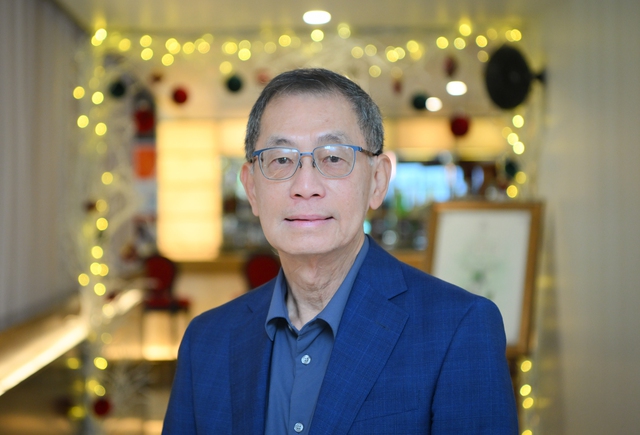
Professor Đặng Văn Chí highlights the exceptional quality of this year’s nominations.
Given the exceptional quality of the nominations and laureates, does this make the selection process more challenging for the VinFuture Awards Council?
Indeed, the process is challenging because the number of deserving nominations far exceeds the available awards. Each year, the competition grows fiercer, making it increasingly difficult to choose. Over the past five years, this trend has continued, requiring council members to thoroughly evaluate and debate to select the most outstanding work among the best.
Nominations not selected this year remain highly deserving and may win in future years if renominated.
As an expert in cancer research, how would you assess the quality of this year’s cancer-related nominations?
Since the results haven’t been announced, I can’t reveal specifics (laughs). We’ll have to wait for the ceremony. However, I believe one or more of this year’s Grand Prize or special prizes will likely go to researchers in critically important fields.
As a cancer researcher, I’m confident that when the laureates are announced, it will be clear that VinFuture has once again made an excellent choice.
Some believe winning the VinFuture Award significantly increases the chances of winning the Nobel Prize. What’s your take on this?
I’d rephrase it slightly: VinFuture laureates have a higher probability of winning the Nobel Prize.
The VinFuture Awards were founded by Vietnamese individuals. How many nominations from Vietnam have been received this year, and how would you assess their quality?
We’ve received several nominations from Vietnam and hope for more next year. As a Vietnamese person, I’ll share a different perspective. Vietnam has endured many struggles, but significant improvements have been made in recent decades. This year marks the 50th anniversary of national reunification and the 80th anniversary of independence. Our nation is on a clear path toward the future.
Vietnam has excelled in artificial intelligence (AI) and computer science. However, investment in science takes time. Fields like cancer research, for instance, require more extended periods. I expect the number of Vietnamese nominations to grow over time.
Vietnam is still building its research and development capabilities, but progress is evident. I hope the VinFuture Awards will inspire young Vietnamese scientists and experts to innovate and pursue impactful research.
“I Consider 90 and Above as Old Age”
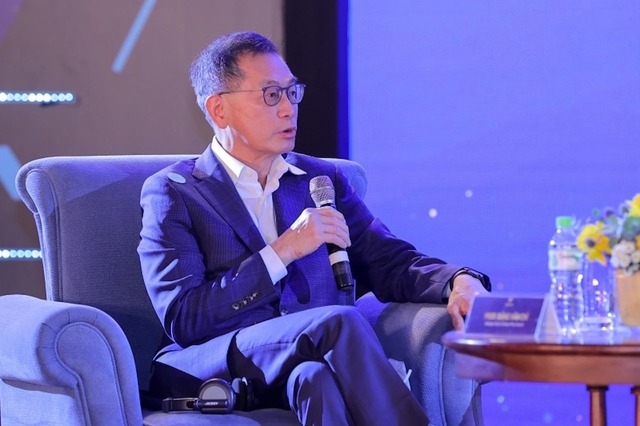
Professor Đặng Văn Chí speaking at a VinFuture Science and Technology Week event.
For scientists, especially young ones, hesitant about participating in the VinFuture Awards, what would you say to encourage them?
Scientists cannot self-nominate; they must be nominated by partners. However, there’s a special prize category that may interest young Vietnamese scientists: the award for female scientists. This category honors women in science and is not limited to senior researchers like Professor Võ Tòng Xuân (Vietnam’s first VinFuture laureate in 2023). Younger researchers are also eligible.
Recent trends show a “youthful” shift among laureates. And what defines “young”? I’m 71, but I believe 90 and above is old age (laughs).
As a council member, can you share any insights into the award’s future direction?
I assume you’re asking about future award-winning research fields. Looking back at the past five years, each Grand Prize has recognized groundbreaking work that improves millions of lives. The awards span various fields, from medicine and battery technology to solar energy and AI.
Next year’s focus remains uncertain, as we aim to stay ahead of the Nobel Prize. I can’t disclose specific fields, but consider technologies impacting millions globally. These could include advancements in food security, clean air, or ocean health—areas often overlooked by other awards.
VinFuture’s unique mission is to honor research that enhances life for millions. Any work significantly improving humanity’s well-being could be a future VinFuture laureate.
A Prestigious Award from Vietnam
After five years with the VinFuture Awards, what impact do you think it has had on Vietnam’s scientific and technological development, especially as Vietnam prioritizes these areas?
The VinFuture Awards align closely with Vietnam’s goals, focusing on core technologies and environmental sustainability. Vietnam aspires to lead in these areas, emphasizing the need to care for the Earth as it cares for us.
The VinFuture Awards aim to elevate Vietnam’s global standing, ensuring its laureates are recognized alongside Nobel Prize winners. Here in the U.S., awareness of the VinFuture Awards is growing, which is fantastic.
In just five years, this award has become highly prestigious, and its Vietnamese origins are a source of great pride.
Thank you, Professor, for your insights!
(Photos: MH/VFP)
Vietnam’s Minister of Industry and Trade: Demonstrating Goodwill in Trade Negotiations with the United States

Minister Nguyễn Hồng Diên emphasized Vietnam’s proactive engagement in trade negotiations, which has significantly contributed to the United States achieving favorable outcomes with its partners.
How AI Empowers Leaders to Navigate Decision-Making Gray Areas

Instinct and experience are foundational, yet AI is empowering the next generation of leaders to *see the future* before it arrives.
FPT Partners with $90 Billion Investment Fund Backing Chelsea FC

FPT Corporation (HOSE: FPT) has officially signed a Platinum Partnership Agreement with Clearlake Capital Group, a global investment firm managing over $90 billion in assets and co-owner of Chelsea Football Club.
U.S. Deputy Secretary of State Meets with Vietnam’s Minister of Industry and Trade: Concerns Raised Over Issue Threatening Livelihoods of Hundreds of Thousands of Workers—How Did the U.S. Respond?

On the occasion of accompanying the Prime Minister to the 47th ASEAN Summit and related meetings in Kuala Lumpur, Malaysia, on October 26, 2025, Minister of Industry and Trade Nguyen Hong Dien held a meeting with U.S. Assistant Secretary of State for Economic, Environmental, and Energy Affairs Jacob Helberg. Joining the Minister at the meeting were representatives from the Multilateral Trade Policy Department, the Foreign Market Development Department, the Electricity Regulatory Authority, and the Cong Thuong Newspaper.
Billionaire Pham Nhat Vuong’s Award-Winning Scholar, Now Nobel-Recognized, Reflects: “I Had a Challenging Childhood”
The recipient of both the VinFuture and, most recently, the Nobel Prize, once shared a poignant glimpse into their humble beginnings: “My family of ten lived in a single-room house, sharing space with cattle, often going days without electricity or water.”