Vietnam’s Ministry of Finance Proposes Special Capital Mobilization and Lending Mechanisms for EVN
|
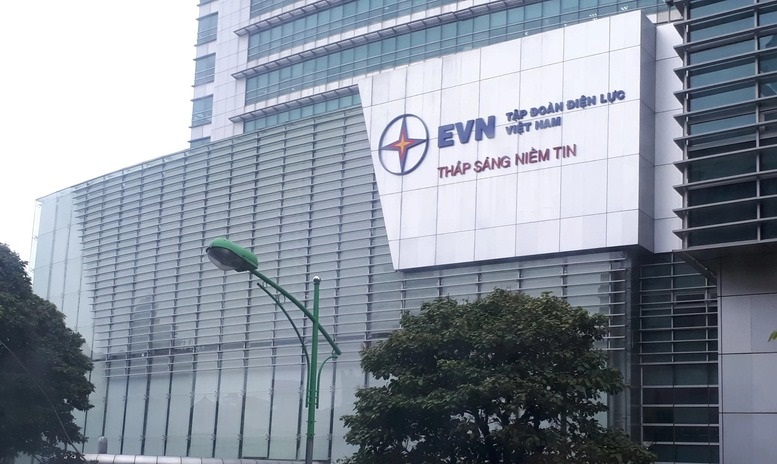
According to the draft, the Ministry of Finance proposes that the Prime Minister authorizes the State Bank of Vietnam to approve credit limits exceeding the threshold for EVN, its subsidiaries, and related entities. This authorization aims to facilitate borrowing for electricity projects outlined in the National Power Development Plan and Provincial Plans.
The Ministry of Finance justifies this proposal by citing Article 136 of the Law on Credit Institutions: “…. 7. In special cases, to fulfill socio-economic objectives where the capital mobilization capacity of credit institutions and foreign bank branches falls short of a customer’s needs, the Prime Minister may decide on the maximum credit limit in cases where the total outstanding credit exceeds the limits specified in Clause 1 or Clause 2 of this Article for specific instances.”
In the coming period, the investment demand for the power system and the capital requirements for EVN’s power projects and its subsidiaries are substantial. Borrowed capital is the primary source to meet the funding needs of these investment projects. However, the process of securing loans from domestic credit institutions is often lengthy.
To streamline the approval process when total outstanding credit exceeds the specified limits in special cases for socio-economic tasks, and to enhance decentralization and delegation, the draft Decree proposes that the Prime Minister authorizes the State Bank of Vietnam to handle these approval procedures for power projects under the National Power Development Plan and Provincial Plans.
Regulations on “On-Lending” Activities
The draft also proposes regulations on EVN’s “on-lending” activities (excluding ODA loans, foreign preferential loans, and government-guaranteed projects):
If credit agreements signed by EVN for power projects are transferred to its subsidiaries, affiliated companies, or other entities as per decisions by competent state authorities, EVN must complete necessary procedures with lenders or loan guarantors to transfer the borrowing entity to the receiving companies as required.
If lenders or loan guarantors do not agree to transfer the borrowing entity, EVN must execute on-lending agreements, debt transfer contracts, or commitment agreements with the receiving companies in accordance with the law.
For projects with specific mechanisms or policies issued by competent authorities, those mechanisms or policies shall apply.
The Ministry of Finance explains: The proposed regulations build upon Clause 10, Article 6 of Decree No. 10/10217/NĐ-CP, with an additional provision for transfers to companies outside EVN. In practice, EVN has previously separated the National Load Dispatch Center (A0) as per the Prime Minister’s decision. Consequently, projects under EVN’s management were transferred to A0, including associated loans. Thus, the draft includes the provision “other companies as decided by competent state authorities.”
Additionally, building upon Clause 4, Article 6 of Decree 10/10217/NĐ-CP, the draft proposes that EVN may mobilize idle capital from its subsidiaries when necessary, subject to written agreements between the parties.
– 1:18 PM, December 2, 2025
Businesses Deposit Over 8.35 Quadrillion into Banks

As of the end of September 2025, corporate deposits in the banking system surpassed 8.35 quadrillion VND, marking an 8.91% increase compared to the end of 2024. This figure also exceeded individual deposits by a significant margin of 518 trillion VND.
Record-Breaking Deposits: Vietnamese Citizens Flood Banks with Unprecedented Cash Inflows

Record-breaking deposits flood banks as interest rates soar, igniting a fierce battle for savings at year-end.
Why Banks Are Universally Raising Savings Interest Rates

Rising interest rates on deposits stem from various factors, notably the allure of competing investment avenues.
Over 1.7 Million Customers Receive Payment Risk Alerts

The State Bank has implemented a range of digital solutions to enhance system security, manage customer data effectively, and combat high-tech crime.
Interest Rates Remain Stable to Bolster Year-End Business and Production Growth

With a stable macroeconomic environment, controlled inflation, and robust capital mobilization, financial institutions are poised to optimize costs and maintain competitive lending rates. This strategic approach empowers businesses by fostering growth in production, trade, and services, particularly during the critical year-end period.