Yesterday, on December 1st, the Ministry of Health hosted a workshop to gather expert opinions on developing a plan to gradually implement the free healthcare policy in accordance with Resolution 72 of the Politburo.
At the workshop, Deputy Minister of Health Vu Manh Ha highlighted significant achievements in healthcare, notably the health insurance coverage reaching 94.29% of the population in 2024, alongside a widespread healthcare network extending to commune levels. The professional capacity of all levels has been enhanced, and the list of medicines, supplies, and techniques covered by health insurance has expanded, laying the groundwork for large-scale social health policies.
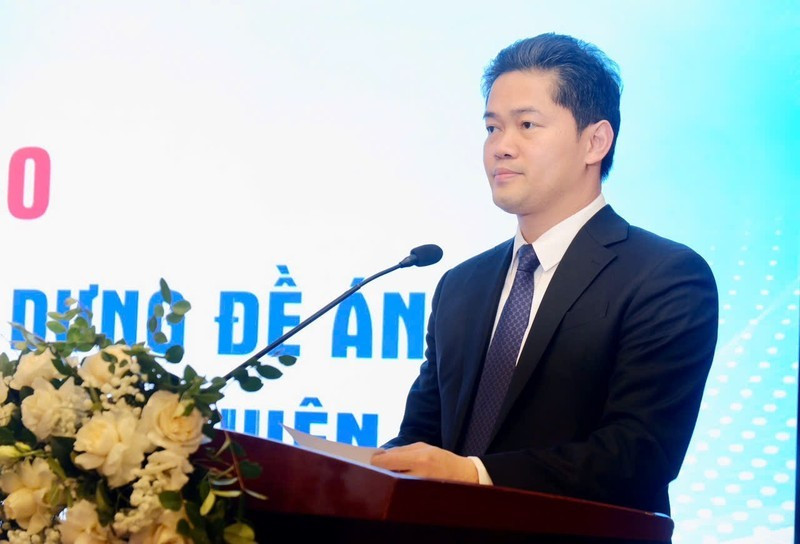
Deputy Minister of Health Vu Manh Ha speaking at the workshop.
However, out-of-pocket expenses remain high, accounting for over 40% of total healthcare costs—a ratio the World Health Organization deems risky for patients’ financial security. The risk of impoverishment due to illness persists, especially among the poor, chronic patients, and those requiring long-term treatment. According to Deputy Minister Vu Manh Ha, in this context, the free healthcare policy becomes an urgent necessity to ensure equity in healthcare and align with the principle of “leaving no one behind.”
Free Healthcare Policy Anchored in Health Insurance and Implemented in Phases
Experts at the workshop affirmed that free healthcare is not just a financial policy but also carries profound humanitarian significance, significantly reducing financial burdens on citizens and encouraging earlier access to healthcare services. With cost barriers removed, patients have better chances of timely diagnosis, reduced complications, lower mortality rates, and improved treatment outcomes.
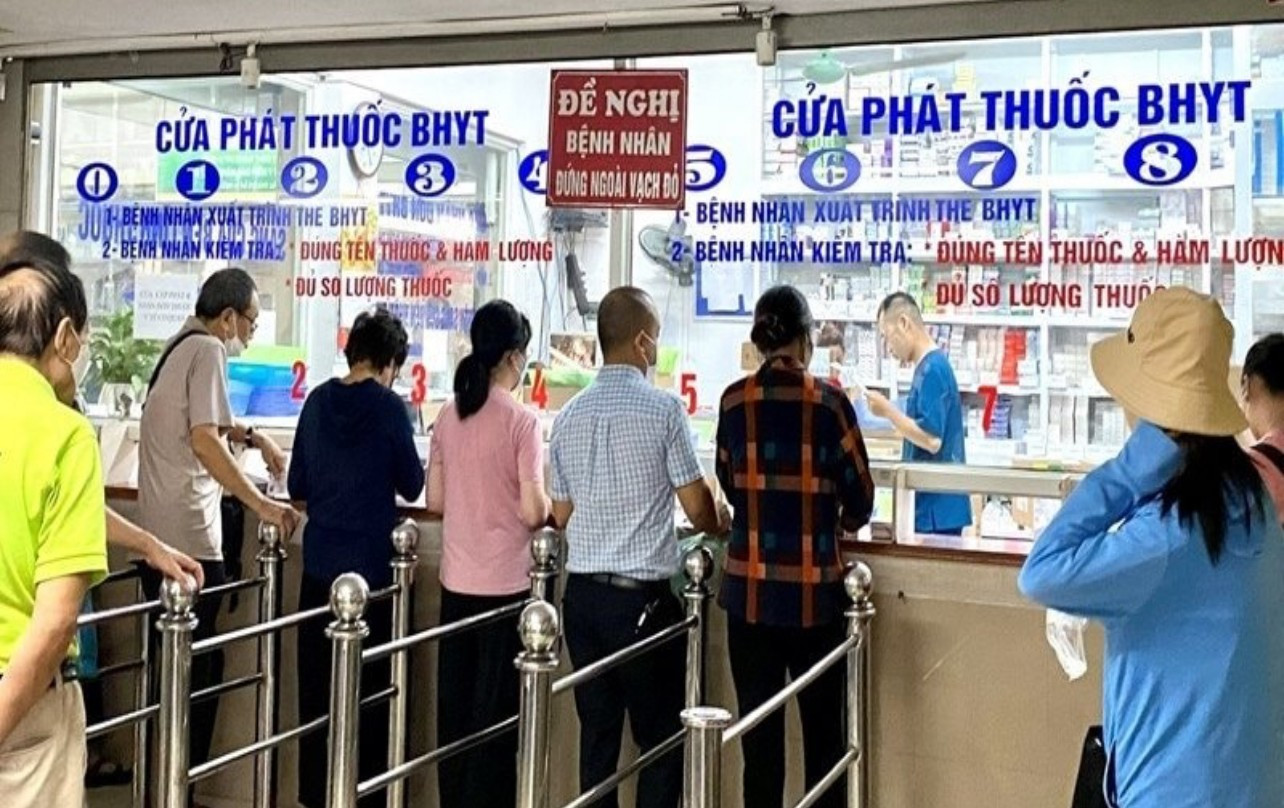
Health insurance coverage reached 94.29% of the population in 2024.
Director of the Health Insurance Department Tran Thi Trang stated that the policy will be built on universal health insurance, aiming to gradually reduce and eventually eliminate co-payments for many essential services. A basic healthcare package will be defined, including a list of diseases, medicines, equipment, and techniques aligned with budget and health insurance fund capabilities. This package will be free for citizens within the insurance scope, while on-demand services will incur separate charges to prevent resource misuse.
Director of the Health Strategy and Policy Institute Nguyen Khanh Phuong emphasized that the free healthcare policy could prevent tens of thousands of households from falling into poverty annually due to medical expenses. This measure not only narrows health disparities between income groups but also strengthens public trust in the healthcare system and government policies.
According to Deputy Minister Vu Manh Ha, every implementation step must rely on health insurance and state budget contributions. Essential services will be fully covered to minimize burdens on citizens, especially vulnerable groups, while on-demand services will require co-payments to ensure system sustainability.
Necessity to Increase Health Insurance Contributions and Expand Social Mobilization
One of the project’s biggest challenges is financial pressure. Director Tran Thi Trang noted that to achieve free healthcare, the health insurance fund must cover not only treatment but also preventive services like screenings. Alongside the health insurance fund, the state budget and targeted programs will be crucial for policy implementation.

Director of the Health Insurance Department Tran Thi Trang speaking.
The plan is divided into two phases, starting in 2026, prioritizing the poor, near-poor, elderly, and vulnerable groups. The policy aims to ensure free periodic health check-ups for all, significantly reduce out-of-pocket expenses, and enhance service accessibility.
However, health insurance contributions have remained unchanged for over a decade, while healthcare service demands, benefit lists, and treatment costs have increased. Experts assert that without contribution adjustments, the health insurance fund cannot sustain the free healthcare policy. Contribution increases will follow a phased approach to avoid sudden pressure on citizens and businesses.
The resource pressure extends beyond the health insurance fund to the state budget. Vu Thi Hai Yen, Deputy Director of the Finance and Economics Department (Ministry of Finance), noted that from 2021 to 2025, healthcare budget allocations accounted for only 6.55% of total expenditures, insufficient for development amid new challenges. Additionally, healthcare financial management inefficiencies further strain resource utilization. These factors pose long-term resource balancing challenges for the free healthcare policy.
Fully implementing Resolution 72’s goals could increase the annual budget by over 55 trillion VND, excluding infrastructure investments for primary healthcare.
The Ministry of Finance proposed enhancing social resource mobilization, encouraging businesses to invest in infrastructure, equipment, and hospitals, and developing charitable funds to support needy patients. Public-private partnerships will be reviewed and improved to attract investment while ensuring transparency.
Experts agree that universal free healthcare is a significant, complex initiative requiring thorough research. The Ministry of Health is compiling feedback to refine the plan, ensuring it is feasible, financially sustainable, and aligned with Vietnam’s socio-economic conditions.
Proposed One-Year Health Insurance Exemption for Disaster-Affected Citizens

Members of the National Assembly have proposed a one-year waiver of health insurance premiums, funded by the state budget, for citizens voluntarily enrolling in health insurance in provinces severely affected by natural disasters.
Cà Mau Residents Rejoice Over Expanded Benefits

Residents living in wards and communes designated as Safe Zones in Ca Mau will enjoy numerous benefits as stipulated by the state.
100% Health Insurance Premium Support for Individuals Aged 65 to 75

The Ho Chi Minh City Social Insurance Agency (BHXH TPHCM) requests all local authorities to compile a list of permanent residents aged 65 to under 75 and submit it to the local BHXH office by November 25, 2025.
Free Regular Health Check-Ups for Citizens Starting 2026, Basic Hospitalization Fee Waived by 2030

From 2026 onwards, Vietnamese citizens will benefit from annual complimentary health check-ups, as outlined in the National Assembly’s draft resolution on mechanisms and policies to effectively implement Resolution 72.
Ho Chi Minh City to Allocate 2.138 Trillion VND for Health Insurance Coverage of Students and the Elderly

The Ho Chi Minh City People’s Committee has proposed maintaining the highest current support levels for health insurance contributions for the elderly and students, while also increasing assistance specifically for students. This decision recognizes students as the future workforce and cornerstone of the nation’s progress.