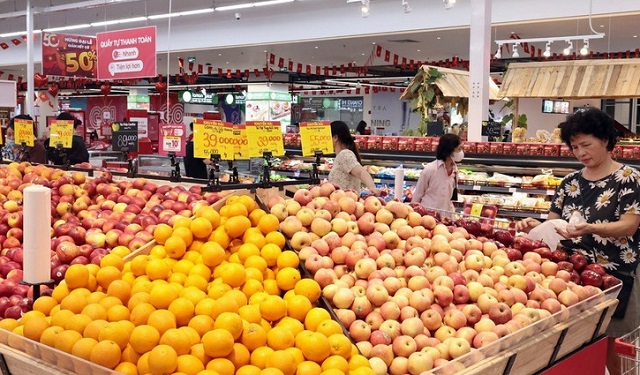
Domestic consumption fuels Vietnam’s economic growth. (Photo: Trần Việt/TTXVN)
|
On December 2, the Organization for Economic Cooperation and Development (OECD) released its global economic outlook report, revising Vietnam’s GDP growth forecast upward to 6.2% for 2026 and 5.8% for 2027.
This positive signal underscores Vietnam’s robust macroeconomic foundation, even amidst global trade uncertainties.
The OECD highlights 2025 as a year of strong economic “rebound” for Vietnam, with Q3 GDP surging 8.2% year-on-year.
Key drivers remain final consumption, fixed asset accumulation, and exports of goods and services.
The labor market remains buoyant, with unemployment at a record low of 2.2% since Q3 2024, while labor force participation continues to rise, reflecting a stable and expanding job market.
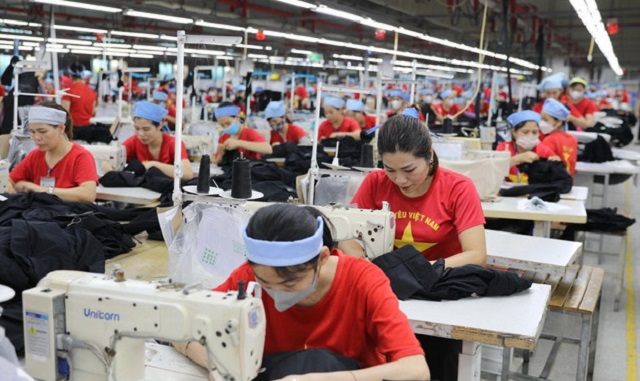
Vietnam’s labor market remains strong with unemployment at 2.2%. (Photo: Xuân Tiến/TTXVN)
|
However, the OECD cautions that weakening external demand in 2026 will pressure exports, a key growth pillar for Vietnam. As a highly open economy, Vietnam remains vulnerable to global policy shifts.
On the positive side, private consumption is expected to remain stable, supported by rising real wages and employment. However, the planned VAT increase in 2027 may temporarily dampen consumption. Inflation is also projected to rise due to strong domestic demand and the one-off impact of the VAT adjustment.
Public investment, particularly after previous slow disbursement, will remain a crucial support for aggregate demand and growth. The OECD has raised its 2026 growth forecast by 0.2 percentage points compared to its June 2025 report.
Exports and FDI Remain Key Pillars
Despite global trade volatility, Vietnam’s exports of goods and services have grown significantly.
In the first nine months of 2025, export turnover rose 15.5%, surpassing the 14.2% growth in the first half. Exports to the US, accounting for 30% of total exports, surged 27.7% despite lingering US import tax risks.
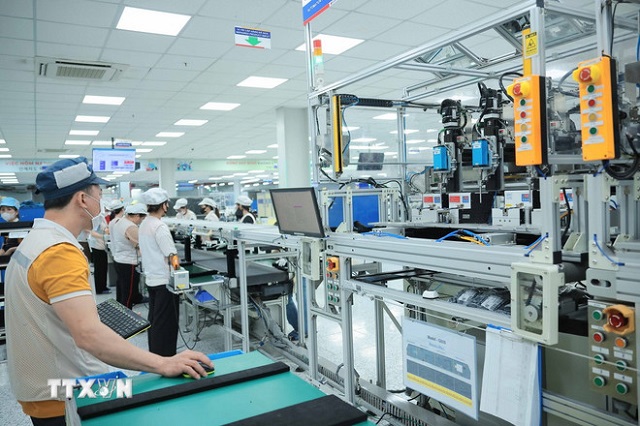
Quảng Ninh province attracts new FDI projects applying modern, eco-friendly technologies. (Photo: Hoàng Hiếu/TTXVN)
|
Foreign direct investment (FDI) has grown steadily since mid-2023, reinforcing its role as a key growth driver. FDI not only supplements investment resources but also promotes technology transfer and productivity gains.
On fiscal policy, the OECD notes that increased public investment will continue supporting the economy toward its 8% growth target for 2025.
However, it recommends a return to neutral fiscal policy in the medium term, especially as inflationary pressures mount.
The VAT reduction from 10% to 8% is set to expire in late 2026, while inflation faces upward pressure from pension increases, minimum wage adjustments, and public service price hikes.
On monetary policy, Vietnam maintains its accommodative stance following rate cuts since June 2023. The OECD urges the State Bank to closely monitor inflation and stand ready to adjust policy if price pressures intensify.
Emerging Challenges
The OECD identifies several risks to Vietnam’s growth outlook, notably weakening global trade from 2026. Private consumption, while crucial, may be temporarily affected by the 2027 VAT adjustment.
External risks—such as shifts in major economies’ trade policies, potential US transit taxes, and a tightening global investment climate—could negatively impact exports and FDI.

Wood products are among seven agricultural and forestry export groups surpassing $1 billion in value. (Photo: Vũ Sinh/TTXVN)
|
To sustain long-term growth, the OECD recommends institutional reforms, particularly in productivity and growth quality.
Key recommendations include: market-based monetary policy frameworks to improve capital allocation and financial resilience; further service sector liberalization to reduce foreign investor barriers; enhanced competition between private and state enterprises through improved business environments; incentives to reduce informal labor (currently two-thirds of the workforce) to expand social security and boost productivity; and deeper integration of businesses into global value chains.
Though growth is expected to moderate in the next two years, the OECD ranks Vietnam among Asia’s fastest-growing economies, aligning with forecasts from major international institutions.
HSBC raised Vietnam’s 2025 and 2026 growth forecasts to 7.9% and 6.7%, respectively, the highest in ASEAN.
UOB predicts 7.7% growth in 2025, while Standard Chartered forecasts 7.5% for 2025 and 7.2% for 2026.
Diệu Linh
– 11:29 03/12/2025
Emerging Urban Corridor: Economic Hub Development from Da Nang Airport to Chu Lai

Da Nang City has identified the eastern region, stretching from Da Nang Airport to Chu Lai Airport, as the foundation for a coastal urban corridor and a key socio-economic hub. This strategic area will drive development and support growth in the western region.
Accelerating the Implementation of Key Projects in Phú Thọ Province

The Government Office has issued Announcement No. 636/TB-VPCP dated November 24, 2025, outlining Deputy Prime Minister Bùi Thanh Sơn’s conclusions from his working session with the leadership of Phú Thọ Province.
Billion-Dollar Chinese Investor Generates Nearly 70,000 Jobs in Province Neighboring Hanoi

This is one of the province’s leading partners.
Vietnamese Index Surges as Fastest in Southeast Asia, Unveiling “Unprecedented Historical Goal” – Russian Media Reports

Vietnam’s index surpasses that of regional powerhouses like Singapore, Thailand, Indonesia, and Malaysia, solidifying its position as a formidable contender in the area.
Why Are Foreign Investors Withdrawing Billions from the Stock Market?

Over the past five years, global macroeconomic factors have prompted foreign investors to withdraw tens of billions of USD from the stock market.