





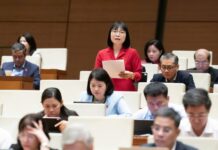






Numerous delegates expressed their opinions on land reclamation and compensation in cases where land use is implemented through agreements for project execution.
According to the draft, if the land use rights have expired or the extension period has ended, and over 75% of the land area along with more than 75% of the land users have reached an agreement, the Provincial People’s Council will consider and decide to reclaim the remaining land area to allocate or lease it to the investor.
Regarding compensation rates when the state reclaims the remaining land, in the report explaining the opinions of delegates discussed in groups, the Ministry of Agriculture and Environment presented two options.
Option 1: Compensation, support, and resettlement are carried out as in cases where the state reclaims land as stipulated in the 2024 Land Law.
Option 2: Implement as in Option 1, but if the total compensation and support amount received per unit of land area is lower than the average price of previously agreed land, the person whose land is reclaimed will receive an additional differential amount. The investor must pay this differential amount to the person whose land is reclaimed, and it will be included in the project’s investment costs.
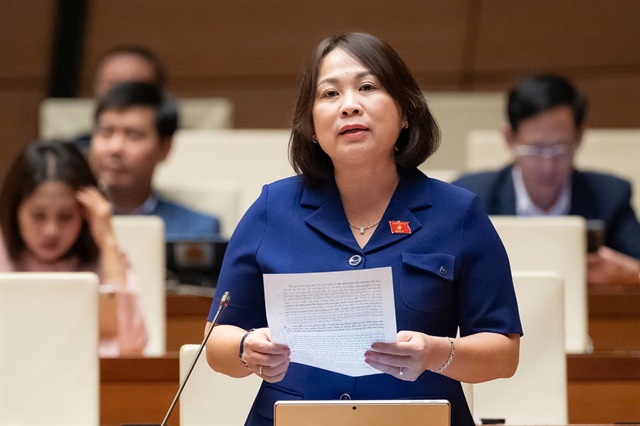 Delegate Nguyễn Thị Thu Thủy. Photo: National Assembly |
Endorsing Option 2, delegate Nguyễn Thị Thu Thủy (Gia Lai) suggested that the drafting committee should clarify the basis for determining the 75% threshold and specify which projects this regulation applies to.
“The 25% of households not in agreement is a proportion that could potentially lead to social instability, security issues, and administrative complaints and lawsuits,” Ms. Thủy expressed concern.
Delegate Nguyễn Thị Việt Nga (Hai Phong) also endorsed Option 2. She believes that while Option 1 has the advantage of simpler procedures and reduced costs for investors, it creates a significant disparity among households within the same reclaimed land area, which could lead to complaints and lawsuits.
Option 2 offers a more balanced approach between the interests of the state, those whose land is reclaimed, and the investor.
“This option ensures fairness, guaranteeing that people in the remaining land area receive compensation no lower than the average price agreed upon with other households. This not only protects the legitimate rights of those whose land is reclaimed but also minimizes the risk of disputes and complaints,” Ms. Nga stated.
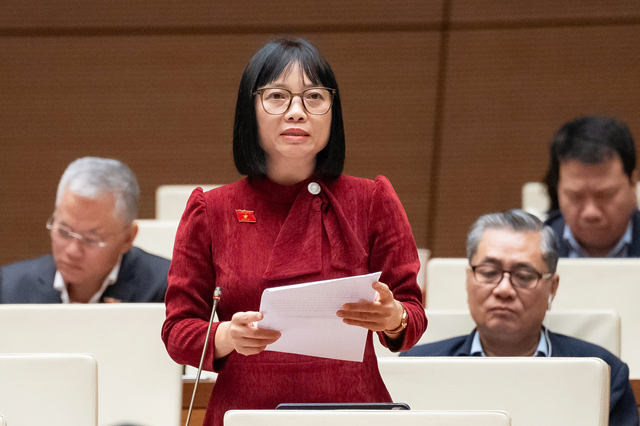
Delegate Nguyễn Thị Việt Nga. Photo: National Assembly
|
Delegate Trần Chí Cường (Da Nang) believes that state land reclamation to resolve difficulties and avoid project delays, which negatively impact socio-economic development, is necessary. However, the state should only support the reclamation process while ensuring the legal rights and interests of the affected citizens.
He supports Option 2, where if the total compensation, support, and resettlement costs are calculated to be lower than the average price per square meter of land according to the compensation rate, the person whose land is reclaimed will receive the missing differential amount. This differential will be paid by the investor and included in the project’s total costs.
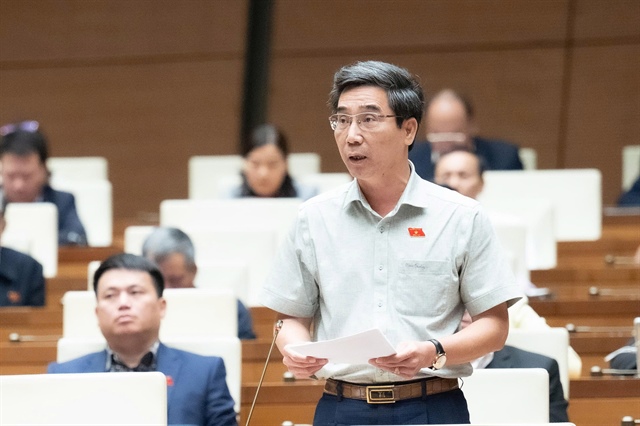
Delegate Trần Chí Cường. Photo: National Assembly |
In his subsequent explanation, Minister of Agriculture and Environment Trần Đức Thắng stated that to promote national development in the new context with a target of double-digit growth, it is necessary to add certain land reclamation cases.
The proposed land reclamation cases include: Projects in free trade zones and international financial centers; land reclamation to create land funds for payment in BT contracts; and creating land funds for leasing to continue production and business activities for organizations whose land is reclaimed by the state.
Another case is reclaiming the remaining land area of a project when the investor has reached an agreement on more than 75% of the land area and obtained the consent of over 75% of the land users within the project’s scope. For this case, the drafting agency considers it a “special” land reclamation case that requires careful and thorough evaluation from economic, social, security, and public safety perspectives, as well as protection of the legitimate rights and interests of citizens.
Therefore, the draft resolution assigns the Provincial People’s Council—the local state power agency representing the will, aspirations, and mastery of the people—to consider and decide whether to reclaim the remaining land area when the investor has reached an agreement on more than 75% of the land area and over 75% of the land users.
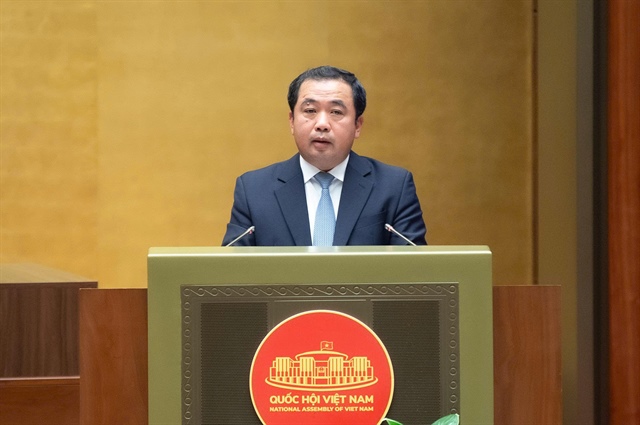 Minister of Agriculture and Environment Trần Đức Thắng explains. Photo: National Assembly |
The draft resolution also presents two compensation options when the state reclaims the remaining land.
Regarding these two options, the Minister of Agriculture and Environment affirmed that he will collaborate with the reviewing agency to study and select an option to report to the National Assembly.
The government will detail the procedures and processes to ensure democratic, objective, fair, public, and transparent implementation of the legal rights and interests of those whose land is reclaimed.
Trần Thường
– 21:07 01/12/2025
Dong Nai Auctions Three Prime Land Plots, Expected to Generate Over 5 Trillion VND
Upcoming auction in Dong Nai: Prime eco-urban complex and themed park project in Phuoc An Commune, 8.4-hectare land plot in Tan An Commune, and land use rights for plots 145 and 14 on map sheet 31 in Trang Bom Commune.
“MP Highlights the ‘Most Sensitive Issue’ in Land Reclamation”

When it comes to land reclamation, the focus should not solely be on the compensation rate, but rather on the mechanisms that ensure fairness and transparency. As highlighted by delegate Hà Sỹ Đồng, the key lies in establishing a robust framework for determining compensation prices, fostering open dialogue, implementing effective resettlement schemes, and instituting independent oversight to safeguard the interests of all parties involved.
Land Reclamation: Protecting Citizens from Unfair Losses

Land laws and resolutions truly come to life when citizens are no longer displaced or burdened by land loss, but instead receive support to thrive and improve their quality of life.
Lawmaker Proposes Citizens Receive Compensation Difference When Land Acquisition Prices Fall Below Agreed Rates
Every member of the National Assembly unanimously supported the proposal that citizens should receive the difference if the land compensation price is lower than the agreed-upon value.
Unblocking Land-Related Bottlenecks: A Comprehensive Solution

The National Assembly is considering the adoption of a resolution introducing new mechanisms and policies regarding land reclamation and land valuation. These measures aim to address existing challenges and meet the practical demands of the current situation.