Establishing the National Housing Fund for Social Housing Development and Rental
The Government has recently issued Decree 302, detailing the National Housing Fund—a non-profit state financial fund with legal entity status, operating outside the state budget.
The Central Housing Fund, established by the Government, falls under the Ministry of Construction’s management. Meanwhile, provincial People’s Committees will establish and manage local housing funds.
The fund’s resources are diverse, including state budget allocations, land value designated for social housing infrastructure, proceeds from the sale of public housing assets, land use rights auctions, voluntary contributions from domestic and international sources, and other lawful funds.
Notably, the fund’s primary goal is to develop and expand social housing for rent. It is also authorized to purchase commercial housing units for rent to government employees, civil servants, and workers.
The social housing rental model is not new globally. The Vietnam Real Estate Market Research Institute (VARS IRE) views it as a strategic housing solution, aligning with international trends.
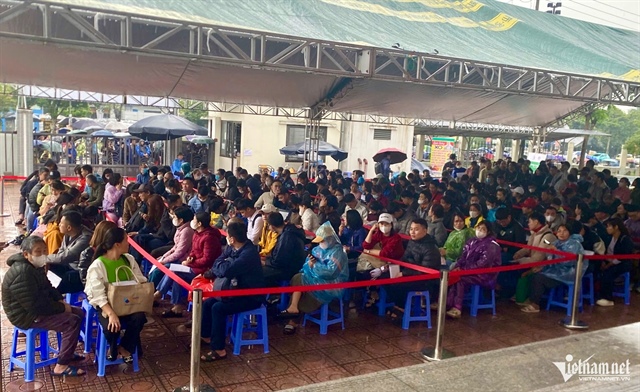
Hundreds queue to submit applications for social housing in Hanoi. Photo: Hồng Khanh |
In Singapore, 80% of the population resides in Housing and Development Board (HDB) flats. South Korea maintains state-owned enterprises for social housing development, while Germany offers long-term subsidies for affordable housing, ensuring rents remain below market rates for 15–25 years.
Experts argue that developing the rental housing market is essential in Vietnam. In recent years, access to housing has become increasingly limited. By Q3 2025, apartment prices surged—96.2% in Hanoi, 72.6% in Da Nang, and 56.9% in Ho Chi Minh City compared to 2019.
The Ministry of Construction reports average primary prices of VND 95 million/m² in Hanoi, with 43% of new supply exceeding VND 120 million/m². In Ho Chi Minh City, averages reach VND 91 million/m², and some central projects range from VND 120–150 million/m².
Meanwhile, average worker incomes are approximately VND 15 million/month. The house price-to-income ratio far exceeds affordability, leaving many young families struggling to save for a home.
A young couple typically requires a decade to save a portion of a home’s cost, but during this period, property prices outpace savings, creating a perpetual gap.
Renting has become a necessity for many, yet VARS IRE notes the rental market lacks professionalism and stability. While renting alleviates short-term financial pressure, it fails to provide long-term housing security.
Shifting Demand from Ownership to Rental
Amid rising social housing costs, exceeding the means of many middle-income groups, VARS IRE experts suggest a rental-only model. This approach ensures a stable supply, curbs speculation, and maintains affordable, sustainable rents.
Nationwide, 692 social housing projects (approximately 633,000 units) are underway, but only a quarter of the Phase 1 target is complete. Developers face low profit margins, complex procedures, scarce land, and inconsistent incentives.
Experts advocate for a state-led social housing development model, overseeing policy, land allocation, funding, and implementation.
VARS IRE emphasizes public-private partnerships (PPPs) for sustainable rental market growth. Developers would construct, and the state would purchase or lease units for management.
The institute also recommends rental housing standards, including annual rent caps, long-term leases, and transparent policies to encourage societal participation in rental housing construction.
Long-term improvements in housing supply, particularly affordable and rental options, will stabilize the market. VARS IRE predicts a shift from ownership to rental demand, easing price pressures and fostering a transparent, sustainable real estate market.
This transition is expected to reduce price inflation and enhance housing accessibility for urban residents.
Hồng Khanh
– 10:55 03/12/2025
National Housing Fund Established: Empowering the Poor and Youth to Secure Affordable Housing?
The National Housing Fund is poised to be more than just a timely initiative; it represents a strategic approach to ensuring long-term social welfare.
Exclusive Update: Progress on Đà Nẵng’s Most Anticipated Social Housing Projects in the City Center
A surge in social housing projects is revitalizing Da Nang’s real estate landscape. Construction sites are buzzing with activity after a period of stagnation, fueled by the entry of numerous developers and the continuous approval of new projects. This renewed momentum promises a substantial and well-structured social housing fund for Da Nang residents in the near future.
Thousands Apply for Social Housing, but What Are the Alternatives for Those Who Miss Out?

In recent years, several social housing projects (NƠXH) have seen a surge in applications, far exceeding the number of available units. This has left many prospective buyers facing the prospect of missing out after the selection process. However, for those who were unable to secure a home, there is still hope. A wave of new NƠXH projects in Hanoi is set to launch, with applications opening from late 2025 and early 2026, offering another chance to own a social housing unit.
Proposed Allocation of Social Housing Construction Budget for Rental Purposes
City representative Nguyễn Minh Đức has proposed that the city invest in and develop a social housing fund for rent, following the lead of other localities. Additionally, he emphasized the need for solutions to issue land-use right certificates (sổ đỏ) for apartments built in violation of height limits or without proper permits, ensuring the legitimate rights of residents are protected.
Prime Minister Concerns Over $2,100-$2,900/m² Apartment Prices, Vietnam Young Entrepreneurs Association Pledges 10,000 Social Housing Units Next Year

The Vietnam Young Entrepreneurs Association has announced that its members will promptly register to submit a report to the Prime Minister regarding the implementation of social housing initiatives.