



















The global biotechnology market is booming, ushering in an unprecedented era of growth. Fueled by groundbreaking advancements in research, the widespread application of artificial intelligence (AI), gene-editing technologies, and the escalating demand for innovative solutions in healthcare, agriculture, and industry, the global biotechnology sector is poised to become a leading economic force.
The Tremendous Potential of the Global Biotechnology Market
According to the National Scientific Seminar: “Biotechnology Development Strategy for 2026-2030, Vision to 2045,” jointly organized by the Central Propaganda and Mobilization Committee, Ho Chi Minh City National University (VNU-HCM), the Ministry of Science and Technology, and CT Group on November 29, 2025, the global biotechnology market in 2025 is estimated to reach $1.8 trillion. Remarkably, this market is projected to double by 2030.
However, in contrast to the global landscape, Vietnam’s biotechnology market remains modest, valued at approximately $1.5 billion, accounting for less than 0.1% of the global market. To illustrate the disparity, China’s biotechnology market is currently estimated to be 100 times larger than Vietnam’s, Japan’s 55 times, South Korea’s 28 times, and India’s 25 times. This gap presents both a challenge and a powerful incentive for Vietnam to implement breakthrough strategies to catch up with regional counterparts.
The “Three-Party Model”: Key to Breakthrough
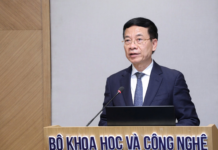
Assoc. Prof. Dr. Huỳnh Thành Đạt, Member of the Party Central Committee and Deputy Head of the Central Propaganda and Mobilization Committee, stated at the event: To achieve the goals of Resolution 36-NQ/TW and Resolution 57-NQ/TW of the Politburo, the biotechnology development strategy for 2026-2030 must be built on a complete value chain, from research and mastery of core technologies to product development and market organization, while adhering to standards, regulations, and bioethical safety requirements.
He proposed focusing on mastering core technologies, developing “Made in Vietnam” biotechnology products, innovating sandbox-based testing and risk management mechanisms, and investing in research and innovation infrastructure.
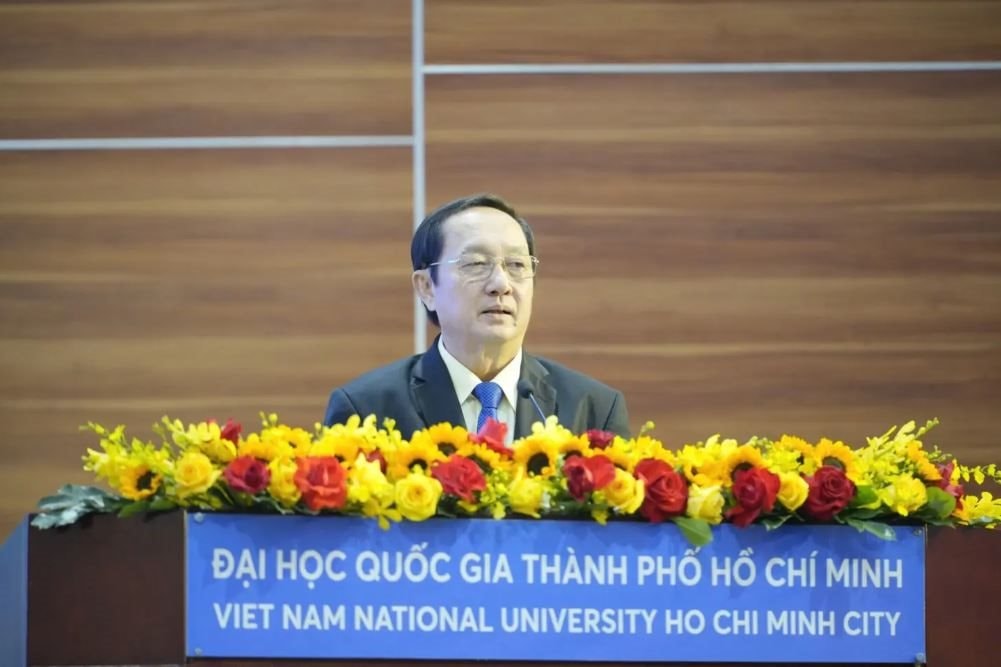
Assoc. Prof. Dr. Huỳnh Thành Đạt speaking at the event.
Given the historic opportunity and existing challenges, experts, scientists, and businesses unanimously agree that the “Three-Party Model” (Government – Scientists – Businesses) is the crucial key to propelling Vietnam’s biotechnology sector forward.
To ensure the model’s effectiveness, key proposals have been put forth, including advocating for a controlled sandbox testing mechanism, streamlining clinical trial approval processes, and establishing pilot mechanisms for commercializing scientific and technological products within universities. Notably, the role of businesses must be elevated, transforming them from mere clients into strategic investors actively involved from R&D to commercialization, creating a cohesive biotechnology value chain.
Assoc. Prof. Dr. Vũ Hải Quân, Member of the Party Central Committee and Permanent Deputy Minister of Science and Technology, emphasized the need to prioritize investment in strategic technologies, gradually establish a national laboratory system, and strengthen the “Three-Party” collaboration to build a biotechnology industry rather than merely focusing on product research.
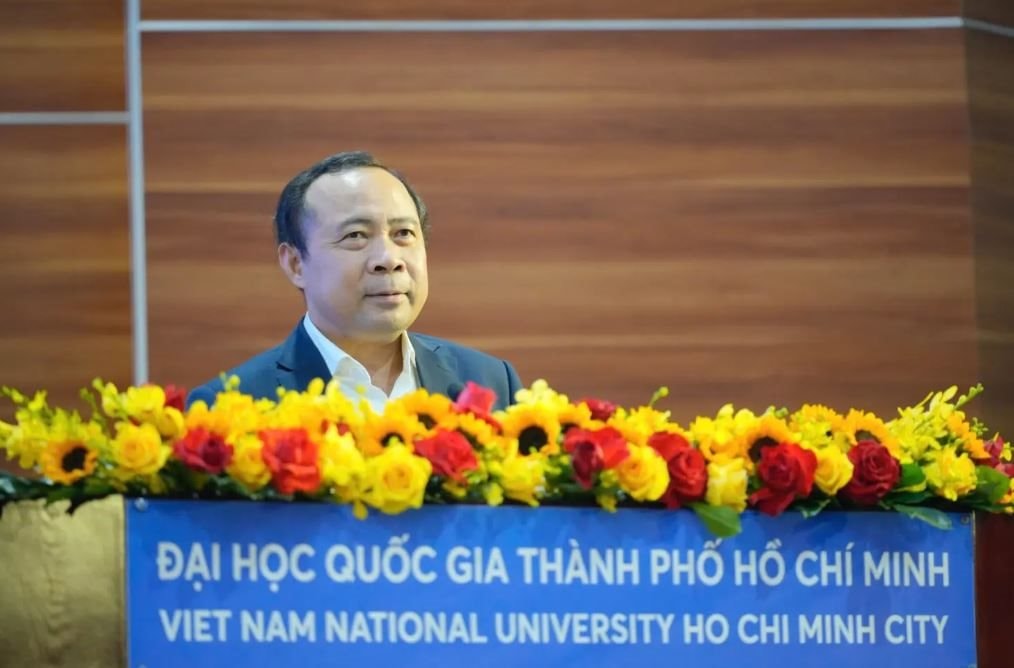
Assoc. Prof. Dr. Vũ Hải Quân speaking.
Proposal for Quantum Computing in Biotechnology
At the seminar, Mr. Trần Kim Chung, Chairman of CT Group, affirmed the company’s commitment to partnering with the national biotechnology development strategy. CT Group has identified biotechnology as one of its five strategic pillars in the new development phase, particularly in bio-medicine, precision agriculture, green energy, and bio-materials.
Mr. Chung stated that CT Group is committed to long-term collaboration with the government, universities, and research institutions through the Three-Party Model, focusing on five specific areas, notably bio-medicine and core technologies. The company pledges sustained engagement in R&D, product commercialization, spin-off creation, high-quality workforce training, and policy development, aiming to establish biotechnology as a strategic national technology pillar alongside VNU-HCM.
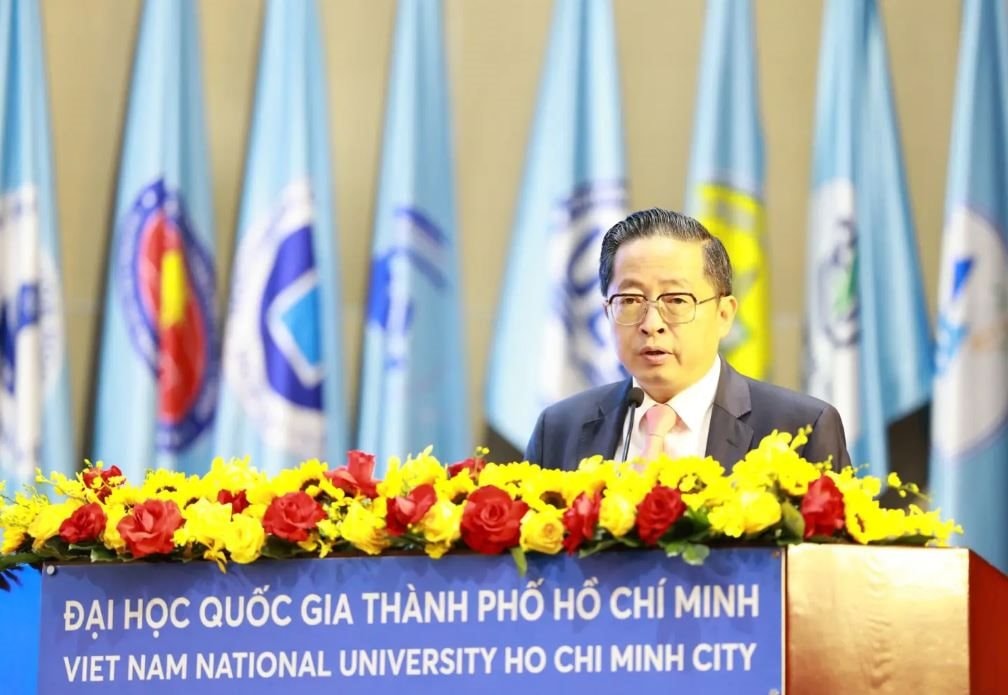
Mr. Trần Kim Chung, Chairman of CT Group, speaking.
Discussing major projects, Mr. Chung highlighted the “Red Sun” initiative in bio-medicine, a humanitarian program focused on researching and applying bio-corneas to restore sight for hundreds of thousands of blind individuals in Vietnam, particularly offering free treatment to low-income families.
Recognizing the critical role of computational tools in advanced biotechnology research, especially in genomics, Mr. Chung boldly proposed that VNU-HCM seek central approval to acquire and operate a quantum computer. This would serve as a powerful technological catalyst, supporting the five-year plan for biology and quantum research in Vietnam.