According to Hanoi Tax Department, individuals and households engaging in real estate rental activities are considered direct participants in business operations. Therefore, it is essential to comply fully with regulations regarding business registration, tax laws, and related legislation.
Individuals and households renting out real estate are those generating revenue from leasing activities, including renting houses, storefronts, shops, warehouses, and storage facilities, excluding accommodation services.
Accommodation services not classified as rental activities include: providing short-term lodging for tourists and other transient guests; offering long-term accommodations not designated as apartments for students, workers, and similar groups; and providing lodging combined with dining or entertainment services.
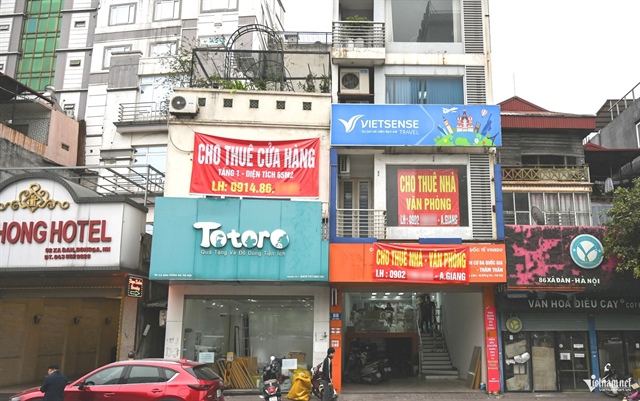
Renting houses, shops, or commercial spaces with annual revenue exceeding the taxable threshold requires payment of Value Added Tax (VAT) and Personal Income Tax (PIT). |
Revenue from real estate rental activities is the total amount received by individuals or households from leasing properties.
If individuals or households engage in other business activities alongside real estate rentals, taxable revenue includes income from both rental activities and other business operations.
What Taxes Must Be Paid and How to Declare Them?
The tax authority emphasizes that individuals renting real estate with annual revenue above the taxable threshold must pay VAT and PIT.
If annual revenue from business activities falls below the taxable threshold (currently set at 100 million VND or less, and from January 1, 2026, 200 million VND or less), no tax payment is required.
Hanoi Tax Department advises that individuals renting real estate can file taxes directly with the tax authority or through a tax agent. Tax declarations should be submitted to the tax office managing the location of the rented property.
Currently, the Tax Department is launching an experience portal for businesses and individuals to familiarize themselves with the system before its official implementation on January 1, 2026, aiming to streamline tax declaration and payment processes.
Businesses and individuals can access the eTax Mobile application, select “Experience for Businesses and Individuals” on the display screen, and practice electronic tax declaration and compliance.
|
On November 27, the Ministry of Finance submitted a report to Prime Minister Pham Minh Chinh and Deputy Prime Minister Ho Duc Phoc, addressing feedback and opinions from the National Assembly on the draft amendments to the Personal Income Tax Law. Regarding taxes for individuals engaged in business activities, the Ministry of Finance stated that for individuals renting real estate as a non-regular business activity (excluding accommodation services), to simplify tax compliance, the draft law stipulates that individuals with annual rental revenue exceeding 500 million VND will only apply the tax calculation method based on a percentage of revenue. Consequently, there will be no need to determine expenses, offset income (if multiple properties are rented), or file annual tax returns. |
Nguyễn Lê
– 07:00 03/12/2025
Still Wondering About Taxable Revenue?

Small business owners express concerns that the current tax threshold does not accurately reflect their actual profits. They propose raising the tax-exempt threshold to a more reasonable level, ensuring a fairer representation of their financial situation.
“Hanoi Tax Deputy Director: Gold Shops Must Record Citizen ID or Tax Code of Buyers and Maintain Detailed Seller Information Logs”

At the “Vietnam Gold Market: Opportunities and Challenges in the New Phase” forum, Mr. Nguyen Tien Minh, Deputy Director of Hanoi Tax Department, revealed insightful information regarding the current state and future prospects of the gold market in Vietnam.
“Hanoi Tax Deputy Director: Gold Shops Must Record Citizen ID or Tax Code of Buyers and Maintain Detailed Seller Information Logs”

Mr. Nguyen Tien Minh, Deputy Director of the Hanoi Tax Department, shared this information at the forum titled “Vietnam’s Gold Market: Opportunities and Challenges in the New Phase.”
Secure Your 2025 Land Rent Reduction: Act Before November 30th

On November 19th, the Hanoi Tax Department issued an open letter to businesses, organizations, households, and individuals leasing land within the city regarding a reduction in land rental fees for 2025.
Eliminating Lump-Sum Tax: Business Households Grapple with Input Invoice Declaration

As of January 1, 2026, the lump-sum tax will be officially abolished, requiring business households to declare taxes or transition to a corporate model. The Hanoi Tax Department has provided detailed guidance addressing key concerns, including input invoice declarations and inventory management, even for goods purchased from individuals.