Carbon Data Emerges as the New “Trade Passport”
The Carbon Border Adjustment Mechanism (CBAM) began operations in late 2023, but its focus during the 2023-2025 period is not on levying fees but on the obligation to report emissions for goods imported into the EU. In practice, these requirements quickly cascade down the supply chain, compelling exporters of steel, cement, aluminum, fertilizers, electricity, and other sectors to provide carbon data to their importing partners to maintain orders.
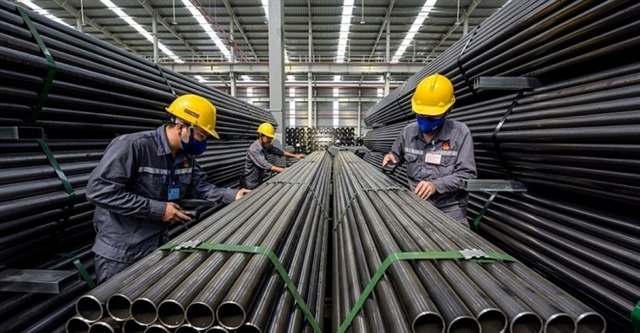 During 2023-2025, CBAM’s focus is on reporting emissions for imports into the EU, not fees. Image: DNCC |
Meanwhile, the initial requirement of “reporting sufficiently” is just the beginning. In the real market, more large purchasing conglomerates are going beyond CBAM obligations, demanding suppliers provide the Product Carbon Footprint (PCF) – the carbon footprint of each product unit – calculated comprehensively under Scope 1, Scope 2, and Scope 3. Commonly applied standards include the GHG Protocol, ISO 14067, or the PEF Methodology developed by the European Union. This means emissions are not confined to the factory but encompass the entire value chain, from raw materials, logistics, and packaging to the product’s lifecycle and disposal.
It’s no surprise that global corporations prioritize carbon transparency in their supply chains as a strategic imperative. Reports from Boston Consulting Group and the Carbon Disclosure Project (CDP) reveal that more multinational enterprises are making emission data disclosure and verification a condition for selecting and retaining suppliers, viewing it as part of supply chain risk management amid tightening CBAM and ESG standards.
Thus, “carbon data” is evolving from a mere environmental metric into a market access condition. For exporters, lacking a standardized PCF means being excluded from the green trade arena. In this context, power no longer lies solely in production or cost efficiency but in who sets the standards, collects, processes, and owns the carbon data.
AI and Digital Platforms: Who Controls Whose Data?
In the green trade flow, a paradox is emerging: it’s not the manufacturers holding their carbon data, but international buyers and digital platforms controlling this data stream. Current supply chain operations show that most carbon data is not managed within Vietnamese companies’ internal systems but is directly fed into buyers’ digital platforms or global tech giants’ systems. Here, artificial intelligence (AI) collects, processes, standardizes, and determines how data is ranked within the green trade ecosystem.
Digital platforms are increasingly becoming the “de facto standard-setters” in emissions data management, helping companies collect, standardize, and aggregate ESG information under a unified reporting framework, filling the gap left by incomplete national carbon data management systems. Notable examples include SAP Sustainability Control Tower, which integrates emissions data across the supply chain for ESG compliance audits, and Microsoft Cloud for Sustainability, an AI-driven solution for collecting, analyzing, and reporting environmental data according to international standards, widely used by global corporations.
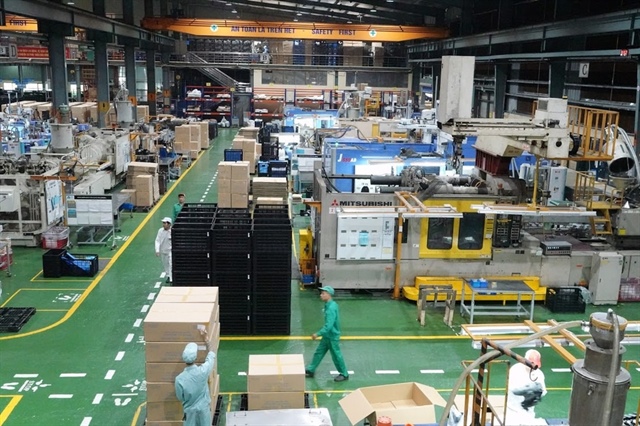 A paradox in green trade: carbon data is controlled by international buyers and tech platforms, not producers. Image: TL |
In reality, Vietnamese companies primarily act as “data entry clerks,” conducting self-surveys, declaring figures, and directly uploading data to customers’ systems, without controlling how algorithms process, compare, or rank their “carbon footprint,” or how the data is used post-transfer.
At the macro level, gaps in carbon data management remain evident. Vietnam lacks a complete national Measurement, Reporting, and Verification (MRV) system compatible with CBAM standards. The Ministry of Natural Resources and Environment’s MRV framework is still policy-oriented, outlined in the National Update Report to UNFCCC, rather than a unified operational data system directly linked to supply chains and trade activities.
More critically, Vietnam lacks a clear legal framework governing carbon data ownership or legal liability for data inaccuracies, misuse, or third-party exploitation, leaving Vietnamese companies’ emission data in a legal “gray area.”
In this new game, Vietnamese companies are in a precarious position: they are the physical producers in the global supply chain but merely “data inputters” for others’ systems, playing by rules designed and controlled by external entities.
From Trade Wars to Data Wars: Strategic Risks for Vietnam
Previously, global competition centered on production costs and capacity: who could produce cheaper, faster, and deliver more reliably won. However, trade dynamics are shifting rapidly. With environmental barriers rising, competition criteria are no longer just about cost but about emission transparency – the ability to measure, prove, and compare carbon data across the supply chain.
In this new structure, carbon data is not just for environmental reporting but is becoming a trade regulator: screening suppliers, negotiating prices, and restructuring supply chains to favor producers with synchronized reporting systems and lower compliance costs.
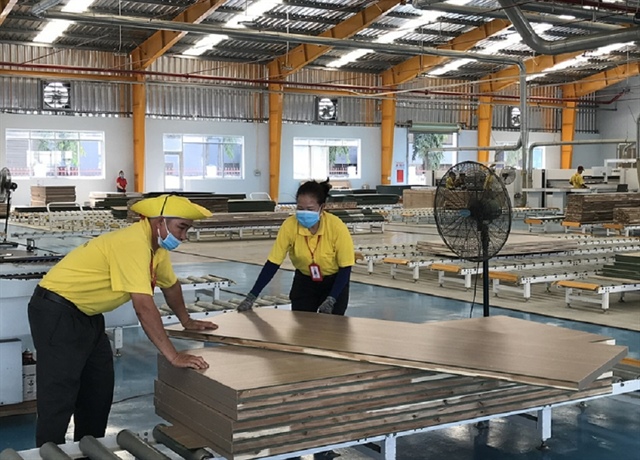
Vietnam risks shifting from raw material dependence to carbon data dependence. Image: H.Như |
The implications for Vietnamese companies are significant. The first risk is exclusion from supply chains, particularly for small and medium-sized enterprises lacking the capacity to invest in formal emission measurement and verification systems. The second risk is price disadvantage, as buyers use emission indices as negotiation leverage, shifting green transition costs to suppliers. The third risk is systemic: carbon compliance risk – where inaccurate, incomplete, or non-standard data reporting leads to direct financial and legal liability, despite data collection and processing often being controlled by buyers or tech platforms.
This indicates that Vietnam risks shifting from raw material dependence to carbon data dependence – a new form of “data dependency,” where market access is no longer in producers’ hands but depends on who collects, processes, and values their data.
Policy Solutions: What Does Vietnam Need to Escape “Data Dependency”?
If carbon data is the “soft infrastructure” of the green supply chain, Vietnam’s current bottleneck lies in the absence of a robust policy-legal-financial ecosystem to proactively control this data flow.
At the national level, the most urgent need is establishing a national Measurement, Reporting, and Verification (MRV) system with data standards directly compatible with EU ETS-CBAM, enabling companies to declare and verify carbon information domestically, rather than relying entirely on foreign partners’ measurement systems. A national data infrastructure not only reduces compliance costs for companies but also acts as a “standard anchor,” maintaining autonomy in the international carbon market integration process.
Simultaneously, a legal framework for environmental data governance must be legislated. Three missing core pillars include: establishing companies’ ownership of emission data; regulating data usage and sharing among supply chain parties; and defining legal liability for data inaccuracies or misuse. Without a clear legal framework, Vietnamese companies’ carbon data will remain in a “gray area,” with rights largely unprotected.
The third bottleneck lies in the financial system. ESG becomes a true transformation lever only when carbon data is directly integrated into credit mechanisms: ESG scoring, “carbon footprint” pricing, and linking to loan interest rates. This is already widely applied in the European Union under the EU Taxonomy and sustainable finance framework.
Green transformation isn’t about solar panels or wall certificates. It’s about the data streams quietly determining the fate of supply chains. The carbon economy game has shifted from “what to produce” to “who owns and controls the data.”
The answer to “who controls our carbon data” will not only determine individual companies’ survival but also shape Vietnam’s position in the emerging carbon trade order.
Phạm Thu Trang (Finance & Operations Expert, Development and ESG)
– 19:00 03/12/2025
Experts Warn: Delayed Action Could Cost Vietnamese Businesses Global Supply Chain Opportunities

In the era of digital transformation and sustainable development, leveraging advanced technology and efficient data management has become crucial for Vietnamese businesses to successfully implement ESG (Environmental, Social, and Governance) standards.
Carbon Credits: The Nexus of Transparency and Risk Management

As carbon credits emerge as tradable assets, businesses gain stronger incentives to reduce emissions. However, this shift also demands heightened transparency and robust risk management to maintain a competitive edge in the global marketplace.