On the morning of December 3rd, the National Assembly convened to discuss the consolidated report on the implementation of resolutions by government members, the Chief Justice of the Supreme People’s Court, the Prosecutor General of the Supreme People’s Procuracy, and the State Auditor General. The focus was on specialized supervision and questioning during the 14th and 15th terms.
Slow Disbursement of Social Housing Credit, Unstable Gold Market
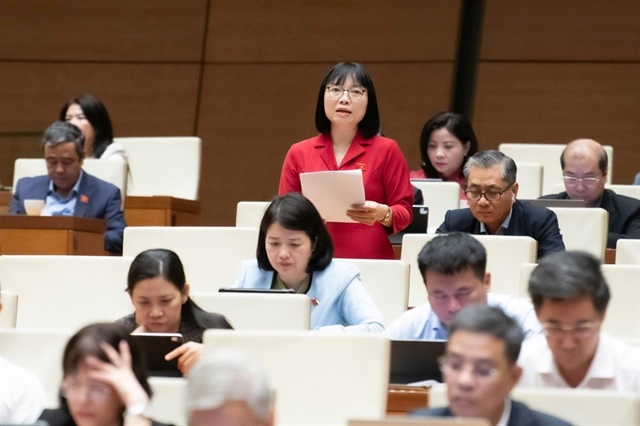
Commenting on the government’s report regarding the implementation of resolutions on banking sector questioning and supervision, Delegate Nguyễn Thị Việt Nga (Hai Phong) acknowledged the banking sector’s efforts but highlighted persistent bottlenecks, particularly in social housing credit and gold market stability—two areas of public concern.
The delegate noted that the National Assembly has repeatedly urged the State Bank to direct capital toward priority areas, especially social housing, worker housing, and old apartment renovations. However, the report indicates slow disbursement, failing to meet actual demand.
 |
Despite the banking sector’s explanations of “insufficient eligible projects” or “land procedure hurdles,” the delegate argued these do not fully reflect the State Bank’s role in mechanism design and coordination with relevant ministries.
Notably, the VND 500 trillion credit package for infrastructure, digital technology, and green economy remains undisbursed due to a lack of project proposals.
“Citizens and businesses focus on results: whether capital reaches its intended targets, not just the sector’s readiness,” Delegate Nga emphasized.
She urged the State Bank to proactively simplify eligibility criteria, review credit program designs, and boldly propose adjustments if conditions are too restrictive or mechanisms unattractive.
Beyond priority credit, the delegate extensively analyzed gold market stability. While the State Bank’s measures—increased gold supply, auctions, business inspections, and Decree 24 amendments—temporarily reduced domestic-international gold price gaps, volatility persists, indicating vulnerability to speculation and manipulation.
“The government’s report lists actions but lacks root cause analysis and a clear roadmap for restructuring the gold market post-Decree 24,” Delegate Nga noted.
She called for a transparent restructuring roadmap to reduce monopolies, foster fair competition, and establish a centralized gold trading platform to curb price manipulation.
According to the delegate, Resolution 173/2024/QH15’s gold market stabilization goals are “partially met, with limited sustainability,” as price fluctuations still threaten monetary stability and systemic safety.
Land Violations Persist Over Years
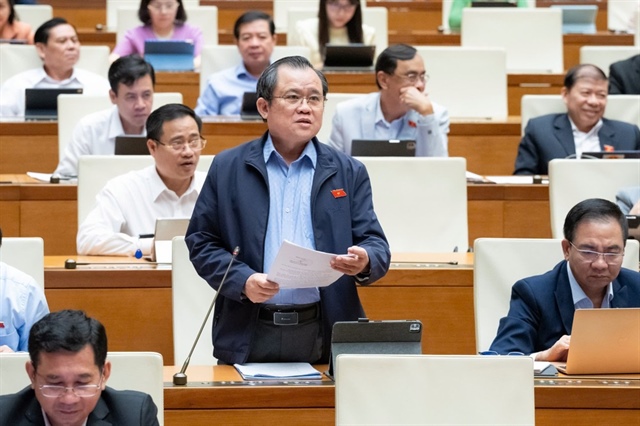
Addressing the National Assembly, Delegate Nguyễn Tâm Hùng (Ho Chi Minh City) affirmed the State Audit Office’s (SAO) comprehensive reflection of resolution implementation during the 14th and 15th terms, showcasing efforts to strengthen financial discipline, budget management, and anti-corruption.
“Specifically, in 2024–2025, the SAO proactively transferred seven cases with violation signs to investigative agencies, demonstrating a ‘no forbidden zones’ and ‘no exceptions’ approach, bolstering public trust in the National Assembly’s oversight,” the delegate stated.
 |
However, Delegate Hùng noted that some SAO recommendations for local regulatory amendments face delays, exemplified by post-COVID-19 audit recommendations: only 6/28 completed. Causes include contextual shifts and inadequate transitional provisions.
He proposed clarifying accountability for drafting and implementing audit recommendations, emphasizing individual responsibility, especially for leaders.
The report highlights persistent land issues: non-auction allocations, improper rent exemptions, delayed certificates, incomplete legal files, abandoned public land, encroachment, and misuse. These recur across localities.
The delegate attributed this to weak audit recommendation enforcement and inconsistent post-audit rectification. He urged the National Assembly to mandate periodic reports from high-residual-recommendation localities to the Standing Committee.
As of September 30, 2025, only 58% of prior-year recommendations were implemented, with accountability measures at 22.5%.
He deemed audit conclusions’ deterrence insufficient and oversight mechanisms fragmented. The delegate suggested publicizing non-compliant entities under Resolution 141/2024/QH15.
Delegate Hùng proposed three solutions: first, amend the SAO Law to enhance data access, strengthen audit conclusion binding, and clarify implementation responsibility. Update audit standards with big data and digital auditing for better violation detection.
Second, tighten discipline in recommendation implementation, linking compliance rates to leader performance evaluations.
Third, enhance SAO coordination with inspection and investigation agencies, emphasizing data sharing and timely violation addressing during audits.
REPORTING TEAM
– 11:29 03/12/2025
Proposed One-Year Health Insurance Exemption for Disaster-Affected Citizens

Members of the National Assembly have proposed a one-year waiver of health insurance premiums, funded by the state budget, for citizens voluntarily enrolling in health insurance in provinces severely affected by natural disasters.
Lawmaker Proposes Citizens Receive Compensation Difference When Land Acquisition Prices Fall Below Agreed Rates

Every member of the National Assembly unanimously supported the proposal that citizens should receive the difference if the land compensation price is lower than the agreed-upon value.
Unblocking Land-Related Bottlenecks: A Comprehensive Solution

The National Assembly is considering the adoption of a resolution introducing new mechanisms and policies regarding land reclamation and land valuation. These measures aim to address existing challenges and meet the practical demands of the current situation.
Unlocking Land Law Implementation: National Assembly Deliberates Solutions to Overcome Challenges
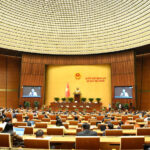
The draft resolution of the National Assembly, outlining mechanisms and policies to address challenges in the implementation of the Land Law, will be discussed by delegates during this week’s session.
Revised Title:
“Legislative Review: Proposed Amendments to Special Development Mechanisms for Ho Chi Minh City and Da Nang”
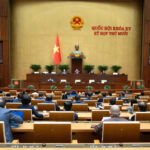
At the recently updated session agenda, the National Assembly will review and supplement resolutions on special mechanisms and policies for the development of Ho Chi Minh City and Da Nang City.