Entrepreneurial Imprint 2025
In 2025, the world faced geopolitical storms, while Vietnam, despite significant damage from natural disasters, recorded a 9-month GDP growth of 7.85%. Amidst this landscape, the resilience of nation-building entrepreneurs has never been more evident.
Entrepreneurial Imprint 2025
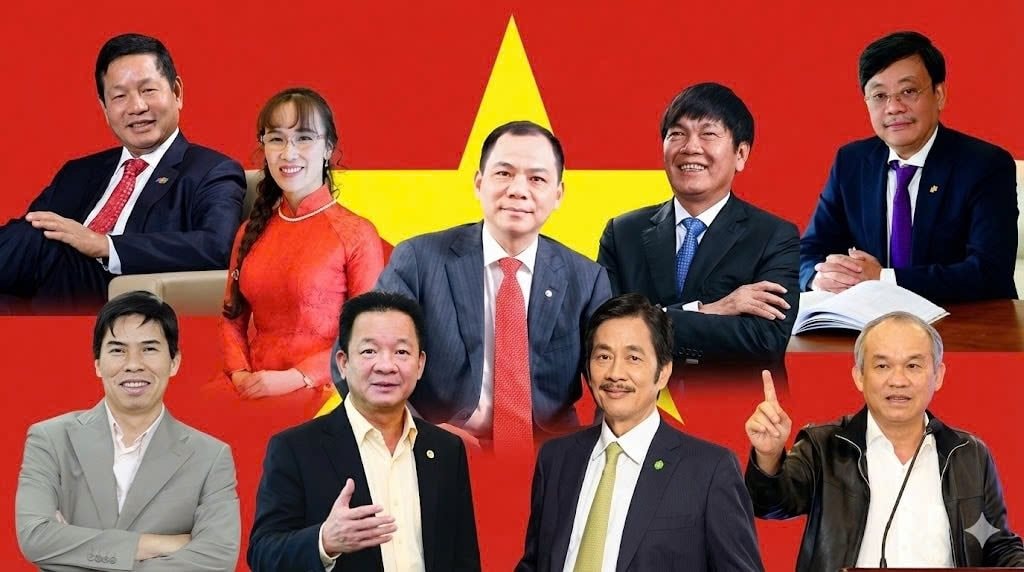
Billionaires Phạm Nhật Vượng, Nguyễn Thị Phương Thảo, and Trương Gia Bình: Internationally Ambitious Ventures
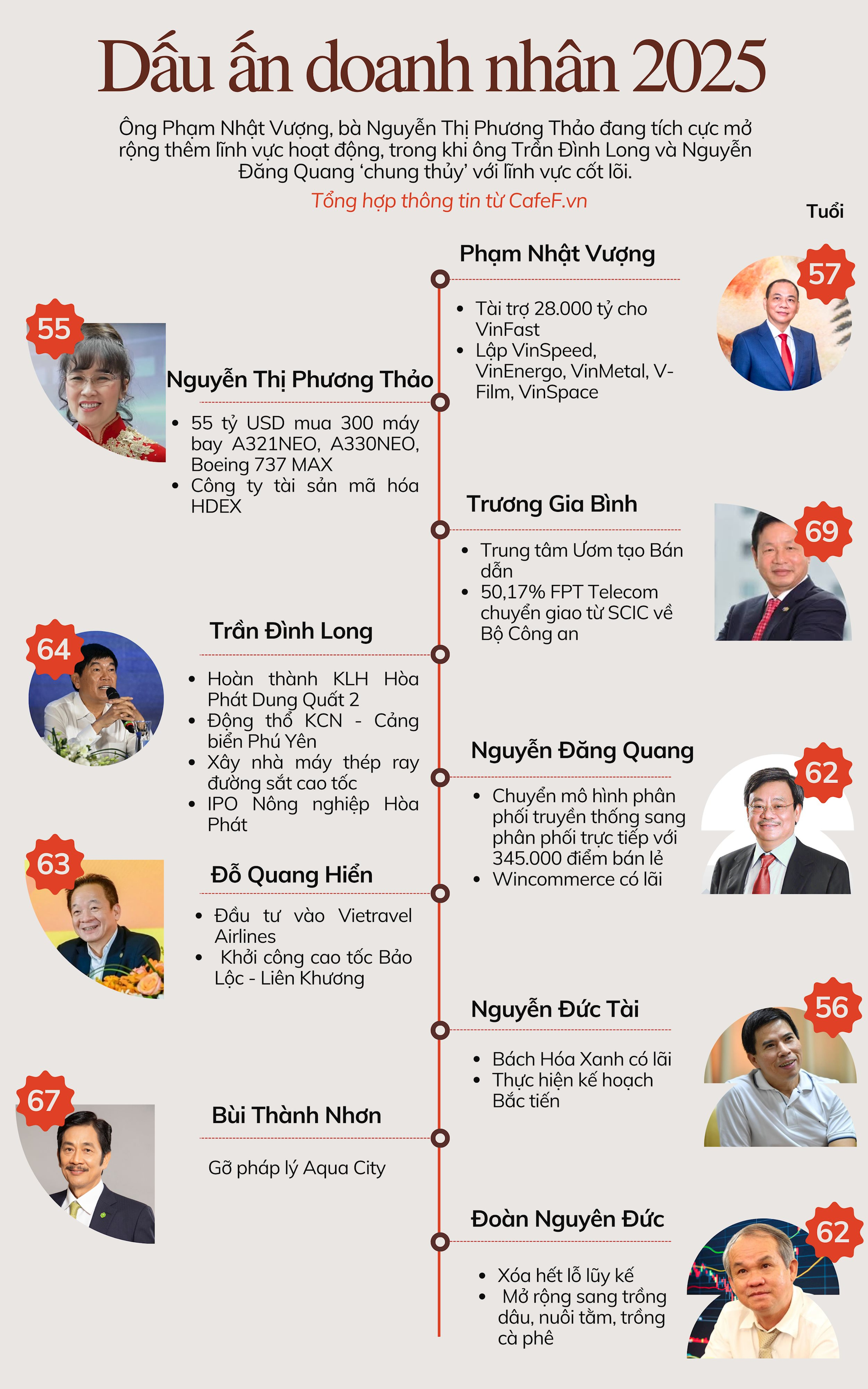
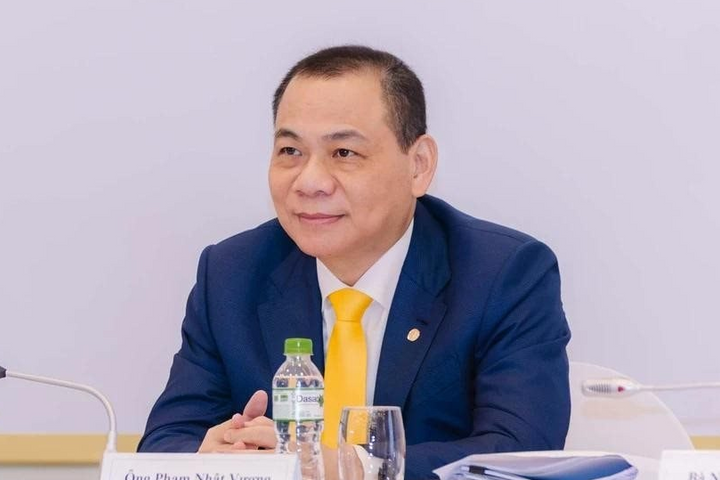
For billionaire Phạm Nhật Vượng, Chairman of Vingroup, 2025 marked a triumphant year for VinFast. From the beginning of the year to the end of Q3 2025, VinFast sold over 110,362 vehicles—an unprecedented figure in Vietnam’s automotive history. Notably, more than 10,000 vehicles were sold in international markets such as North America, India, Europe, Southeast Asia, the Middle East, and Africa.
Assuming the role of VinFast CEO in early 2024 and declaring “no plan B,” Mr. Vượng personally funded VinFast with 28 trillion VND from his assets. To accelerate progress and ensure quality control, he implemented a unique approach, simplifying complex technical processes to make them accessible to all workers. This strategy, combined with operational data from the Xanh SM fleet, continuously enhances software improvements.
VinFast’s 2025 goal is to sell 200,000 vehicles across 50 countries, doubling its 2024 output. The company also plans to launch its second factory in Hà Tĩnh and expand its international manufacturing footprint.
In late October 2025, Vingroup surprised the market by announcing plans to research a mega-urban project in Congo, marking its first foray into the African market and expanding its green real estate portfolio internationally.
Despite its global ambitions, the domestic market remains Vingroup’s financial cornerstone.
Vingroup has launched several large-scale real estate projects, including Vinhomes Hạ Long Xanh (Quảng Ninh, 18 billion USD), Vinhomes Cần Giờ (10-11 billion USD), Vinhomes Dương Kinh (Hải Phòng), Vinhomes Phước Vĩnh Tây (Long An), and seven Happy Home social housing projects nationwide.
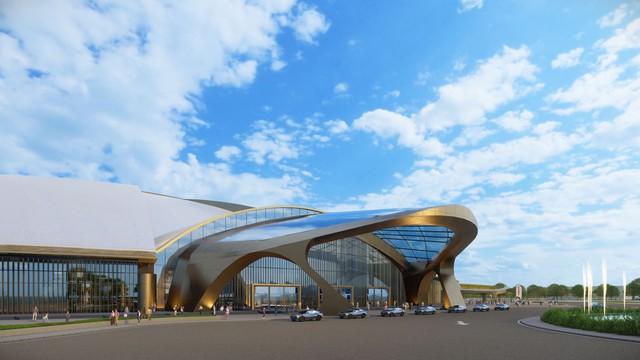
A highlight is the completion of the National Exhibition Center, a national and regional landmark and one of the world’s ten largest exhibition centers. It serves as a hub for international trade and cultural events.
Beyond real estate and electric vehicles, Phạm Nhật Vượng is venturing into challenging sectors.
In August 2025, Vingroup announced two new business pillars: Infrastructure and Energy. Through its subsidiary VinSpeed, the group proposed investments in major rail projects, including the North-South Railway (61.35 billion USD), Hà Nội – Quảng Ninh (5.3 billion USD), and the HCM City – Cần Giờ metro (4 billion USD).
Vingroup also proposed large-scale renewable energy and LNG power projects, with an estimated investment of 25-30 billion USD for 2025-2030. Construction has begun on the Hải Phòng LNG plant, Vietnam’s largest, with a 7.7 trillion VND investment.
Phạm Nhật Vượng’s ambitious plans extend to steel (Vinmetal), entertainment (V-Film, V-Spirit, V-Talents), and even aerospace with VinSpace. Vin New Horizon focuses on urban development and senior living services.
Financially, Vingroup’s stock (VIC) surged in 2025, increasing over fivefold (560%) since the year’s start. By September, the group’s total assets surpassed 1 million billion VND, making it Vietnam’s first non-financial private enterprise to achieve this milestone.
Billionaire Nguyễn Thị Phương Thảo, Chairwoman of Sovico Group and Vietjet, is expanding her global ambitions. With the aviation industry’s post-pandemic recovery, Vietjet is enhancing its international network, adding routes to India, China, Australia, Russia, and planning flights to Europe and North America.
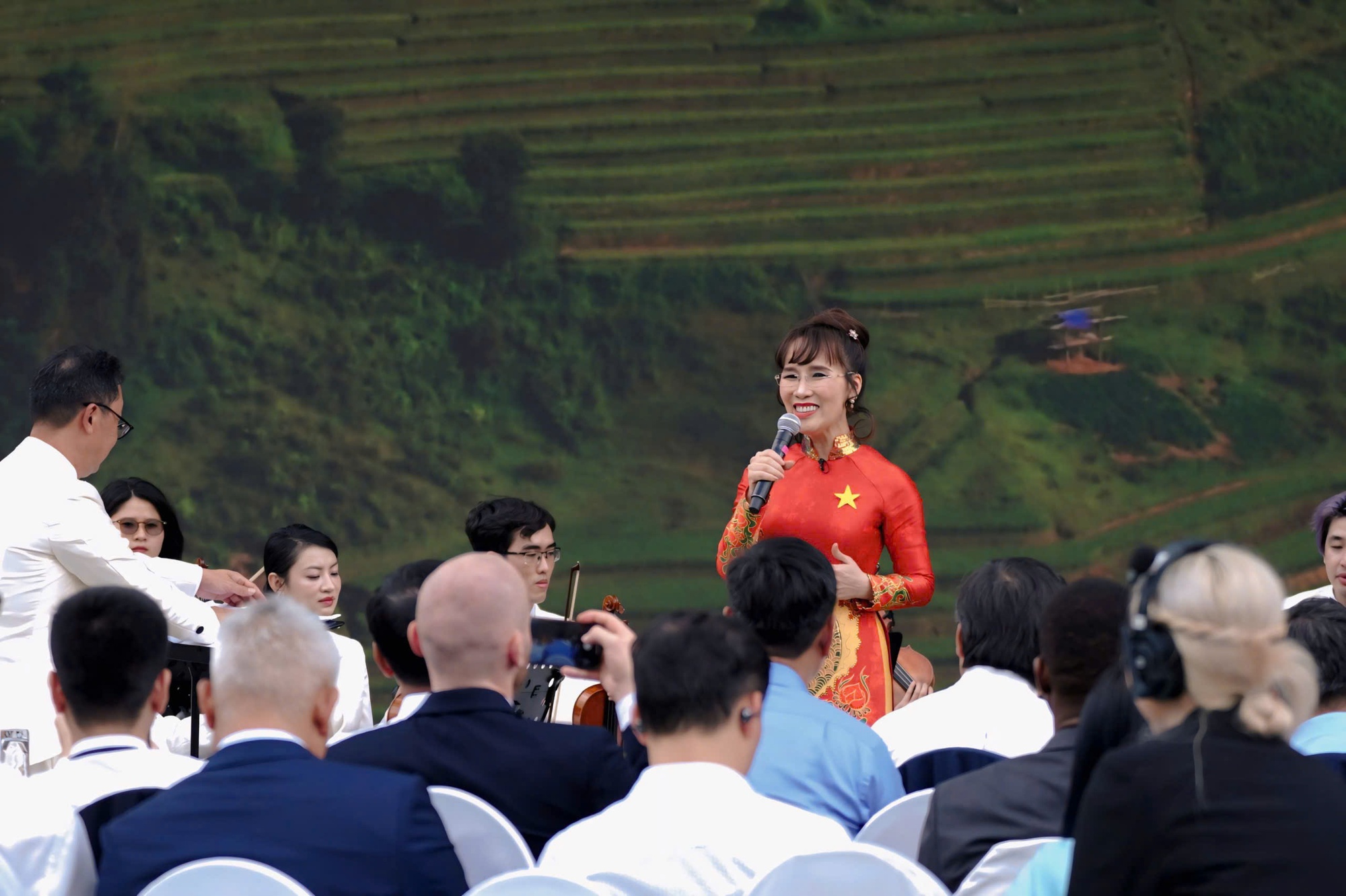
In 2025, Vietjet signed MOUs and orders worth tens of billions of USD, including a 25 billion USD deal for 100 A321neo and 20 A330neo aircraft from Airbus.
Additionally, the airline finalized a 32 billion USD order for 200 737 MAX aircraft from Boeing and a 3.8 billion USD engine contract with Rolls-Royce. These agreements not only expand the fleet but also help balance Vietnam’s trade relations with international partners.
Despite operational success, Vietjet’s aggressive fleet expansion and network growth require substantial capital. The company continues to raise funds and strengthen its multi-industry ecosystem. HDBank plays a central financial role, promoting green credit. Sovico Group invests in logistics infrastructure at Long Thành Airport, where Vietjet establishes an MRO center—a first for a private Vietnamese enterprise.
Notably, Sovico launched the HDEX crypto asset exchange in September 2025, signaling early entry into fintech and digital assets.
Nguyễn Thị Phương Thảo’s wealth grew impressively in 2025, rising from 2.8 billion USD to a record 48.2 trillion VND (as of December 2025), driven by the surge in Vietjet (VJC) and HDBank (HDB) stocks.
Trương Gia Bình, Chairman of FPT, focuses on core technology businesses, leveraging AI and global digital transformation opportunities. FPT secured major contracts in Asia (256 million USD) and the US (100 million USD), showcasing its global reach.
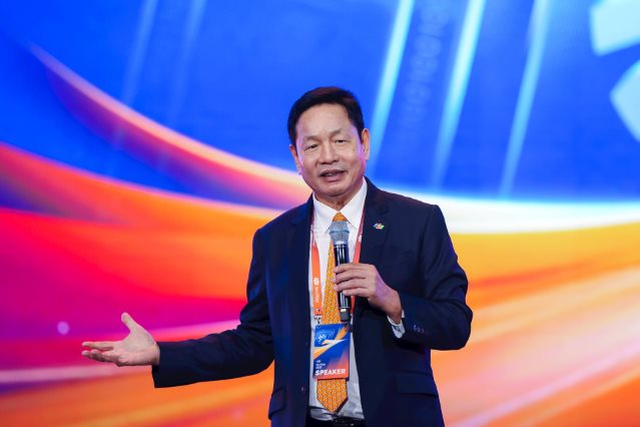
FPT’s technological ambitions include launching the Semiconductor Incubation Center (VSIC), acquiring NVIDIA’s H200 AI chip, and planning five “AI factories.” A 50,000 semiconductor engineer training program underscores its commitment to innovation.
In the first nine months of 2025, FPT reported strong financials with 49.9 trillion VND in revenue and 9.54 trillion VND in pre-tax profit, up 10% and 18% YoY, respectively. Despite adjusted annual targets, overseas IT services maintained robust growth, particularly in Japan.
FPT’s stock rebounded, rising above 100,000 VND/share, supported by foreign investor buying interest, signaling a recovery after a 35% decline from previous peaks.
A notable development is the transfer of FPT Telecom’s 50.17% state-owned shares from SCIC to the Ministry of Public Security, ensuring national security and data safety.
All three entrepreneurs share a global vision and technological focus but differ in risk appetite and financial strategies. Phạm Nhật Vượng leverages real estate to fund industrial ventures, while Trương Gia Bình pursues technology from a stable financial base. Nguyễn Thị Phương Thảo builds a multi-industry ecosystem, requiring complex capital coordination.
Billionaires Trần Đình Long, Nguyễn Đăng Quang, Nguyễn Đức Tài, and Đỗ Quang Hiển: Strengthening Foundations and Optimizing Operations
Entrepreneurs like Nguyễn Đăng Quang and Trần Đình Long focus on core strengths, optimizing operations and expanding selectively.
Nguyễn Đăng Quang, Chairman of Masan Group, strengthens the “Point of Life” ecosystem in Vietnam while selectively expanding globally, targeting culturally aligned markets like South Korea and Japan.
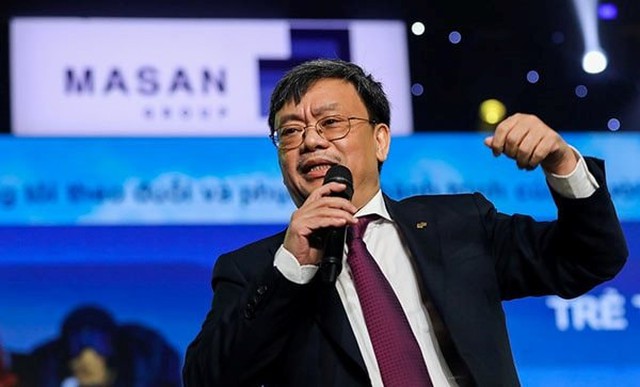
WinCommerce (WCM) reported a 2.1% revenue increase in nine months, with same-store sales up 5.6%, highlighting rural market strategy success.
Masan Consumer (MCH) faced challenges due to new tax policies but implemented a “Direct Coverage” strategy, transitioning from wholesalers to direct retail relationships with 345,000 outlets. This shift initially reduced Q3 profit by 19% but narrowed revenue decline to 5.9% YoY, with a 20% QoQ increase.
Phúc Long adjusted its model, closing 44 kiosks and focusing on flagship stores, accepting a 9.5% revenue drop in nine months.
Masan prioritizes debt repayment and leverages data and AI for domestic market optimization.
Trần Đình Long, Chairman of Hòa Phát (HPG), focuses on heavy industry expansion. In nine months, HPG earned 11.626 trillion VND, meeting 78% of its annual target.
Hòa Phát completed the Dung Quất 2 steel complex (88.4 trillion VND investment) in September 2025, raising total steel capacity to 16 million tons/year by 2026. The company also launched a 120 trillion VND industrial park and port project in Phú Yên.
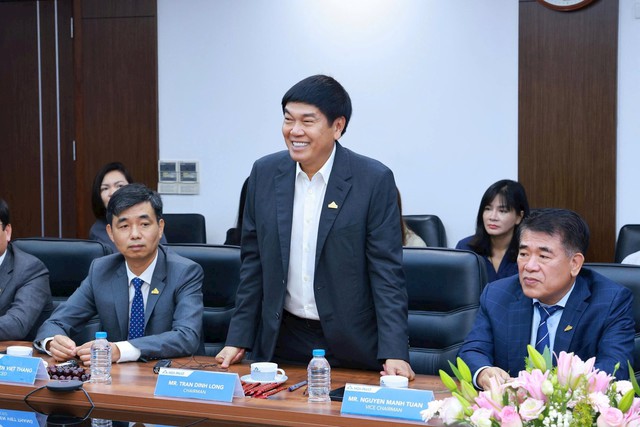
Supporting national infrastructure, Hòa Phát invested over 10 trillion VND in a Dung Quất rail factory for high-speed rail components.
Its agriculture subsidiary (HPA) filed for an IPO on HoSE, targeting December 2025 listing, with nine-month revenue of 6.258 trillion VND and 1.412 trillion VND in pre-tax profit.
In real estate, Hòa Phát develops new industrial parks like Hòa Tâm (Phú Yên) and Yên Mỹ II (Hưng Yên), alongside large-scale social housing projects.
Nguyễn Đức Tài and The Gioi Di Dong (MWG) focus on quality over quantity, reporting a record 1.784 trillion VND profit in Q3 2025. Nine-month profit reached 4.989 trillion VND, up 73% YoY, exceeding annual targets.
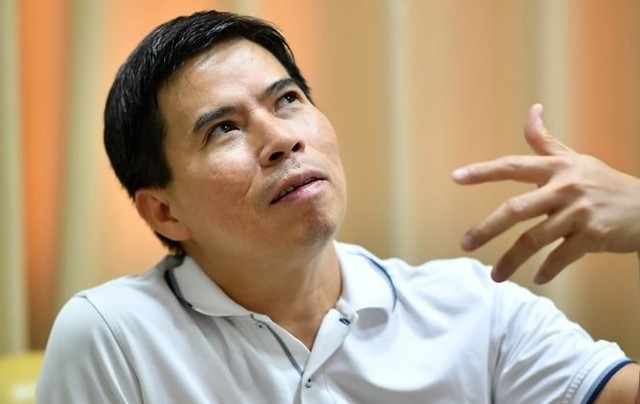
TGDĐ/ĐMX chains grew 15% in revenue despite fewer stores, emphasizing service quality. Bách Hóa Xanh achieved profitability in 2025 under new leadership, enabling a “Northern Expansion” plan with 1,000 stores/year and a 2028 IPO vision.
Internationally, EraBlue in Indonesia reached 150 stores and exceeded 18 billion Rupiah profit targets. AvaKids also turned profitable, validating MWG’s core business consolidation strategy.
MWG’s stock surged from 50,000-55,000 VND to over 80,000 VND/share in 2025.
Đỗ Quang Hiển (Bầu Hiển) focuses on large-scale infrastructure and financial consolidation through T&T Group and SHB.
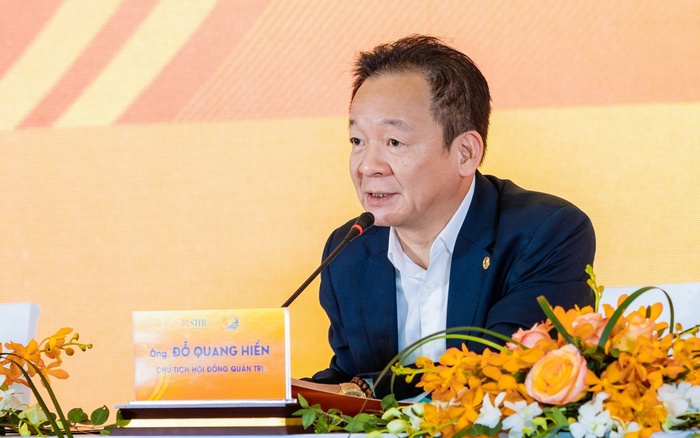
In 2025, T&T invested over 87 trillion VND in aviation and central region projects, including Vietravel Airlines. Đỗ Vinh Quang, Bầu Hiển’s son, chairs the airline, integrating logistics and tourism infrastructure like Quảng Trị Airport and resorts.
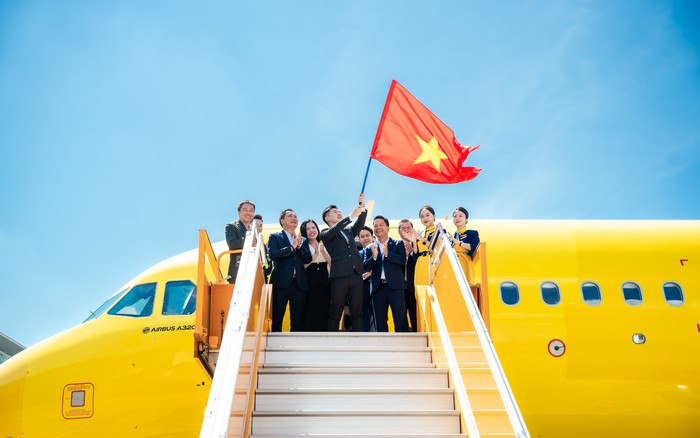
T&T also launched the Bảo Lộc – Liên Khương highway (17.7 trillion VND) and proposed large-scale urban and golf resort projects.
In energy, T&T completed a 220kV transmission line from Laos to Vietnam and advanced the Hải Lăng LNG project (2.3 billion USD).
Financially, T&T sold SHB Finance to Krungsri, negotiated a 20% SHB stake sale, and increased SHS capital. SHB and SHS stocks doubled and surged 100% in Q3, respectively.
Bùi Thành Nhơn and Đoàn Nguyên Đức: Revitalizing Enterprises
Entrepreneurs like Bùi Thành Nhơn and Đoàn Nguyên Đức focus on reviving struggling enterprises.
Bùi Thành Nhơn, Chairman of Novaland (NVL), aims to revive the company rather than expand. In nine months, Novaland earned 5.398 trillion VND but lost 1.820 trillion VND.
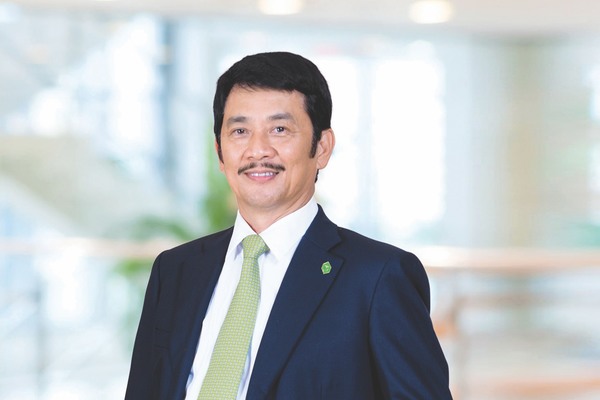
Legal hurdles for Aqua City were resolved in June 2025, enabling project resumption. In August, shareholders approved debt-to-equity swaps and convertible bonds, strengthening finances. Banks committed 18 trillion VND, and over 1,000 homes were delivered, with 2,400 properties approved for sale.
Đoàn Nguyên Đức (Bầu Đức) and HAGL turned profitable in Q3 2025, earning 824.6 billion VND, driven by agriculture. Bananas and durian replaced livestock, which shrank to 40 billion VND revenue in Q3.
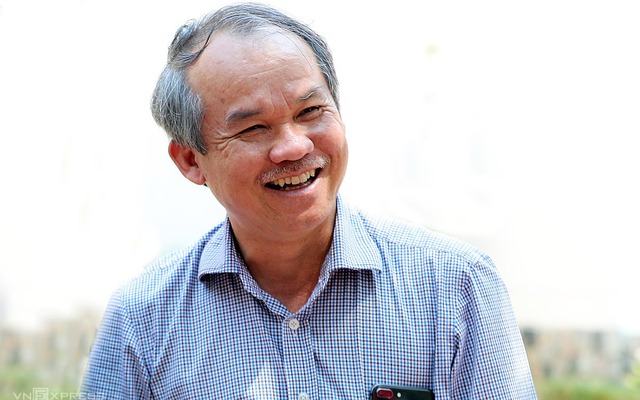
Eximbank’s interest waiver and a 2.52 trillion VND debt-to-equity swap improved finances. HAGL focuses solely on agriculture, with a small housing project on existing land.
These entrepreneurs demonstrate resilience, adapting strategies to navigate challenges and pursue growth.
Fortune Unveils Southeast Asia’s Top 100: Vietnam Stands Alone with Two Companies in the Top 10
Who are the two representatives?
Vietnam’s Stock Market Welcomes Back Nguyen Thi Phuong Thao as the Richest Female Billionaire

On December 1st, Pham Thu Huong’s stock portfolio surged past Nguyen Thi Phuong Thao’s, reaching a staggering 46 trillion VND in value.
Vingroup’s Pham Nhat Vuong Becomes Southeast Asia’s Second-Richest Person with $1 Billion Asset Surge
With a staggering $1.1 billion surge in a single day, Vingroup Chairman Pham Nhat Vuong has soared to become the second-richest individual in Southeast Asia, trailing only Indonesian billionaire Prajogo Pangestu.
Asia’s Brand Ascendancy: Techcombank in the Global Power Shift

Asian brands, particularly in the finance and banking sectors, are rapidly expanding their influence by seamlessly blending cultural identity, cutting-edge technology, and data-driven insights.
The Fierce Race of Mega-Cities: Vingroup, Sungroup, and Other Titans Shake Up the Real Estate Market with Bold All-In Moves

A wave of colossal real estate projects, spearheaded by industry titans, is reshaping Vietnam’s property landscape. These ambitious developments are redefining the nation’s real estate map, signaling a new era of growth and transformation.