Real Capabilities Required
Data from the Civil Aviation Authority of Vietnam (CAAV) shows that as of August this year, Vietnam Airlines holds over 47% of the domestic market share, Vietjet nearly 42%; Bamboo Airways holds nearly 6%, and Vietravel Airlines around 2%.
Speaking with Tiền Phong, a CAAV leader stated that the shift in market share among airlines is the result of multiple factors, including fleet capacity, pricing policies, service quality, brand strategy, and alliances between carriers.
Pricing strategies, market segmentation, and customer service quality are crucial factors for an airline to expand its market share. However, in the current and immediate future, fleet capacity (availability) is the most direct and critical factor determining market share changes in Vietnam’s aviation sector.

Pricing strategies, segmentation, and service quality are key to expanding an airline’s market share. Photo: NIA.
CAAV leadership emphasizes that fleet capacity is the primary determinant of an airline’s supply capabilities. Airlines with larger fleets have better opportunities to increase supply and compete effectively. Fleet capacity directly impacts flight frequency and network expansion.
On major or key routes, robust fleet capacity allows airlines to increase flight frequencies, enhancing competitiveness. For niche routes, fleet capacity enables airlines to decide on operations, cargo supply, and network expansion. This is evident in Vietnam’s aviation market, where reductions in some airlines’ fleets due to various reasons have left market gaps, quickly filled by carriers with stronger fleet capacities.
The regulatory body asserts that Vietnam’s aviation development potential remains vast. The government continues to facilitate new entrants, as seen with Sun PhuQuoc Airways. New airlines contribute to increased supply, expanded route networks, fare regulation, and improved service quality.

Vietnam’s aviation development potential remains vast. Photo: NIA.
CAAV leaders stress that aviation is no easy game. Only companies with strong financial and technical foundations, distinct strategies, and high-quality personnel can thrive and contribute meaningfully to the market.
Licensing for new airlines is based on market demand, airport infrastructure capacity, and safety requirements for aircraft operations.
How is the Market Segmented?
According to economist Ngô Trí Long, the domestic market is divided into three groups: leaders, challengers, and survivors. Vietnam Airlines leads; Vietjet operates a low-cost model with an extensive network; Bamboo Airways, after rapid growth, has streamlined its fleet, focusing on high-yield routes; Vietravel Airlines remains small-scale.
Routes largely determine revenue and market share. The Hanoi-Ho Chi Minh City-Da Nang axis is the profit backbone, while tourist routes see fierce fare competition. Local routes depend on seasons and offer low efficiency, making it tougher for financially weak airlines.

Long Thành Airport in Đồng Nai is nearing completion of Phase 1. Photo: NAG Nguyễn Minh Tú.
“With input costs up 20-30%, exchange rate pressures, high interest rates, and pilot/technician shortages, new airlines still attract private capital but face higher risks than before. New entrants must find niches or accept long-term losses to compete directly,” said Long. He emphasized that the market is shifting toward two clear extremes—low-cost and traditional—and airlines without a clear identity risk being overshadowed.
Vietnam Airlines reported Q3 consolidated revenue of over 30.78 trillion VND, up 12% year-on-year. While gross margins improved, net profit fell to 732 billion VND due to rising costs. Notably, shareholder equity turned positive, reaching nearly 6.37 trillion VND, strengthening its financial foundation after years of challenges.
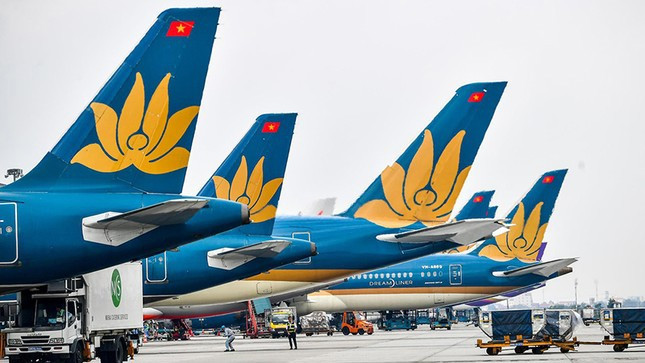
Vietnam Airlines’ shareholder equity turned positive, reaching nearly 6.37 trillion VND in Q3. Photo: VNA.
Vietjet maintained growth with Q3 transport revenue of nearly 16.73 trillion VND; nine-month cumulative revenue reached nearly 52.33 trillion VND, with pre-tax profit of nearly 1.99 trillion VND. Notably, HDBank decided to fully divest from Vietjet, expecting to raise 1.15-1.25 trillion VND.
In the restructuring group, after returning to FLC, Bamboo Airways is redesigning its 2026-2030 strategy, preparing a roadshow to raise capital for brand repositioning and fleet/network expansion.
Vietravel, the founder of Vietravel Airlines, announced its exit by divesting fully by December 31, ending five turbulent years and handing over the airline to new shareholders.
Sun PhuQuoc Airways launched on November 1, targeting the luxury tourism market with routes connecting Phú Quốc.
By 2026, CAAV aims for air transport targets of 95 million passengers and 1.6 million tons of cargo, up 13% and 15% respectively from this year.
2025 Milestones: Phạm Nhật Vượng Invests $1.2B in VinFast’s ‘No Plan B’ Strategy, Trần Đình Long Unveils New ‘Steel Fist’, Nguyễn Đức Tài Completes Mission

Vietnam’s business landscape is dominated by visionary leaders. Billionaires Phạm Nhật Vượng, Nguyễn Thị Phương Thảo, and Trương Gia Bình are global players, shaping industries on an international scale. Meanwhile, Bùi Thành Nhơn and Đoàn Nguyên Đức are masterminds of corporate revival, breathing new life into their enterprises.
Unprecedented Collaboration: FPT and Vietnam Airlines Host Exclusive Matchmaking Event for 100 Single Employees

An exclusive event tailored for 50 FPT Software Officers and 50 Vietnam Airlines staff, aged 24–35, promises an engaging and insightful experience.
Vietnam’s Stock Market Welcomes Back Nguyen Thi Phuong Thao as the Richest Female Billionaire

On December 1st, Pham Thu Huong’s stock portfolio surged past Nguyen Thi Phuong Thao’s, reaching a staggering 46 trillion VND in value.
Reviving Flights from Vinh Airport
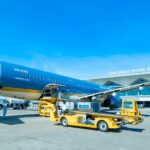
Starting December 19th, Vietnam Airlines will operate a total of 7 daily round-trip flights connecting Vinh to both Hanoi and Ho Chi Minh City.
Vietnam Airlines Now Serving 4P’s Pizza In-Flight: Half Pie for 119,000 VND
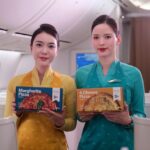
Pizza 4P’s, a renowned brand that debuted its first store in 2011, has since expanded to 40 locations worldwide. Recently, the brand made headlines by partnering with Vietnam Airlines (VNA) to offer its signature pizzas onboard, elevating the in-flight dining experience.