











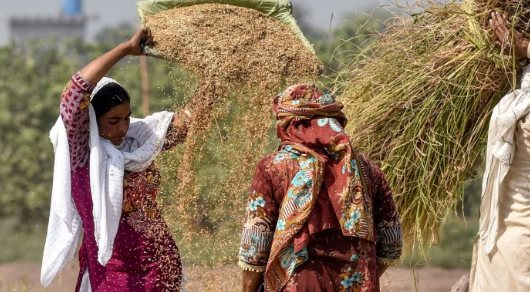
Illustrative Image
Rice prices in Nigeria are cooling significantly after a prolonged surge, contributing to the lowest food inflation rate in months. However, this relief for consumers masks growing challenges for local millers and traders.
According to the latest report from the National Bureau of Statistics (NBS), food inflation in the most recent month stood at 13.12%, a sharp decline from the peak of 39.16% recorded in October 2024. Rice saw the steepest drop, falling by 28%, with analysts predicting further declines in the coming weeks.
Typically, rice demand in Nigeria spikes in the final quarter due to heightened social activities, driving prices upward. This year, however, the market has witnessed the opposite trend.
The primary driver is a reversal in the global market, particularly from India, the world’s largest rice exporter. After tightening export restrictions in 2022–2023, India relaxed them in March 2025, significantly boosting global rice supplies. By August, India had exported nearly 15 million tons, far surpassing Thailand (4.7 million tons) and Vietnam (6 million tons). New Delhi also set a floor price of $950/ton for basmati rice and anticipates another bumper harvest to further lower prices until 2026.
Nigeria’s market is also heavily influenced by cross-border trade. President Bola Tinubu’s reopening of land borders with Niger in March 2024 has increased informal rice imports via neighboring countries like Benin, which have lower tariffs. Rising smuggling has forced domestic businesses to slash prices to remain competitive.
The 2025 rainy season, lasting from April to October, yielded high outputs for staple crops like rice, corn, and black-eyed peas, supported by the government’s “Renewed Hope” agricultural agenda. The 2025 national budget increased allocations for agriculture, promoting mechanization and waiving import taxes on inputs.
Additionally, logistics costs plummeted as domestic fuel prices dropped from 1,350 naira/liter to 870 naira/liter, and the naira regained value. These factors helped reduce overall inflation from 34.6% (November 2024) to 16% by October 2025.
With ample supply, states like Lagos have sold government-branded rice at just 57,000 naira per 50 kg bag.
While lower prices benefit consumers, domestic supply chain businesses face significant losses. Many traders are selling previously imported stock at a loss. Despite rice’s long shelf life, holding inventory ties up capital as prices continue to fall.
Imported rice, often of superior milling quality, dominates the market, weakening demand for local rice. This has forced many local mills to scale down or close, negatively impacting farmers.
Pressure intensifies as domestic rice production has declined for three consecutive years, according to the USDA, due to climate change and rising production costs. In 2024, domestic consumption reached 7.66 million tons, while imports surged to 2.4 million tons—up from 1.89 million tons the previous year.
Since the 1970s, Nigeria has attempted various food self-sufficiency measures with limited success. Experts argue that tighter border controls could curb smuggling but won’t address the sector’s structural issues.
Key proposals include: investing in irrigation to reduce reliance on erratic rainfall, adopting disease-resistant rice varieties and dry-season farming to boost yields, and developing value chains and milling technologies to enhance local rice competitiveness.
While falling rice prices bring holiday cheer to Nigerian households, the outlook for traders and local millers remains bleak. Without comprehensive reforms, Nigeria’s rice sector will continue to face significant challenges amid intensifying global competition.
India’s Rice Exports Hit as Another Nation Halts Imports for One Month Following Philippines and Indonesia

The surplus of rice supply is emerging as a pressing concern across numerous countries.
What’s Unfolding in the World’s 4th Largest Economy: Sky-High Import Taxes on Rice, Yet Imported Prices Undercut Local Goods, Leaving Consumers Paying a Premium
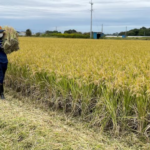
This nation has consistently raised import tariffs on rice, a strategic move that reflects its commitment to protecting domestic agriculture and ensuring food security. By implementing these measures, the country aims to bolster local rice production, reduce dependency on foreign supplies, and safeguard the livelihoods of its farmers. This policy underscores a broader effort to achieve self-sufficiency in a staple crop that is central to both its economy and cultural identity.
Asia’s Rice Exporters Face Dilemma: World’s Third-Largest Importer Set to Surplus 4 Million Tons, Following Philippines in Halting Imports
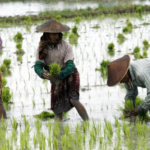
Emerging as a new force in the global rice market, this nation is not India or the Philippines, yet it’s reshaping the dynamics of international rice prices.
India’s Rice Exports Poised for Over 10% Growth in Fiscal Year 2025-2026

India’s rice exports are projected to surge by over 10% in the 2025-2026 fiscal year, driven by market expansion and the diversification of value-added rice products, thereby bolstering the agricultural economy.
Vietnamese Rice Prices Hit Two-Month Low
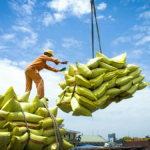
This week, Vietnamese rice prices plummeted to their lowest point in over two months, driven by lackluster demand and subpar quality of the newly harvested crop.