Dong Nai: A Key Growth Engine for Vietnam’s Economy in 2025
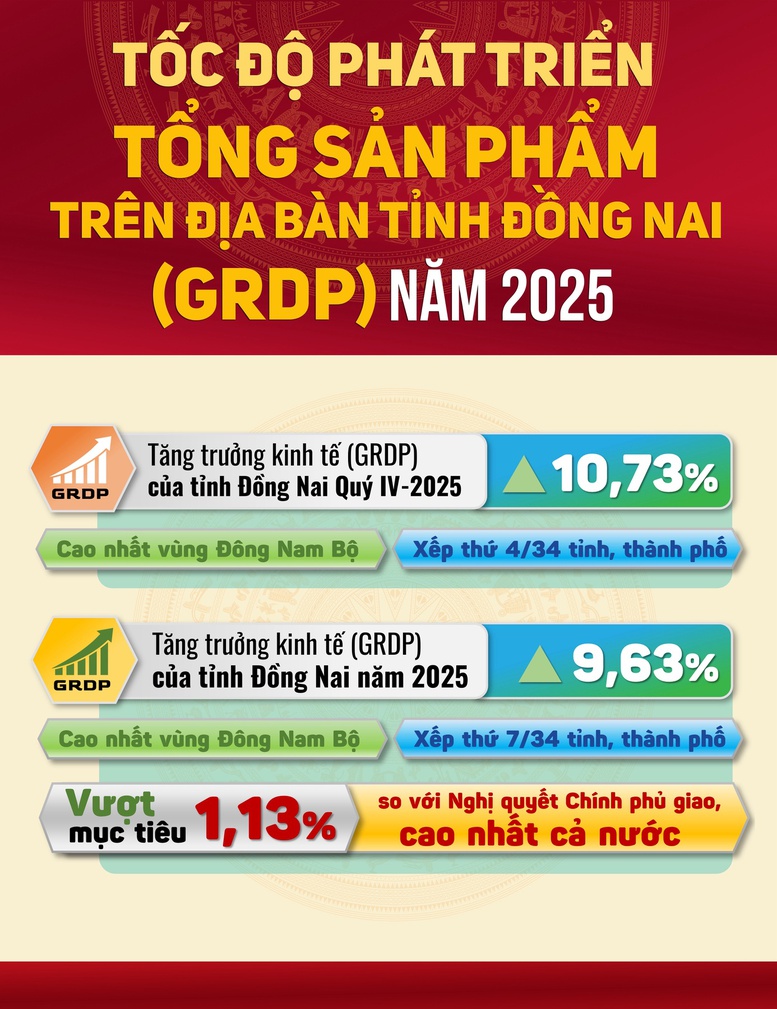
Dong Nai’s 2025 economic landscape concluded on a vibrant and optimistic note. The fourth-quarter GRDP surged by 10.73% (ranking 4th nationally), contributing to an annual growth rate of 9.63% compared to 2024—exceeding the government’s target of 8.5% by 1.13 percentage points and securing the top position nationwide in growth achievement.
Ranking 7th nationally in GRDP growth, Dong Nai continues to lead the Southeast region, solidifying its role as a vital growth hub for both the region and the country.
This remarkable achievement is attributed to the decisive leadership of the Provincial Party Committee and People’s Committee, the synchronized efforts of departments such as Finance, Industry and Trade, Statistics, Customs, and Taxation, and the resilience of the business community.
Government agencies have proactively advised on policies, addressed challenges, and supported businesses in resuming production, while effectively managing and utilizing resources. Administrative reforms and digital transformation have been accelerated, simplifying procedures and unlocking both foreign and domestic investment flows, thereby fueling the province’s economic acceleration.
Industry and Construction: Primary Growth Drivers, Contributing 56.54% to GRDP
Industry and Construction Sector: Remains the key driver of the province’s GRDP growth.
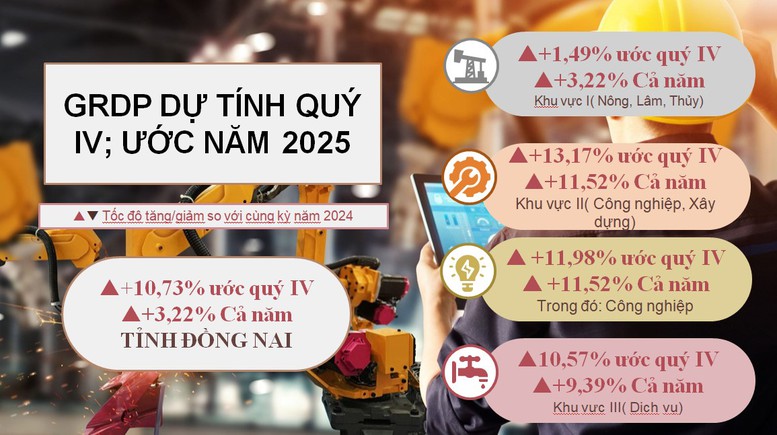
The fourth quarter of 2025 is projected to grow by 13.57%, with industry increasing by 11.98%. For the full year, this sector grew by 11.52%, with the industrial sector alone expanding by 10.42%.
Manufacturing: The Heart of the Economy
Key industries such as textiles, footwear, and metal production recorded impressive growth rates ranging from 7.2% to 20.77%.
Many businesses experienced robust recovery due to abundant orders as global markets improved, coupled with flexible management and timely support from both central and local governments.
Electricity Production and Distribution: A Significant Leap
2025 marked a breakthrough year for electricity production and distribution, with a remarkable 19.29% growth. The highlight was the commencement of operations at Nhon Trach 3 and 4 power plants in the third quarter, significantly boosting the national power grid. Several other sectors also achieved notable growth.
Construction: Surging Ahead with Major National Projects
The construction sector achieved a remarkable 21.69% growth, driven by several key national projects, including the Long Thanh International Airport, scheduled to commence operations on December 19, 2025.
With a capacity to serve 100 million passengers annually, the airport is poised to become Southeast Asia’s largest, competing directly with Changi (Singapore) and Suvarnabhumi (Thailand). The Phuoc An Port, a strategic logistics gateway for the Southeast region, has also begun operations, enhancing connectivity with Ho Chi Minh City and regional seaports. This development will alleviate transportation pressures, boost logistics services, and attract significant investment to industrial zones and surrounding areas. Critical transportation infrastructure projects are being expedited.
These transformative infrastructure projects, along with other pivotal transportation initiatives, are creating substantial growth opportunities for the foreseeable future.
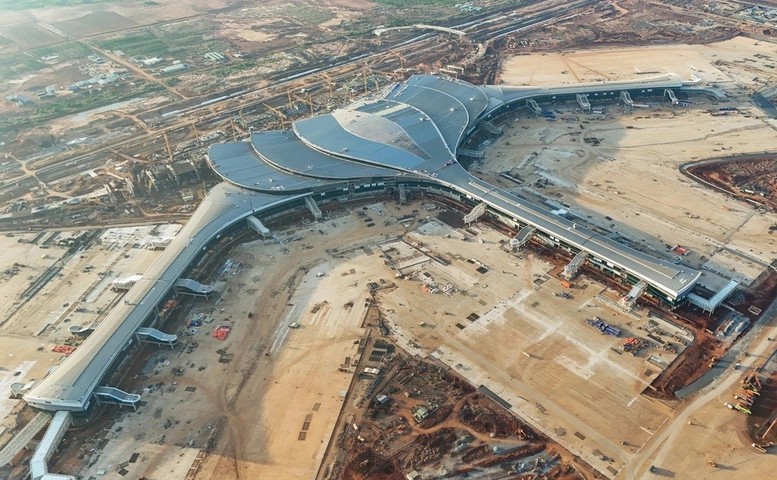
Dong Nai’s construction sector surged by 21.69%, driven by major national projects such as Long Thanh International Airport and Phuoc An Port—a strategic logistics hub for the Southeast region.
Services: Steady Growth Fueled by Consumption and Trade Recovery
Services Sector: Grew by 10.57% in the fourth quarter and 9.39% annually, supported by improved household incomes, robust consumption, and advancements in logistics, information technology, and other service sectors. Key growth drivers include:
Increased household incomes stimulating spending on retail, dining, entertainment, transportation, and accommodation.
The year-end holiday season consistently boosts consumer demand.
Exports, IT services, and logistics expanded due to improved global demand and market expansion.
Effective stimulus policies and support for small and medium-sized enterprises.
Administrative reforms enhancing the efficiency and speed of service sector operations.
Agriculture, Forestry, and Fisheries: Slowest Growth but Essential for Economic Stability
Agriculture, Forestry, and Fisheries Sector: Grew by 1.49% in the fourth quarter and 3.22% annually—the lowest among the three economic sectors.
Challenges included rising livestock costs, disease outbreaks, and reduced agricultural land due to urbanization and industrial development. Despite its slower growth, this sector remains crucial for food security, social welfare, and economic balance in the province.
Dong Nai continues to assert its position as a leader in sustainable development, with a 2025 GRDP growth rate surpassing the government’s target, leading the Southeast region, and ranking among the nation’s top performers. Dong Nai has demonstrated its economic resilience, adaptability, and robust growth potential.
With an increasingly advanced strategic infrastructure system, accelerated administrative reforms, an attractive investment and business environment, and a dynamic business community, Dong Nai is poised to enter a new phase of development: faster, more sustainable growth, and heightened regional competitiveness.
Proposed Developments for Long Thanh International Airport
Vietnam Airports Corporation (ACV) has submitted a proposal to the Ministry of Construction, seeking to be appointed as the lead investor for Phase 2 of the Long Thanh International Airport project in Dong Nai Province. The proposal emphasizes the principle of “one airport, one operator” to ensure unified operations and long-term development.
ACV Proposes to Lead Phase 2 of Long Thanh Airport Project with Estimated Investment of VND 80,000 Billion
With Phase 1 construction accelerating and aviation demand soaring, Long Thanh Airport is gearing up for its next stage of development. ACV, the driving force behind this mega aviation project, has officially proposed continuing as the lead investor for Phase 2.
The Billion-Dollar Long Thanh Airport Terminal: A Preview Before Its Inaugural Flight
After two years of construction, the lotus-shaped terminal at Long Thanh Airport is beginning to take shape. Inside, essential equipment such as escalators and elevators are being installed at a rapid pace to ensure readiness for the first scheduled flight.
11 Investors Poised to Acquire 125 Million Individual Shares of Phuoc An Port
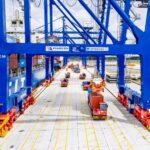
Phước An Port is set to offer 125 million private placement shares to 11 individual investors at a price of VND 13,610 per share, which is half the current market price of PAP stock.
Dong Nai Auctions Three Prime Land Plots, Expected to Generate Over 5 Trillion VND
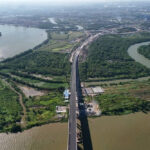
Upcoming auction in Dong Nai: Prime eco-urban complex and themed park project in Phuoc An Commune, 8.4-hectare land plot in Tan An Commune, and land use rights for plots 145 and 14 on map sheet 31 in Trang Bom Commune.